
 Mathan Allington
Software enabling managers to coach direct reports 2026
 Mathan Allington
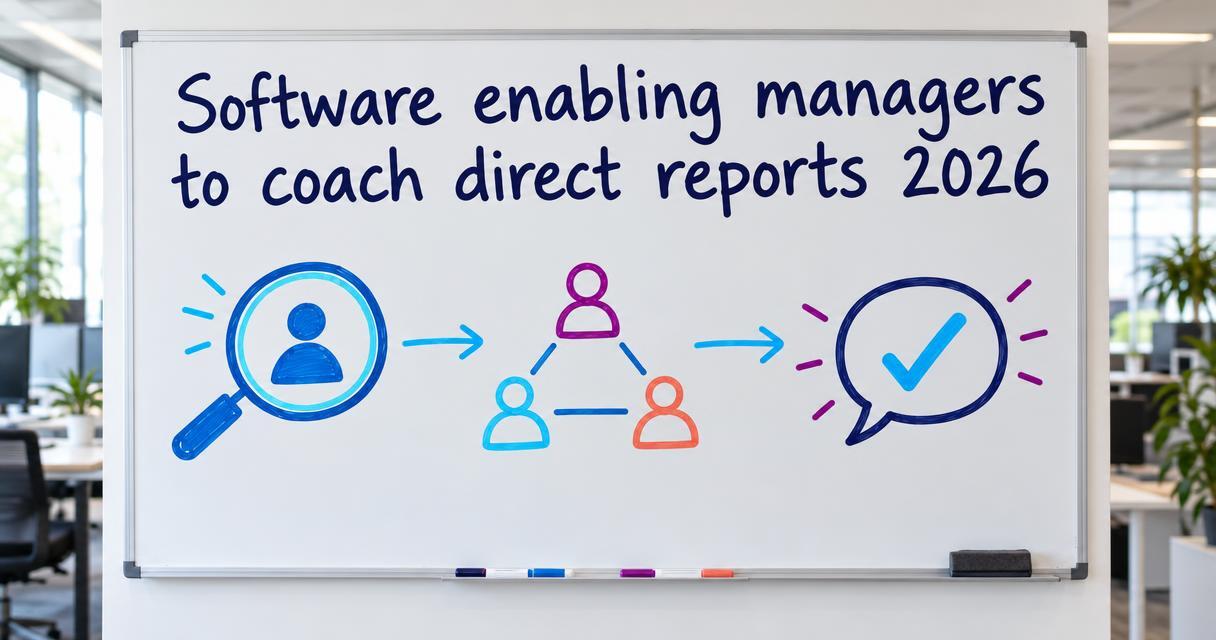
How coaching software enabling managers to coach their direct reports without hiring external professional coaches builds stronger, more capable...
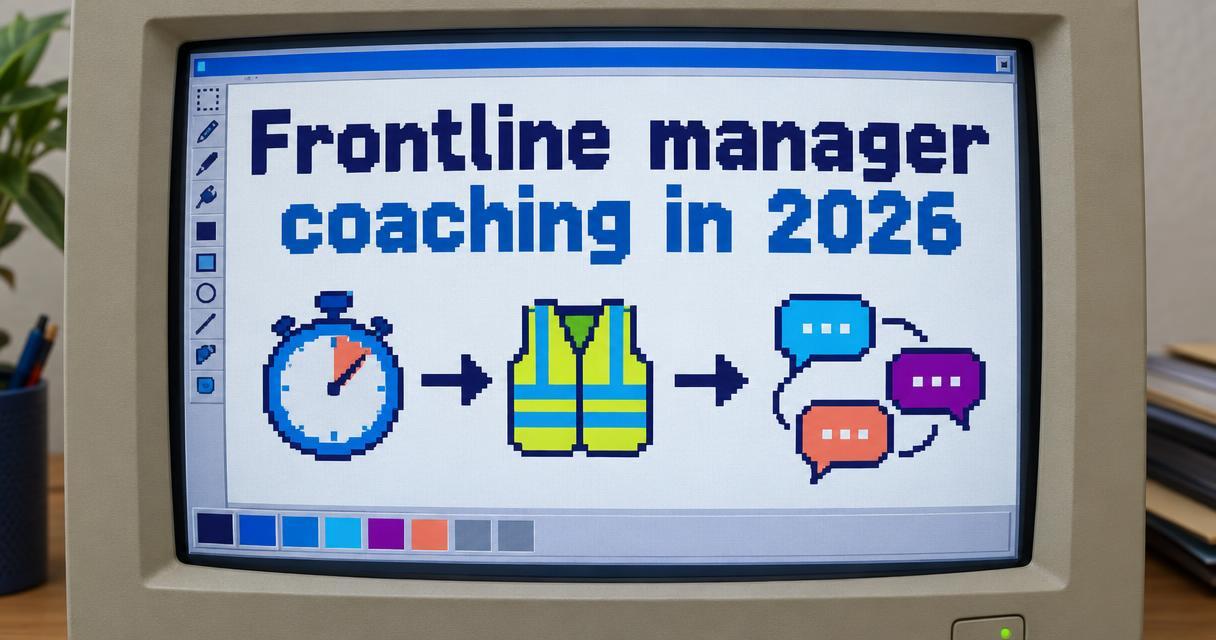
Your frontline managers are probably the hardest working people in your business, but right now they are mostly just putting out fires.
Last reviewed November 2026
Key takeaways
- Traditional corporate coaching models fail in deskless environments because shift supervisors lack calendar time and quiet office space.
- Most frontline leaders are promoted for their technical speed, meaning they need help unlearning the urge to fix every problem themselves.
- Effective floor coaching happens in five-minute micro-conversations rather than hour-long scheduled meetings.
- Providing on-demand digital support helps managers handle difficult conversations in real time without waiting for HR intervention.
- Success is measured by shift retention and reduced error rates, not just the completion of training modules.
When a supervisor is three staff down on a Friday night, they do not care about your overarching leadership philosophy. They just want to survive the shift. We expect these operational leaders to guide their teams, mediate conflicts, and hit targets, yet we rarely give them the practical tools to do it in a fast-paced environment. They are constantly reacting to call-outs, customer complaints, and inventory delays.
The cost of this pressure is severe. According to the 2024 Axonify Frontline Manager Report, 47 percent of hospitality managers report experiencing burnout themselves, and 64 percent have seen team members leave specifically because of burnout. People quit their bosses, and those bosses are exhausted.
It is not that shift leaders do not want to develop their people. A 2025 DDI Global Leadership Forecast reveals that 31 percent of frontline leaders want more coaching than they currently receive. They know they need better people skills. They simply need a coaching framework that actually fits the reality of the shop floor, the warehouse, or the hospital ward.
Knowledge workers have the luxury of sending calendar invites. A marketing manager can book a quiet room for a one-on-one session to discuss long-term career goals. A deskless worker in a distribution centre cannot.
When you take a traditional leadership framework and force it onto a frontline operation, it breaks down. Shift supervisors cannot pull an employee off the floor for forty minutes without causing a backlog. If coaching requires forms, scheduled meetings, and private offices, it simply will not happen.
Furthermore, most frontline managers get promoted because they are incredibly reliable workers. In the Work Personality framework, this is often the Doer type. They see a problem, roll up their sleeves, and fix it.
While this bias for action makes them great employees, it makes coaching difficult. When a junior team member struggles to pack an order or handle a difficult customer, the manager's first instinct is to push them aside and do it for them. We have to teach these managers how to pause, step back, and guide the employee instead of taking over.
To shift a team away from command-and-control management, you need to focus on a few very specific, highly practical competencies. Theoretical management concepts will just collect dust in a binder.
First, managers need the ability to deliver immediate, constructive feedback. They must learn how to correct a behaviour without making the employee feel attacked in front of their peers. Second, they need situational awareness. A good frontline leader knows when to jump in during a rush and when to let the team figure things out during a quiet period.
Finally, they need the skill of active listening in a noisy environment. This means learning how to ask a diagnostic question, listen to the answer, and provide a clear directive in under three minutes. This transition is difficult. If you are developing construction supervisors or retail managers, the focus must stay entirely on practical communication.
If you want frontline manager coaching to actually work, you need a framework that takes five minutes or less. The traditional GROW model is often too heavy for a mid-shift conversation. Instead, teach your supervisors the Notice, Name, Ask, Align method.
Notice the behaviour objectively. The manager must state exactly what they saw without adding judgment or frustration. For example, they might say that the last three orders took longer than the target time, rather than accusing the worker of being slow.
Name the impact. Briefly explain why this matters to the team or the customer. The manager might explain that when orders slow down, the delivery drivers get backed up at the loading bay.
Ask a diagnostic question. This is where the coaching actually happens. Instead of telling the employee what to do, the manager asks what is getting in the way of hitting the target. Often, the employee will reveal a broken tool, a confusing process, or a lack of supplies that the manager can then fix.
Align on the next step. Agree on one small change to try immediately. It is short, it is direct, and it gets everyone straight back to work with a clear plan.
One of the hardest parts of leading a deskless team is dealing with a worker who simply does not want to cooperate. When you manage a shift, you cannot afford to have someone refuse a task or argue on the floor. It kills momentum and drags down the rest of the crew.
The key to coaching through resistance is addressing the friction early and privately. A manager should pull the worker aside for two minutes, even if it means stepping into a hallway or a stockroom. Public corrections almost always create defensive behaviour.
During that brief conversation, the manager must separate the person's attitude from the specific task requirement. You cannot coach someone out of a bad mood, but you can set clear boundaries around the work standard. By focusing on the exact expectation rather than the employee's personality, the manager keeps the interaction professional and avoids an argument. Learning how to separate task feedback from personal friction is a core part of what we teach at Hey Compono, because it stops small issues from escalating.
You cannot place an HR business partner on every night shift and weekend roster. The reality of frontline operations is that managers often face their toughest people challenges when the head office is completely empty. This is where digital tools and AI step in to bridge the gap.
When a manager is nervous about giving a formal warning the next morning, they need immediate guidance on what to say. Having access to a mobile coaching platform allows that manager to practice the conversation, refine their tone, and walk into the shift feeling prepared. The impact of this on-demand support is highly measurable. Data from Centrical shows that managers with access to an AI assistant for team leaders delivered 88 percent more coaching actions than comparable managers without access.
Technology does not replace human empathy. It simply scales the basic structural support so the manager can focus on the human interaction. By exploring how AI coaching changes team behaviour, organisations are finding that managers who use these tools become much more consistent in how they treat their staff.
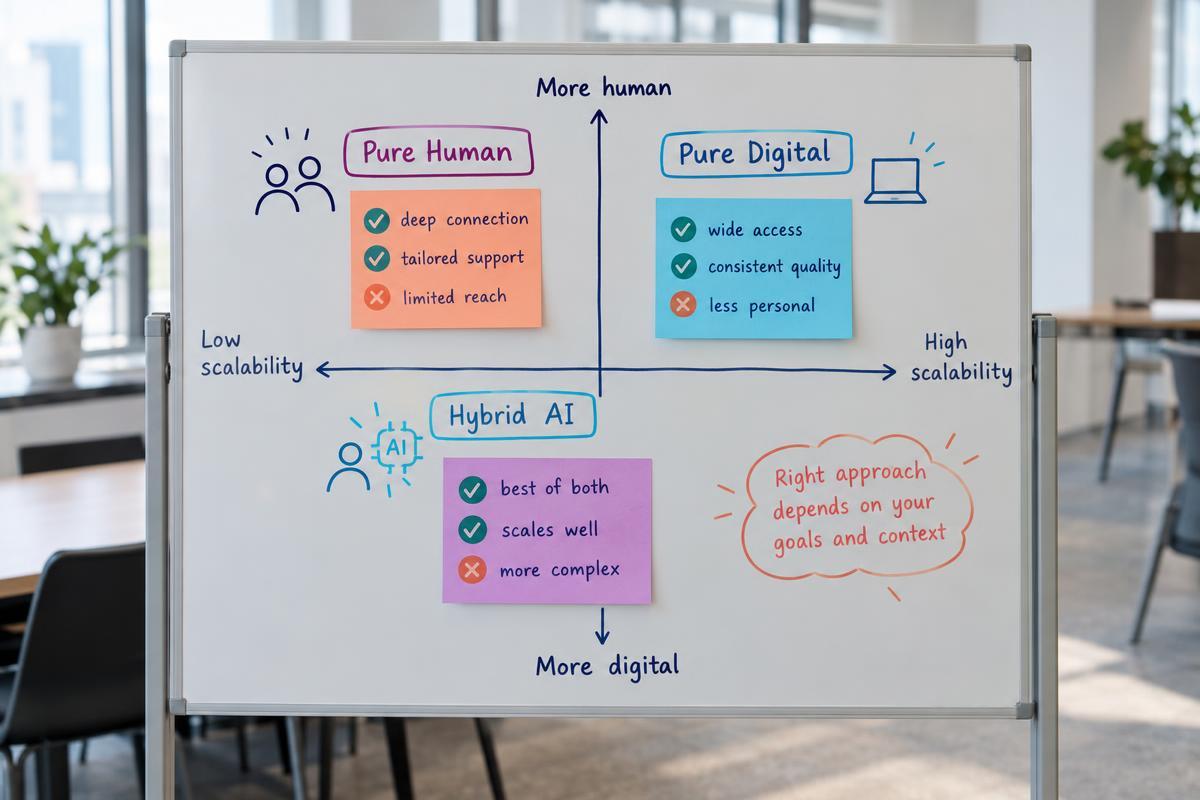
When deciding how to train and support your frontline supervisors, you have three main choices. Each approach carries distinct advantages and operational drawbacks for shift-based environments.
| Coaching approach | Operational advantage | Primary drawback |
|---|---|---|
| Pure human coaching | Deeply empathetic and builds strong personal bonds | Impossible to scale across multiple locations and irregular shift patterns |
| Pure digital modules | Highly able to grow and easy to track completion rates | Creates zero behavioural change in stressful, real-world situations |
| Hybrid AI and human | Provides 24/7 on-demand guidance while preserving the human manager's authority | Requires an initial culture shift to get managers using the tools regularly |
For most operational businesses, the hybrid model is the only realistic path. It gives the supervisor a safety net of digital advice without removing them from their role as the leader on the floor.
If you want to secure executive buy-in for a frontline manager coaching program, you have to stop reporting on completion rates. A director of operations does not care how many people watched a video. They care about productivity, safety, and staff retention.
Start measuring the specific business outcomes that coaching influences. Gallup's 2025 State of the Global Workplace report shows that managers account for approximately 70 percent of the variance in team engagement. When engagement goes up, turnover drops. Track the retention rate of new hires during their first ninety days on a specific manager's shift.
You can also track operational metrics like error rates, safety incidents, and customer satisfaction scores. When managers coach effectively, the work gets done better. You should also look at the speed of interventions. A great coaching program means problems are resolved on the floor today, rather than turning into formal HR grievances next month. We see this frequently when developing public sector leaders, where early intervention drastically reduces formal complaints.
Ultimately, a strong coaching culture gives your shift leaders the confidence to manage their people properly. At Hey Compono, we know that when you support the manager, the entire team performs better. They stop firefighting and start leading.
Give your shift supervisors the on-demand, practical guidance they need to handle difficult conversations and build resilient teams without waiting for HR.
Related reading
Deskless workers and shift managers do not have the luxury of scheduled calendar blocks or quiet meeting rooms. They need micro-coaching techniques that work in the middle of a busy shift, focusing on immediate task correction rather than long-term career philosophy.
A good operational coaching conversation should take under five minutes. The goal is to quickly notice an issue, ask a diagnostic question to find the root cause, and agree on a minor adjustment before getting straight back to work.
You measure success by tracking operational outcomes like shift retention, error rates, safety incidents, and customer complaints. High completion rates on training modules mean nothing if the manager's team is still quitting due to burnout.
Yes. AI coaching tools provide 24/7 on-demand advice for managers who often work nights or weekends when human resources staff are unavailable. It allows them to practice difficult conversations and get immediate guidance on how to handle conflict right before they step onto the floor.
The most common mistake is promoting a fast, reliable worker and expecting them to naturally know how to manage people. Without practical communication training, these new managers usually just take over tasks when things go wrong, rather than guiding their team to fix the issue.
How coaching software enabling managers to coach their direct reports without hiring external professional coaches builds stronger, more capable...

How AI coaching gives managers tailored support, adapts to different people, and takes some development load off a small HR team.
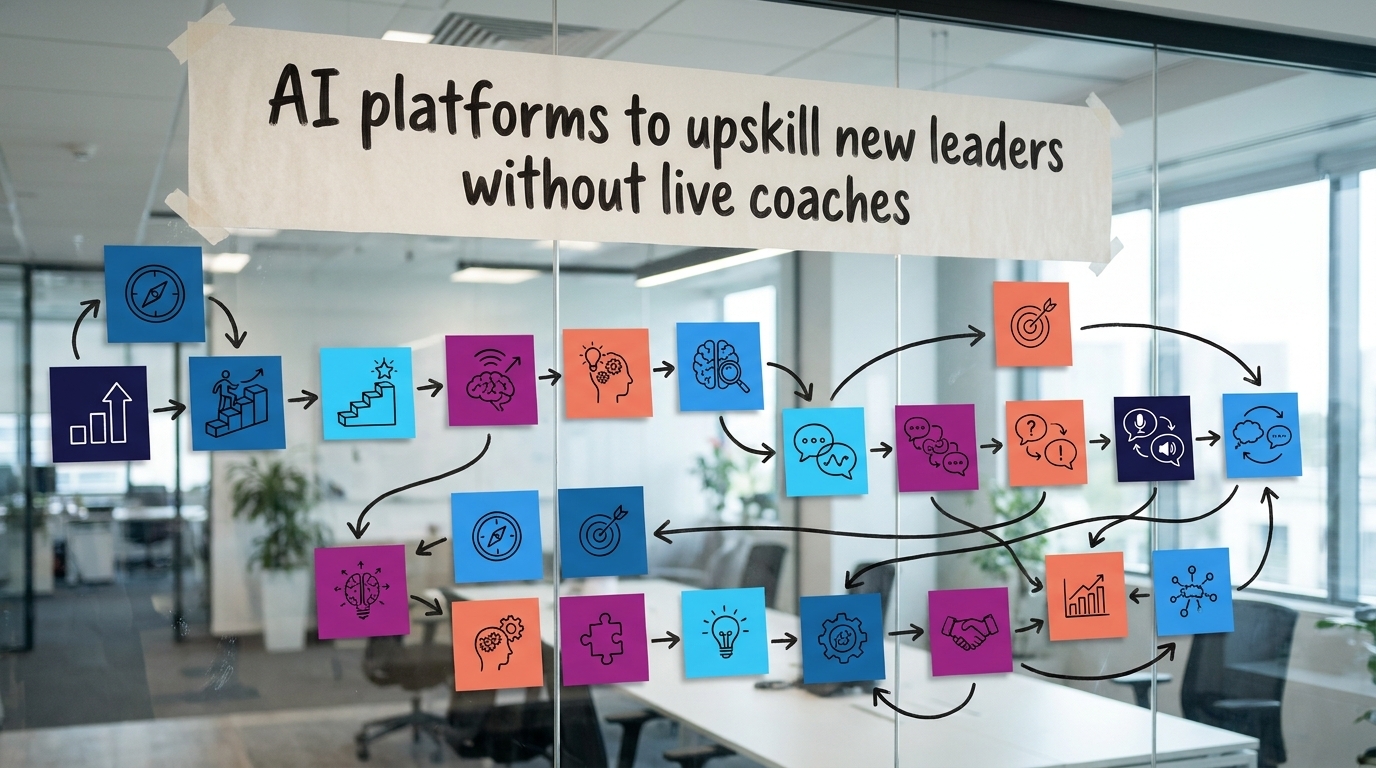
How AI platforms to upskill new leaders without live coaches can scale support, improve retention, and provide safe roleplay practice.
 Compono