
 Mathan Allington

Career guidance that actually fits your personality
 Compono
Generic career advice ignores the way you actually work. How to use what you know about yourself to pick a direction you will stay with.
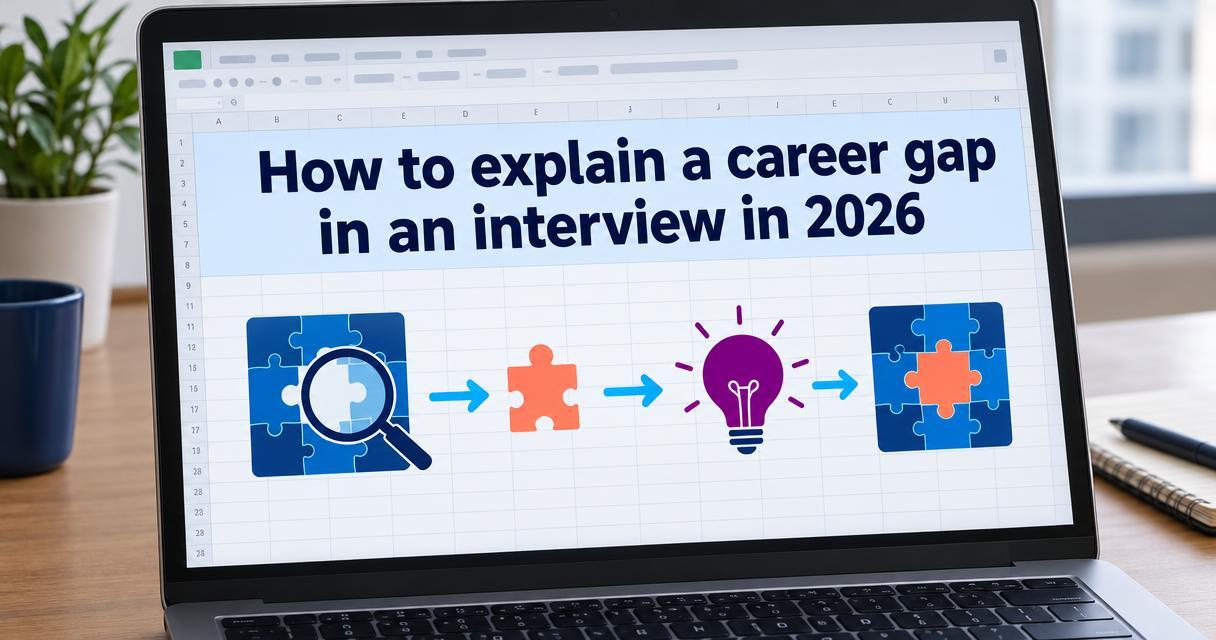
To learn how to explain a career gap in an interview, you need to state your reason clearly, describe what you did during the time away, and immediately pivot to why you are ready for this specific role.
Last reviewed November 2026
Key takeaways
- Employment gaps are common and rarely a dealbreaker for modern hiring managers.
- Keep your explanation brief and avoid over-sharing personal details.
- Focus on the skills you built or the clarity you gained during your time away.
- Frame your return to work as a deliberate choice because you are excited about the specific role.
We have all stared at a blank space on a resume and felt exposed. When the interviewer points to that gap year, the health break, or the six months you spent looking for work, panic often sets in. You might feel the urge to justify your choices or apologise for stepping off the corporate ladder. You do not need to do either.
Taking time away from the workforce is completely normal today. According to a LiveCareer analysis reported by Forbes in 2025, more than half of workers reported at least a one-month employment gap between 2020 and 2025, while 58% reported a gap of six months or longer. At Hey Compono, we know that career paths are rarely straight lines. Life happens, and recruiters know this.
When figuring out how to explain a career gap in an interview, structure is everything. You want to control the narrative. A practical answer structure is to briefly explain the reason, mention what you did or learned during the gap, and connect that experience to why you are ready for the role now. This approach comes directly from InterviewFocus (2025), which notes that one or two sentences is enough when explaining a career break. Candidates should then describe recent learning, certifications, consulting, or volunteer work that demonstrates continued engagement.
We call this the Acknowledge, Action, and Alignment framework. First, acknowledge the gap with a neutral fact. Second, describe the action you took during that time. Finally, align your current readiness with the job you are interviewing for. It keeps you from rambling and shows the interviewer that you are forward-focused.
How you deliver this message depends heavily on your natural Work Personality. We all communicate differently under pressure. If you are The Doer, you might be tempted to rattle off a long, practical list of every single task you completed during your break. Instead, you should focus on the overarching value you gained.
If you are The Evaluator, you might over-analyse the gap and give the interviewer far too much logical detail. Keep it brief. Practising your delivery ensures your natural style works for you rather than against you.
Let us look at exactly what to say. Different gaps require different framing. The goal is always to pivot back to the present and show that you are ready to work.
| Reason for gap | Example script |
|---|---|
| Layoff or redundancy | My previous company went through a restructuring and my role was eliminated. I took the opportunity to complete a project management certification, and now I am looking for a team where I can apply those skills long-term. |
| Burnout or mental health | I took a planned career break to reset and handle some personal matters. During that time, I volunteered locally to stay engaged. I am fully recharged now and excited about this role because it aligns with my core strengths. |
| Caregiving | I stepped away from the workforce to care for a family member. That situation is now resolved. I kept my industry knowledge current by reading trade journals, and I am ready to dive back into a fast-paced environment. |
| Failed business venture | I took a year to launch a startup. While the business did not scale as planned, I learned incredible lessons about budget management and client acquisition. I want to bring that entrepreneurial mindset to this role. |
Not all gaps are treated equally by recruiters. A 2026 hiring experiment by WiserHours found that employment gaps of up to approximately six months had little effect on callback rates, while a penalty emerged at around one year.
If your gap is under six months, keep your explanation extremely brief. Many recruiters assume you were simply looking for a job or taking a well-deserved break between roles. You barely need to justify it.
For gaps extending past a year, the interviewer will want to see that you did not let your skills stagnate. Highlight any freelance work, self-study, or community involvement. If you feel like your career has stalled completely due to a long absence, reading our guide on how to handle a professional identity crisis might help you reframe your experience before you head into the interview room.
You might worry that an employer will dig into the exact reasons for your break. You have a right to privacy. Background checks confirm dates of employment and job titles. They do not verify why you left a company or what medical conditions you experienced.
You do not need to disclose medical specifics or family dramas. If you left a toxic workplace and signed a non-disclosure agreement, simply state that you left to pursue new opportunities and respect the confidentiality of your previous employer. Hiring managers respect discretion and professionalism.
There are a few common traps that candidates fall into when discussing career breaks. The first is apologising. You did nothing wrong by taking time out of the workforce. Avoid saying you are sorry for the gap.
The second trap is over-explaining. Rambling makes it look like you are hiding something. As InterviewFocus (2025) notes, you must state clearly why you stepped away and then pivot instantly to why you are ready to build again. If you struggle with knowing when to stop talking, check out our Tell Me About Yourself practice guide to sharpen your pitch.
Finally, avoid speaking negatively about your past employers. Even if you quit because your boss was awful, frame the departure positively. If you are currently debating whether to leave a bad situation, our advice on switching jobs and knowing when to move on can help you make a clean exit before an unplanned gap occurs.
Your interview answers must match what is written on your resume. If you took two years off for parental leave, do not try to hide it by listing years instead of months on your job dates. Recruiters spot this trick immediately. Be transparent. Add a single line to your resume stating "Career Break: Caregiving" or "Sabbatical: Professional Development". Honesty builds trust before you even walk into the room.
Practising your answers out loud is the best way to stop panicking about resume gaps. AI coaching lets you refine your pitch in a safe space before the real interview happens.
Related reading
A gap year does not look bad if you can explain what you learned from it. Employers value candidates who use their time intentionally to travel, study, or volunteer.
Keep it brief and neutral. State that the role was no longer a good fit for either party, share one key lesson you took away, and pivot to why the current role aligns better with your skills.
If the gap is under three months, you generally do not need to highlight it. Most hiring managers understand that finding a new job or taking a short break between roles takes time.
No. Background checks typically only verify your dates of employment and job titles. They cannot legally access your medical records or demand proof of caregiving responsibilities.

Generic career advice ignores the way you actually work. How to use what you know about yourself to pick a direction you will stay with.

A way to prepare that does not rely on memorised answers: know your strengths, handle the hard questions, and work out if the culture suits you.

Discover how CliftonStrengths helps you identify natural talents and turn them into career advantages. Learn to lead with your unique work...