 Mathan Allington
Learning how to give upward feedback to your manager requires a clear focus on specific workplace behaviours, the impact those behaviours have on your work, and a concrete request for what needs to change.
Last reviewed November 2026
It feels dangerous because the power changing is inherently unequal. But when you frame your observations around the work rather than their personality, you give your boss the chance to improve without triggering their defensive instincts.
Key takeaways
- Assess psychological safety before speaking up; if the risk of retaliation is high, use anonymous channels or escalate the issue instead.
- Structure your feedback using the Situation, Behaviour and Impact method to keep the conversation objective and professional.
- Tailor your approach to your manager's working style, such as providing written updates for analytical leaders or scheduling quick chats for relationship-focused bosses.
- Use asynchronous tools for routine updates but save sensitive conversations about workload or fairness for face to face or video meetings.
- Prepare for a defensive reaction by staying calm, repeating your shared goal, and giving them time to process the information.
Understanding how to give upward feedback to your manager
Telling your boss they are doing something wrong is one of the most intimidating things you can do at work. The person receiving the feedback is the same person who controls your assignments, your performance reviews and your pay. This structural reality makes radical candour very difficult for most employees.
Managers have blind spots just like anyone else. They might not realise their late-night emails cause panic, or that their vague project briefs result in hours of wasted effort. Without input from the team, these patterns never change. Hey Compono research and organisational psychology show that leaders who receive constructive input from their teams build higher-performing departments.
According to data from Sogolytics, managers' ratings from direct reports improved modestly after feedback, with gains about three times larger when feedback was used for development rather than pay decisions. Furthermore, managers who discussed these upward feedback results with their teams improved more than managers who kept the results to themselves. The question is not whether upward feedback works. The question is how to deliver it safely.
The pre-check: Is it safe to speak up?
Before you request a meeting or draft an email, you must assess the psychological safety of your environment. Not every manager is receptive to feedback. Some interpret any suggestion as a personal attack. You need to decide whether the issue is worth addressing directly, whether it requires escalation, or whether you should let it go.
If your manager frequently asks for input, reacts calmly to bad news, and takes responsibility for their mistakes, you have high psychological safety. In this environment, direct feedback is appropriate and likely to be well received. If you are dealing with an unsupportive boss who blames others, holds grudges, or uses performance reviews as weapons, direct feedback carries a high risk of retaliation.
| Environment | Manager behaviour | Recommended action |
|---|---|---|
| High safety | Asks for input, admits mistakes, protects the team | Give direct, face to face feedback using a structured framework. |
| Moderate safety | Often stressed, gets defensive initially but calms down later | Frame feedback carefully as a request for help. Focus entirely on shared goals. |
| Low safety | Blames others, punishes dissent, micromanages aggressively | Use anonymous 360 review tools if available. Otherwise, escalate to HR or let it go. |
An analysis from FeedbackPulse notes that sensitive topics such as fairness, workload, and psychological safety are better suited to anonymous surveys, while routine feedback can be handled face to face. If your company lacks an anonymous feedback channel, you must weigh the professional risk before speaking.
How to give upward feedback to your manager without breaking trust
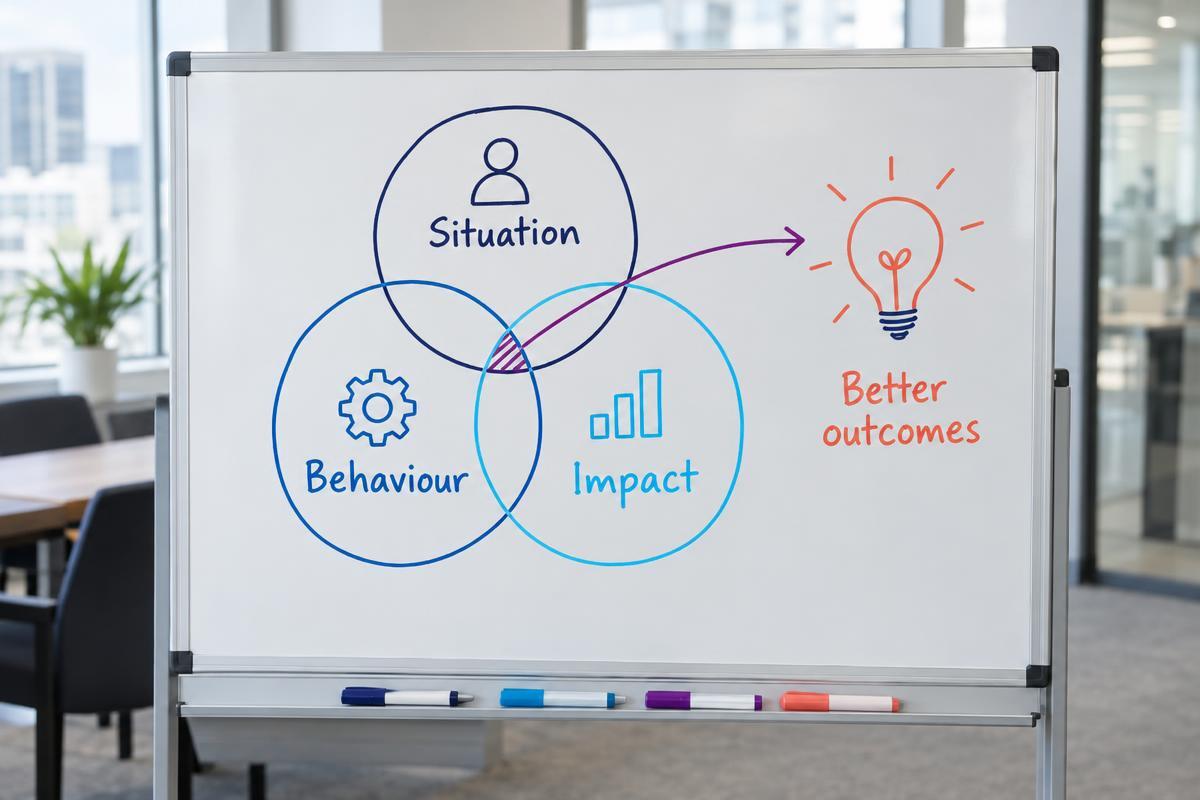
When you decide to proceed, the structure of your message determines how it lands. The most reliable method for giving upward feedback is the Situation, Behaviour and Impact framework. The Center for Creative Leadership, cited by New Changing, designed this structure to frame feedback around when something happened, what the manager did, and how it affected the work.
This removes emotion and personal judgement from the conversation. According to research by Windmill, effective upward feedback identifies a specific behaviour, explains its impact, and suggests what would help (without diagnosing the manager’s personality). You are not telling them they are a bad leader. You are pointing out a mechanical flaw in how the team is operating.
The Situation
Start by naming the exact time and place the issue occurred. This grounds the conversation in reality rather than broad accusations. Never use words like 'always' or 'never'.
Bad example: You never give me enough time to finish things.
Good example: Yesterday morning during the weekly planning meeting, you assigned the client presentation to me.
The Behaviour
Describe exactly what the manager did. Stick to observable facts that a video camera could record. Avoid making assumptions about their motives or their attitude.
Bad example: You dumped it on my desk because you were disorganised.
Good example: You asked for the completed slide deck by 2:00 PM that same day.
The Impact
Explain the business result of their action. Focus on the work, the timeline, or the quality of the output. While you can mention your own stress, linking the behaviour to a shared business goal is much more persuasive for a manager.
Bad example: It made me really stressed out and I hated it.
Good example: Because the turnaround was only four hours, I had to cancel my meeting with the development team, which delayed the software release by a full day.
The Request
Always end with a clear suggestion for the future. If you only present a problem, it sounds like complaining. If you present a solution, it sounds like managing up.
Example: In the future, could we agree to a minimum 48-hour turnaround for client presentations so I can manage my other project deadlines?
Adapting your feedback to their Work Personality
At Compono, decades of organisational psychology research show that people process information differently. The Work Personality framework identifies eight distinct types, and understanding your manager's type helps you frame your feedback in a language they respect.
If your manager is an Evaluator, they value logic, efficiency and data. They do not want to hear a long preamble about your feelings. To give them feedback, put your points in a brief, structured list. Lead with the business impact. Give them time to read it, process the logic, and respond. Emotional appeals will make them uncomfortable and dismissive.
If your manager is a Campaigner, they are driven by vision, ideas and momentum. They hate being bogged down in administrative details and can take criticism personally if it feels like their big ideas are being stifled. When giving them feedback, tie your request directly to their overarching vision. Frame your feedback as a way to help their big idea succeed faster.
By adjusting your delivery to match what they care about, you lower their defensive barriers. You stop fighting their natural instincts and start working with them.
Remote and asynchronous feedback scripts
Remote work complicates feedback. You lose the nuance of body language, and a sudden 'Can we chat?' message on Slack often triggers anxiety. When you need to give constructive feedback asynchronously, you must be exceptionally clear about your intent.
For routine process issues, written feedback is fine. For anything involving workload, fairness, or interpersonal conflict, always ask for a video call. Written text strips away empathy and leaves too much room for misinterpretation.
Script for requesting a feedback meeting
Use this when you need to discuss a recurring issue, like micromanagement or changing priorities. Send it via your usual messaging app or email.
"Hi [Name], I have some thoughts on how we can simplify the approval process for the new campaign. Do you have 15 minutes this Thursday to chat through a few ideas? I want to make sure I'm aligning with your expectations."
Script for immediate workload pushback
Use this when you are handed an impossible deadline remotely, and you need to push back immediately without seeming insubordinate.
"Thanks for sending this over. Looking at my current priorities, I can deliver the report by tomorrow afternoon, or I can pause the website audit to get this done today. Which one would you prefer I focus on first?"
Handling specific manager flaws
Different management failures require different feedback approaches. Here are the three most common scenarios and how to structure your conversation.
The Micromanager
Micromanagers are usually driven by anxiety. They hoard control because they fear failure. Giving them feedback means proving that stepping back will actually give them better results.
What to say: "I noticed during the last two projects that we had multiple daily check-ins. I want to make sure you feel completely confident in the progress. Would it help if I sent you a structured end-of-day summary instead? That way, you have total visibility, and I have uninterrupted blocks of time to execute the work faster."
The Absentee Manager
These managers offer no direction, cancel one-on-ones, and leave you guessing. Feedback here needs to focus on structure rather than their absence.
What to say: "Over the past month, we haven't had a chance to connect on the quarterly goals. When I don't have your input, I worry we might drift off strategy. Could we lock in a 15-minute sync every Tuesday morning? I'll send an agenda beforehand so we can move quickly."
The Idea Machine
This manager constantly changes direction, throwing new priorities at you every week and abandoning last week's critical project.
What to say: "When we shifted focus from the launch campaign to the new product feature yesterday, it meant the design team had to scrap their current work. I love the new direction, but the rapid shifts are burning through our budget. Could we agree on a freeze date for project changes next quarter?"
Working through the defensive reaction
Even with right delivery, your manager might react defensively. They might cross their arms, raise their voice, make excuses, or try to turn the blame back on you. This is a normal human reaction to feeling threatened. Your job in this moment is to de-escalate.
Do not argue with their excuses. Let them speak. When they finish, calmly restate your shared goal. You might say, "I bring this up because I want to make sure I am delivering the best work for the team."
If the conversation becomes heated or hostile, you have the right to pause it. You can say, "I can see this caught you off guard, and that wasn't my intention. Why don't we pause here and pick this up during our regular one-on-one next week?" This gives them time to process the feedback privately. Often, a manager who is defensive in the moment will return a few days later having quietly started your suggestion.
If the hostility continues long after the conversation, or if they begin treating you poorly in retaliation, you have moved from a feedback issue to an HR issue. Document the interactions clearly and seek guidance from your people team.
Positive upward feedback matters too
Upward feedback is not just about fixing problems. It is also about reinforcing good leadership. Managers rarely receive positive reinforcement. They hear complaints when things break, but silence when things work well.
When your manager does something that helps you, tell them. If they block unnecessary meetings, defend your work to an executive, or give you a perfectly clear project brief, call it out. Positive feedback builds a bank of trust. When you regularly notice their good work, they are much more likely to listen when you need to discuss a problem.
Keep positive feedback specific. Instead of saying, "You are a great boss," say, "I really appreciated how you stepped in during the client call yesterday. Your clarification on the budget gave me the room I needed to explain the timeline." This tells them exactly which behaviours to repeat.
Giving feedback to the person who signs your leave requests will never be entirely comfortable. But keeping quiet while a broken process ruins your work is a heavier price to pay. By using a clear structure, removing emotion, and focusing on the work itself, you can help your manager improve while protecting your own professional reputation. You can even use the Hey Compono app to practice these exact conversations with an AI coach before you step into the real meeting.
How Hey Compono can help with difficult conversations
Knowing what you want to say to your boss is only half the battle. Delivering it without stumbling, getting defensive, or losing your nerve takes practice. Hey Compono provides a safe space to role-play these exact scenarios. The AI coach adapts to your specific personality and your manager's likely reactions, helping you test your opening lines and refine your arguments before you ever step into the room.
Related reading
Frequently asked questions
Should upward feedback be anonymous?
If your feedback concerns sensitive issues like psychological safety, unfair treatment, or serious workload imbalances, anonymous surveys are often the safest route. For routine issues concerning processes, communication styles, or project clarity, face to face feedback is more effective and builds better working relationships.
What is the SBI framework?
The SBI framework stands for Situation, Behaviour and Impact. It is a method for delivering feedback that focuses on facts rather than emotions. You state where the event happened (Situation), exactly what the person did (Behaviour), and how it affected the work or the team (Impact).
How do I give feedback to a manager who micromanages?
Focus your feedback on the business impact of their check-ins. Suggest a specific alternative that gives them the visibility they crave without interrupting your work. For example, offer to send a detailed daily wrap-up email in exchange for fewer meetings during the day.
What if my manager gets angry when I give them feedback?
Do not match their anger. Stay calm, let them finish speaking, and restate that your goal is simply to improve how you work together. If they remain hostile, suggest pausing the conversation and returning to it in a few days when emotions have settled.
When should I escalate a problem instead of giving direct feedback?
You should escalate an issue to HR or a senior leader if your manager engages in abusive behaviour, harassment, or retaliation, or if they have a known history of punishing employees who speak up. Do not attempt direct upward feedback in environments with zero psychological safety.