
 Compono
1 min read
Lifelong learning: why staying curious is your best career move
 Compono
Lifelong learning is the ongoing, self-motivated pursuit of knowledge for personal or professional reasons, and it is the single most useful habit...
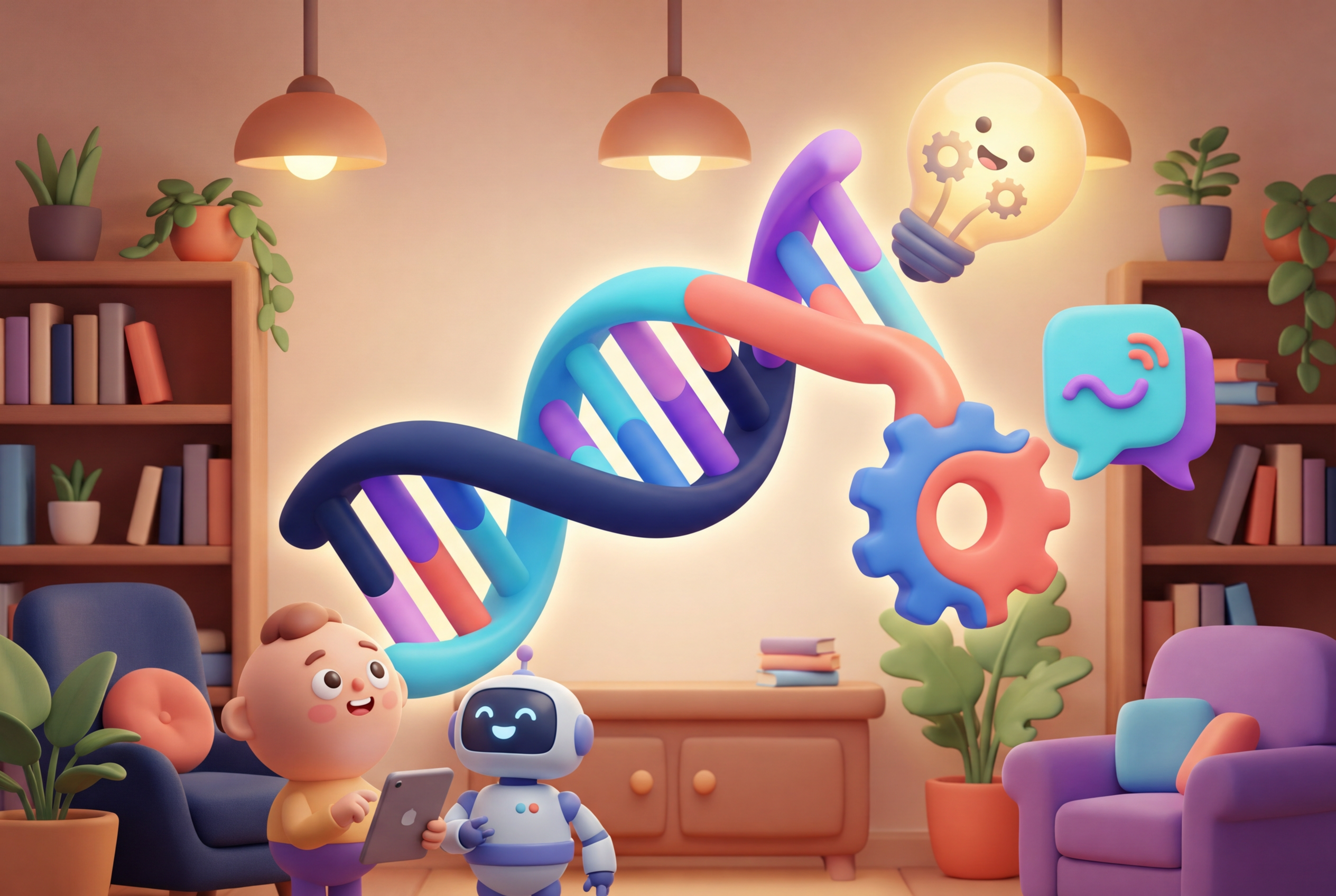
A professional learner is someone who treats the acquisition of new skills and self-awareness as a core part of their job description rather than an occasional task. Becoming a professional learner requires shifting your mindset from purely executing tasks to constantly evaluating how your natural work personality influences your ability to absorb new information. By understanding your dominant work preferences, whether you are a Pioneer or an Auditor, you can tailor your development to suit your brain's natural wiring.
Key takeaways
- Professional learning is a deliberate practice of continuous growth and self-reflection.
- Your work personality significantly impacts how you best acquire and apply new knowledge.
- Adapting your learning style to your natural preferences increases retention and engagement.
- Modern career longevity depends on the ability to unlearn and relearn at a rapid pace.
- Self-awareness is the foundation of any successful long-term development strategy.
You’ve likely felt that nagging pressure to keep up. One day you’re the expert in your field, and the next, a new methodology or tool makes your go-to process feel a bit like a relic. It’s a vulnerable place to be. We’ve all been told at some point that we need to ‘upskill’ or ‘be more agile’, but nobody actually explains how to do that without burning out or feeling like you’re constantly failing.
The problem is that most of us were taught how to learn in a rigid, one-size-fits-all environment. We carry those old habits into our careers, trying to force ourselves into a version of ‘development’ that doesn't actually fit how we work. When the learning doesn't stick, we blame our lack of discipline or intelligence. But you’re not broken. You just haven't aligned your growth with your natural work personality yet.
At Compono, we’ve spent over a decade researching how high-performing teams and individuals actually function. What we’ve found is that the most successful people aren't necessarily the ones with the highest IQ. They are the ones who have mastered the art of being a professional learner. They know how to look at a new challenge and say, ‘Given how I’m wired, what’s the best way for me to tackle this?’
To become a professional learner, you first have to stop guessing. Every person has a dominant work preference that dictates how they interact with information. If you’re a Work Personality Auditor, you likely crave precision, facts, and methodical processes. Trying to learn through a high-energy, abstract brainstorming session will probably just leave you feeling drained and frustrated.
On the flip side, someone like The Pioneer thrives on out-of-the-box ideas and experimentation. For them, a dry, detail-heavy manual is where learning goes to die. They need to get their hands dirty and try things out. Recognising these traits in yourself isn't about putting yourself in a box, it’s about finding the key to your own engagement. When you know your starting point, you can stop fighting your nature and start using it.
If you're curious what personality type you default to under stress or when faced with new information, Hey Compono can show you in about 10 minutes. It’s the first step in moving from a passive student to a professional learner who takes charge of their own trajectory.
Most professionals are ‘Doers’ by habit, even if it’s not their natural personality. We focus on the checklist, the deadline, and the immediate output. While being results-driven is great for productivity, it can be the enemy of deep learning. A professional learner knows when to step back from the 'doing' to focus on the 'understanding'. They look for the patterns behind the tasks.
Consider how The Evaluator approaches a problem. They don't just want to finish the project; they want to weigh up the options and understand the logic behind the decision. This analytical approach is a superpower for learning because it forces you to critique the information rather than just absorbing it. It turns every project into a case study for future success.
This shift requires a level of honesty that can be uncomfortable. It means admitting when a certain way of working isn't landing or when you’ve hit a blind spot. At Compono, our research into the 8 key work activities shows that teams suffer when they lack this kind of reflective insight. Being a professional learner means you’re the one who can bridge that gap, bringing a level of self-awareness that makes the whole team better.
Learning shouldn't be a frantic response to a crisis. It needs to be sustainable. If you’re The Helper, your learning might be driven by your desire to support others and improve team harmony. You’ll find you learn best when you can see the human impact of the new skill. Your growth is tied to the well-being of those around you, which is a powerful and enduring motivator.
The key is to integrate small, consistent acts of learning into your daily routine. It might be 15 minutes of reading, a debrief after a tough meeting, or using a tool to get a pulse on your team's dynamics. There is actually a way to figure out which of these patterns fits you, take a quick personality read and see what comes up. This helps you build a rhythm that feels like a natural extension of your day, not an extra burden on your plate.
Remember, professional learning isn't just about hard skills like coding or accounting. It’s about the soft stuff too, communication, conflict resolution, and emotional intelligence. These are the skills that remain relevant regardless of how much technology changes. By focusing on how you interact with others, you’re future-proofing your career in the most effective way possible.
Key insights
- A professional learner prioritises self-awareness as the primary engine for career growth.
- Effective learning is not one-size-fits-all; it must be adapted to your dominant work personality.
- Moving from a task-oriented mindset to an insight-oriented one is essential for long-term relevance.
- Sustainable learning rhythms are built on natural motivators like helping others or solving complex logic.
- Hey Compono provides the data-driven insights needed to understand and improve your learning style.
Related reading: How to understand and grow your professional self · How to make a professional pivot that actually sticks
Voice or text coaching that adapts to your personality. Start free.
Get started freeWhile lifelong learning is a general philosophy of staying curious, a professional learner applies that curiosity specifically to their career and work personality. It is a deliberate strategy to use self-awareness and personality insights to stay relevant and effective in a professional environment.
Your learning style is often a reflection of your work personality. By using the Hey Compono assessment, you can identify if you lean toward being an Auditor, a Pioneer, or any of the other eight types. This reveals whether you learn best through data, experimentation, or collaboration.
You don't need to change who you are. The goal of being a professional learner is to adapt your environment and your methods to fit your natural wiring. While you can develop new skills and habits, your core preferences remain a valuable guide for how you engage most deeply with work.
Without self-awareness, you're likely to repeat the same mistakes or struggle with the same types of information. Understanding your blind spots, such as a tendency to overlook details or a resistance to new methodologies, allows you to put systems in place that help you learn more effectively.
Teams can support each other by recognising that everyone learns differently. Using personality-adaptive coaching and sharing 'Knowing Me' worksheets helps team members understand how to communicate and collaborate in ways that build everyone's growth and development.
1 min read
Lifelong learning is the ongoing, self-motivated pursuit of knowledge for personal or professional reasons, and it is the single most useful habit...
1 min read
Using AI coaching for internal mobility means giving your team personalised guidance to discover their natural work preferences and map them to new...

1 min read
Meeting privacy requirements with an AI coaching tool means ensuring data anonymisation, securing explicit employee consent, and using platforms that...