
 Mathan Allington

How to debrief a candidate after an interview
 Mathan Allington
Learn exactly how to debrief a candidate after an interview. Get practical steps, conversation scripts and feedback techniques to protect your...
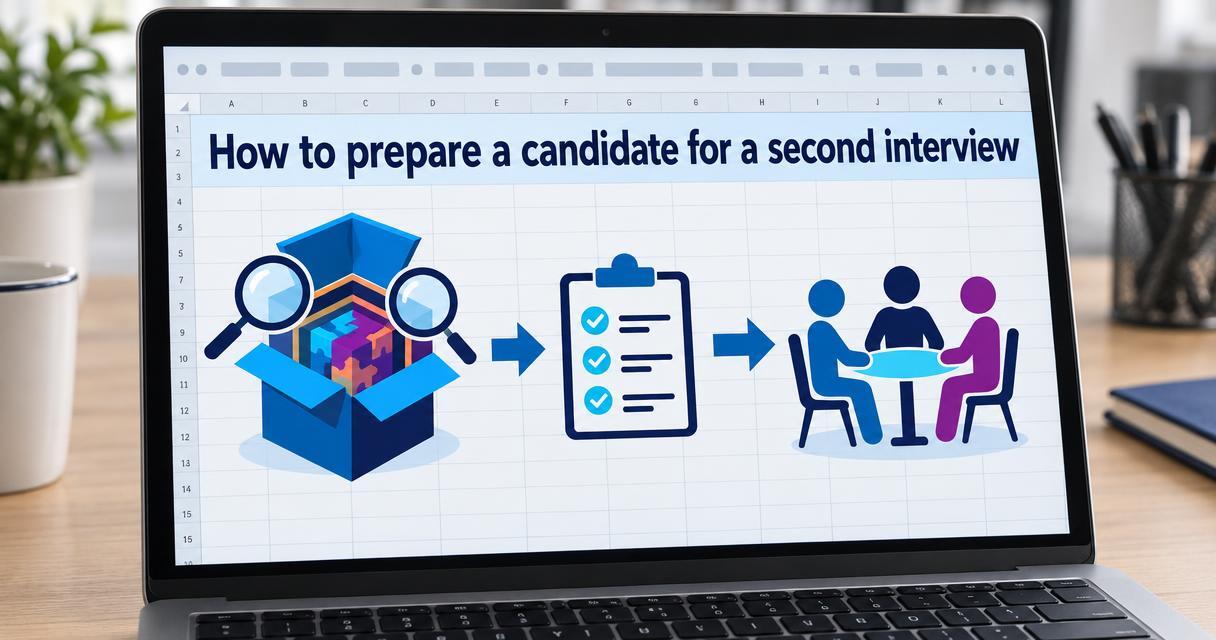
To prepare a candidate for a second interview successfully, you must shift their focus from proving they can do the job to proving how they will do the job within that specific team.
Last reviewed November 2026
Key takeaways
- The second round moves past surface-level screening to test deep competency, team fit and problem-solving under pressure.
- Recruiters must debrief the first round to identify the candidate's weakest answers and coach them to build stronger responses using fresh examples.
- Candidates need detailed intelligence on the interview panel to tailor their communication style to different stakeholders.
- Practising answers out loud is the only reliable way to close the gap between a candidate knowing their experience and communicating it clearly.
Many recruiters watch strong candidates sail through the first round only to crash in the second. The problem usually starts with preparation. A candidate who feels confident after an initial screening will often treat the next conversation as a repeat performance. They plan to tell the same stories to a new audience.
That approach rarely works. The hiring manager is no longer checking boxes on a job description. They are looking for reasons to rule people out. The questions become more specific, the scenarios become complex, and the panel is actively looking for behavioural blind spots.
Your job as a recruiter is to intervene before the candidate logs on to that second call. You need to reset their expectations and give them a structured framework for the next hurdle. By standardising interview preparation across your desk, you ensure every candidate you represent actually shows the panel their true capability.
The first interview is about baseline qualifications. The second interview is about validation and depth. The hiring team wants to know if the candidate can handle the messy reality of the role.
According to Speaking Coach, second interviews typically probe more deeply into a candidate's experience, include additional stakeholders, and may involve a task or presentation. This shift in format changes the preparation entirely. A candidate who gave a great high-level overview of their career yesterday will fail today if they cannot explain the specific steps they took to rescue a failing project.
You need to sit down with your candidate and explain this shift. They will likely face behavioural questions they have not prepared for. They might be asked to solve a problem on a whiteboard. They will definitely be expected to know much more about the company's current market challenges than they did in round one.
At Hey Compono, we see candidates consistently underprepare for the behavioural depth required at this stage. They assume their technical skills will carry them through, forgetting that the panel is now testing their communication and conflict resolution skills just as rigorously.
You cannot prepare a candidate for the future without dissecting the past. Before you look at the upcoming interview, you must debrief the first one. You need the hiring manager's feedback and the candidate's honest self-assessment.
Research from Indeed shows candidates should review the first interview, identify their weakest answer, and prepare a stronger version supported by specific evidence. Start your coaching session by asking the candidate where they felt they stumbled. Most candidates know exactly when they lost the interviewer's attention. They remember the question that made them ramble.
Once you identify those weak points, help the candidate reconstruct their answers. If they struggled to explain a gap in their resume, script out a concise two-sentence explanation and make them practise it until it sounds natural. If they failed to provide enough detail on a technical question, help them map out a better example.
You also need to review what worked well. If the hiring manager loved a specific project the candidate mentioned, tell the candidate to expect follow-up questions on that exact topic. The panel will want to dig into the mechanics of that success to ensure the candidate was actually the driver of the results, not just a passenger on a successful team.
In a second interview, the candidate is rarely speaking to just one person. They are often facing a panel of stakeholders, each with their own agenda and priorities. A technical lead wants to know if the code is clean. A project manager wants to know if the candidate hits deadlines. The head of department wants to know if they align with the broader strategy.
You must arm your candidate with interviewer intelligence. Preparation guidance from Prept suggests that before a second interview, candidates should ask the recruiter who they will meet, how long each conversation will last, and whether a case or presentation is included. Provide this information proactively.
Go beyond just handing over a list of names. Give your candidate a brief on each interviewer's background and what they care about most. As noted by Jobscalr, candidates should research the interviewers' roles and backgrounds so they can tailor examples to each person's likely priorities. If the candidate is speaking to the marketing director, they should focus their examples on customer acquisition. If they are speaking to the finance director, the same example should focus on budget efficiency and return on investment.
This is where understanding work styles provides a massive advantage. If you know the hiring manager values highly organised execution, you can advise the candidate to structure their answers meticulously. For example, a candidate with The Doer work personality will naturally want to skip straight to the results they achieved. You must coach them to slow down and explain the steps they took, satisfying the analytical members of the panel who need to understand the process.
The behavioural questions in a second round are designed to push candidates off their rehearsed scripts. The panel will ask for examples of failure, conflict, and ambiguity. They want to see how the candidate thinks on their feet.
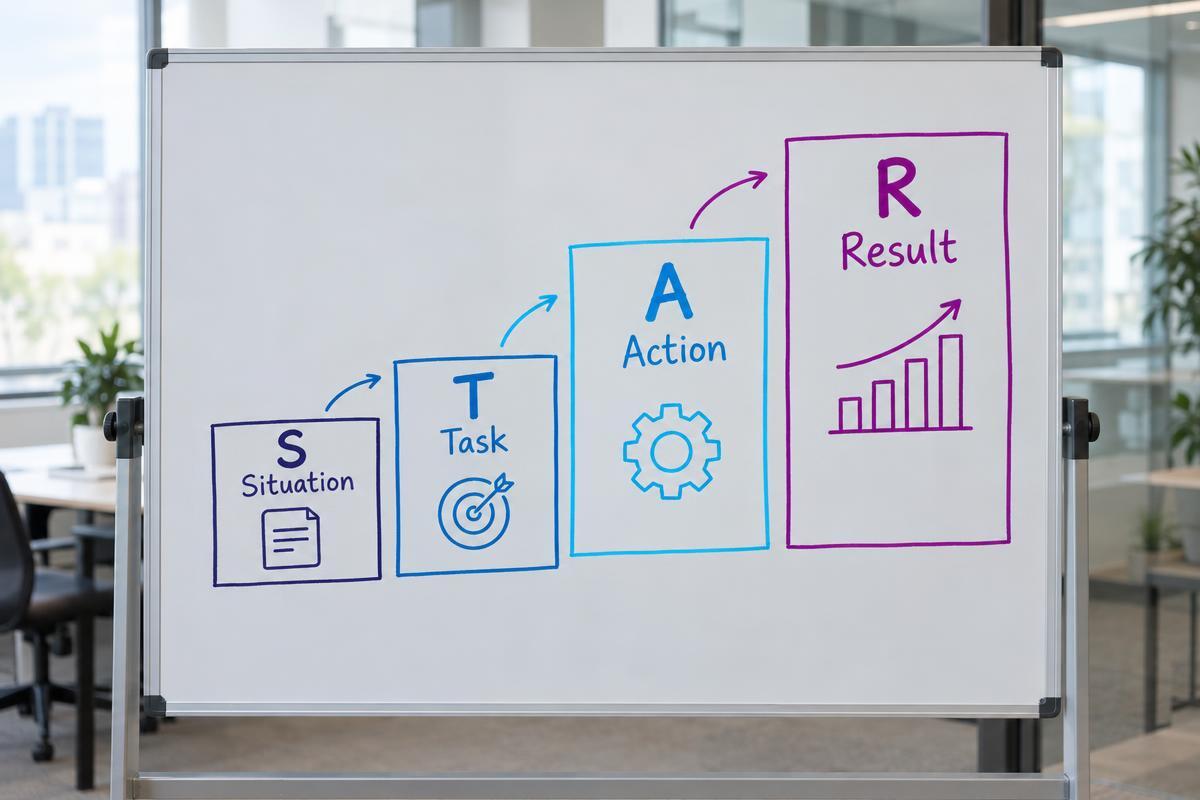
The standard framework for these questions is the STAR method. According to Resume Mate, the STAR method (Situation, Task, Action, Result) is recommended for structuring responses to behavioural questions. However, knowing the acronym is not enough. You must actively coach the candidate on how to weight their answers correctly.
| STAR Element | Common Candidate Mistake | Recruiter Coaching Fix |
|---|---|---|
| Situation | Spending three minutes setting up unnecessary background context. | Restrict context to two sentences. Name the problem and the stakes immediately. |
| Task | Explaining what the whole team was supposed to do. | Force the candidate to use "I" instead of "we". Define their specific responsibility. |
| Action | Glossing over the steps taken to fix the problem. | Expand this section. Detail the exact tools, conversations and decisions they made. |
| Result | Providing vague outcomes like "the client was happy". | Demand metrics. Ask for percentage improvements, time saved, or revenue generated. |
A critical rule for the second round is bringing fresh material to the table. As Jobscalr points out, preparation should include new examples rather than simply repeating stories used in the first interview, since second-round interviewers may test depth through follow-up questions.
Sit with the candidate and map out five distinct career stories that demonstrate different competencies. They need one story about overcoming a technical challenge, one about managing a difficult stakeholder, one about failing and recovering, one about leading a project, and one about working under tight constraints. Having these five stories prepared ensures they can adapt to almost any behavioural question the panel throws at them.
Many second interviews require the candidate to complete a take-home task, a live case study, or a presentation. This format tests actual capability rather than just interview polish.
If your candidate is delivering a presentation, coach them on structure and timing. A ten-minute presentation should never run for fifteen minutes. The panel will penalise them for failing to manage time. Tell the candidate to prepare for interruptions. The panel will ask challenging questions mid-flow to see how the candidate handles pressure.
For technical assessments or whiteboard sessions, the advice is simple: the candidate must narrate their thought process. Getting the final answer right is often less important than showing how they approach a complex problem. Tell your candidate to talk out loud as they work. If they get stuck, they should explain what they are considering and why.
You can help agency recruiters prep candidates for these moments by running a five-minute mock presentation. Listen to their introduction, check their pacing, and ask one difficult question to see how they respond. This small investment of time drastically reduces the candidate's nerves on the day.
The questions a candidate asks at the end of a second interview are evaluated just as harshly as the answers they give. Asking about working hours or standard benefits signals a lack of strategic thinking at this stage.
Advice from Resume Mate indicates candidates should prepare three to five thoughtful questions that demonstrate research into the company and the role's challenges. The candidate must show they are already thinking like an employee trying to solve business problems.
Help your candidate draft these questions. Good examples include asking the hiring manager what the biggest operational roadblock will be in the first ninety days, or asking a peer how the team handles conflicting priorities during busy periods. If the candidate is meeting the department head, they should ask how this specific role feeds into the company's long-term growth strategy.
By asking high-level questions, the candidate shifts the changing of the room. It stops feeling like an interrogation and starts feeling like a peer-to-peer business meeting. This psychological shift is often the deciding factor in securing an offer.
The final piece of preparation is managing the candidate's psychological state. Second interviews are high-stakes environments, and candidate fatigue is real. A nervous candidate will speak too quickly, fail to listen to the nuances of the questions, and default to generic answers.
Interview preparation guidance recommends practising answers aloud, conducting in-depth company research, and preparing for behavioural questions rather than merely repeating qualifications, according to Indeed. Practising aloud is the single most effective way to build confidence. Thinking about an answer is very different from articulating it clearly in real time.
Encourage your candidate to record themselves answering the three hardest questions they expect to face. Hearing their own voice helps them identify where they use filler words or lose their train of thought. Remind them that the panel invited them back because they believe the candidate can do the job. The second interview is simply their opportunity to confirm that belief.
With Hey Compono, candidates practise out loud on their own schedule. They get immediate feedback on their pacing, structure, and clarity. By the time they log on for the real interview, they have already worked through their nerves and refined their stories.
A second interview is not always the end of the road. Sometimes it serves as a bridge to a final executive sign-off. You must prepare the candidate for the reality that they might face yet another round, and they need to maintain their enthusiasm and energy.
Make sure you establish a clear post-interview protocol. Tell the candidate to call you immediately after the interview finishes, while the details are still fresh in their mind. You need to know exactly what questions were asked, how the presentation was received, and if there were any moments of friction. This debrief allows you to manage the hiring manager's expectations when you collect their feedback.
If you notice a pattern where your candidates perform well in round two but struggle to close the deal later, you may need to look at how they handle final interviews. The jump from peer-level validation to executive sign-off requires a different communication style altogether, focusing heavily on commercial outcomes and cultural alignment.
The time you invest in preparing your candidate for the second interview protects the hard work you did sourcing them in the first place. When you provide structured coaching, you stop leaving placements up to chance. You send confident, calibrated professionals into the room who know exactly how to demonstrate their value.
When you have multiple candidates moving to the next stage, coaching them all manually takes hours you do not have. The Hey Compono Recruiter Hub gives your candidates the voice-based practice they need to refine their stories and settle their nerves, allowing you to scale your preparation process without sacrificing quality.
Related reading
A second interview usually involves a deeper dive into behavioural competencies, meetings with a wider panel of stakeholders, and sometimes a practical task or presentation. The focus shifts from basic qualifications to team fit, problem-solving skills, and verifiable results.
First-round preparation focuses on the broad strokes of a candidate's resume and general industry knowledge. Second-round preparation requires deep research into specific panel members, preparing entirely new examples for behavioural questions, and developing strategic questions about the company's current challenges.
A recruiter must conduct an honest debrief to find the specific failure point. Often, candidates fail because they repeated their round-one answers, rambled under pressure, or failed to connect with the broader panel. Once the weakness is identified, the recruiter should run targeted mock interview questions focusing solely on that gap.
Yes, the STAR method is highly effective for the complex behavioural questions asked in second rounds. However, candidates must be coached to spend less time on the situation and task, and much more time detailing their specific actions and the measurable results they achieved.
Candidates should ask high-level, strategic questions that show they are thinking about the business. Good questions focus on the immediate operational challenges of the role, how success will be measured in the first six months, and how the team interacts with other departments to achieve company goals.
Learn exactly how to debrief a candidate after an interview. Get practical steps, conversation scripts and feedback techniques to protect your...

How to practise the STAR method so your interview answers stay structured, stop rambling, and show what you actually did.
Are candidate no-shows burning your client trust? Discover the root causes, communication templates, and AI prep tools to lock in candidate...
 Compono