
 Compono
Leadership coaching Adelaide: A Buyer's guide for 2026
 Mathan Allington
Searching for leadership coaching in Adelaide? Discover why modern teams are shifting from expensive traditional coaching to accessible.

If you are searching for a Rocky.ai alternative in 2026, your best choice depends entirely on whether you want to monetise your own coaching frameworks or find a tool that actually adapts to your personality.
Key takeaways
- Rocky.ai is built primarily as an enterprise and white-label platform for coaches, rather than a standalone consumer app for personal development.
- Independent coaches looking to maximise revenue share often turn to dedicated creator platforms with lower monthly fees.
- Professionals seeking genuine self-awareness are moving away from generic AI advice toward personality-adaptive coaching.
- Understanding your baseline work personality – how you handle conflict, stress, and collaboration – is the missing link in most digital coaching tools.
Finding the right digital coaching tool can feel overwhelming. You know you need something to help you or your team grow, but the market is flooded with apps making massive promises. Many professionals start their search looking for a simple way to get better at their jobs, only to find themselves staring at complex enterprise software designed for someone else entirely.
The frustration usually hits when you realise the tool you signed up for gives the exact same advice to a highly analytical data scientist as it does to a highly creative marketing director. People are different. We process information differently, we handle stress differently, and we need different types of support to thrive at work.
Before you commit to a platform, you need to understand exactly what these different AI coaching tools are built to do.
Rocky.ai has built a strong reputation in the coaching industry. It functions as a high-reasoning intelligence layer designed to drive measurable behavioural change. Coaches use it to transform their internal knowledge and proven frameworks into a dynamic digital coach.
The platform is heavily geared toward organisations and established coaching businesses. According to a 2026 industry comparison, Rocky.ai is positioned with an "enterprise/sales focus" and costs between $49 and $399 per month. It is a coaching tool for working with existing clients, with no standalone product you can sell independently.
If you run a coaching business and want a white-label app to digitise your specific methodology, this structure makes sense. If you are an individual professional or a team leader looking for immediate, personalised development insights, you might find yourself paying for enterprise features you simply do not need.

For independent coaches whose main goal is building a digital clone of themselves to generate passive income, the market offers several specific monetisation platforms. These tools focus heavily on revenue share and audience integration.
Platform fees can eat into your margins quickly if you aren't careful. For example, CoachVox runs at $99 per month plus a 10% platform fee (along with standard payment processing fees). Other platforms offer different structures, with some charging higher monthly retainers but allowing creators to keep 100% of their generated revenue.
These creator-focused alternatives are excellent if you already have a massive audience and a proven methodology you want to scale. They treat AI as a distribution channel for your existing intellectual property.
There is a massive gap in the market for people who just want to understand themselves better. Most AI coaching tools operate on a generic conversational model. You ask a question, and it scrapes the internet for a best-practice answer. We already know that different tools serve different purposes – Perplexity is for research and citations, while Claude handles creative writing.
When it comes to human behaviour, generic answers fail. If you tell a highly creative, big-picture thinker to "implement a strict time-blocking system," they will likely abandon it by Tuesday. If you tell a methodical, detail-oriented analyst to "just go with their gut," you will cause them unnecessary anxiety.
This is where Hey Compono takes a different approach. We focus on personality-adaptive coaching. Before you get advice, you need to know who is receiving it.
Our research into organisational psychology maps natural work preferences into eight distinct personalities. You might be The Evaluator, who thrives on logical risk assessment. You might be The Campaigner, who excels at persuading and inspiring others. When a coaching tool understands your baseline, the advice actually lands.
Think about the last time you received feedback at work that just felt wrong. The person delivering it probably meant well, but they were giving you advice that worked for their brain, not yours.
Digital coaching faces the exact same hurdle. If a tool doesn't understand your underlying traits, it defaults to a one-size-fits-all approach. Real growth happens when you understand your blind spots. A natural Doer needs to know they have a tendency to become overly rigid under pressure. An Advisor needs to recognise when their desire for harmony is delaying an important decision.
If you're curious what personality type you default to under stress, Hey Compono can show you in about 10 minutes. You get immediate clarity on why certain tasks drain your energy and why specific colleagues always seem to rub you the wrong way.
Your search for a coaching platform should start with a brutally honest assessment of what you are trying to achieve.
If you are an enterprise organisation wanting to build a bespoke coaching architecture based on your proprietary training manuals, an enterprise platform is your best bet. If you are an influencer wanting to monetise your audience with an AI clone, look at the creator-focused platforms with favourable revenue splits.
If you are a professional who feels misunderstood at work and wants to figure out why you do things the way you do, you need a tool built around human psychology. You need something that validates your struggles and gives you strategies adapted to your specific brain.
Understanding your natural work preferences is the foundation of any meaningful career growth. We help you map your traits so you can see exactly how you handle conflict, collaboration, and stress.
Related reading
The best alternative depends entirely on your goals. For coaches wanting to monetise their audience, platforms like CoachVox or Delphi are popular. For professionals seeking self-awareness and behavioural change, personality-adaptive tools like Hey Compono are the better fit.
Pricing varies wildly based on the target audience. Enterprise and white-label platforms typically range from $49 to $399 per month. Creator platforms often charge a monthly fee plus a percentage of your revenue. Personal development tools usually offer more accessible consumer pricing.
Personality-adaptive coaching is an approach that tailors advice and development strategies to your specific psychological traits. Instead of giving generic best-practice advice, it provides guidance based on how your brain naturally processes information and handles stress.
Yes, many teams use coaching tools to improve communication and resolve conflict. The most effective team applications involve mapping the different personalities within the group so members understand how to collaborate without unnecessary friction.
Generic advice fails because it assumes everyone operates the same way. A productivity hack that works brilliantly for a highly structured, detail-oriented person will often cause a creative, big-picture thinker to feel stifled and overwhelmed.
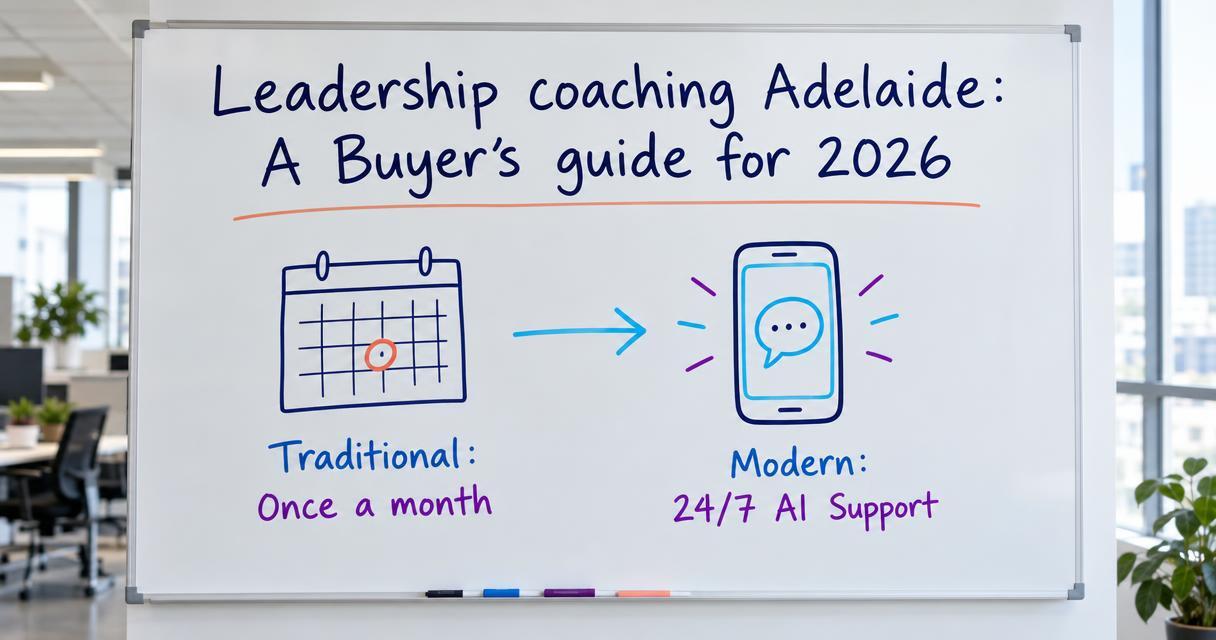
Searching for leadership coaching in Adelaide? Discover why modern teams are shifting from expensive traditional coaching to accessible.

Generic coaching gets generic results. How coaching built around personality changes the way a team communicates, argues and decides.

What AI coaching can and cannot do for psychological safety, how coaching that adapts to personality builds trust, and how to practise hard...
 Compono