
 Compono
1 min read
How to use a team personality wheel to understand your people
 Compono
A team personality wheel is a visual map that plots the natural work preferences of your employees, showing you exactly what tasks they are motivated...

To run a team personality workshop that works, move past generic labels and focus on how different work styles collaborate, communicate and handle conflict. The strongest sessions start with a validated assessment completed before the room gathers, followed by a structured discussion that maps the team's collective strengths and names the friction points.
Last reviewed July 2026.
Most team-building sessions follow a familiar, painful script. People answer a long list of abstract questions, get handed a colour or an acronym, everyone laughs about why the marketing manager is a yellow, and by Tuesday it is forgotten. The concept of personality profiling is not the problem. The way we apply it in a group is.
Run a workshop just to label people and you waste an afternoon. Run it to understand how your team actually operates, where they shine, what they avoid and why they clash, and you change how work gets done. The trick is to stay on observable work preferences rather than deep psychology.
Do not burn group time having people fill out questionnaires in the room. The real value shows up when people digest their own results privately before sharing them. People need to understand their own work personality before they can see how they fit the team.
Compono maps natural work preferences into eight types, from the detail-obsessed Auditor to the future-focused Pioneer. Read in private, people process the uncomfortable truths without getting defensive. A Coordinator can quietly admit they sometimes put process ahead of people. An Advisor can recognise a habit of over-compromising to keep the peace. To get the pre-work done, have your team complete the free work personality assessment. It takes four questions and about two minutes and gives everyone a shared baseline.
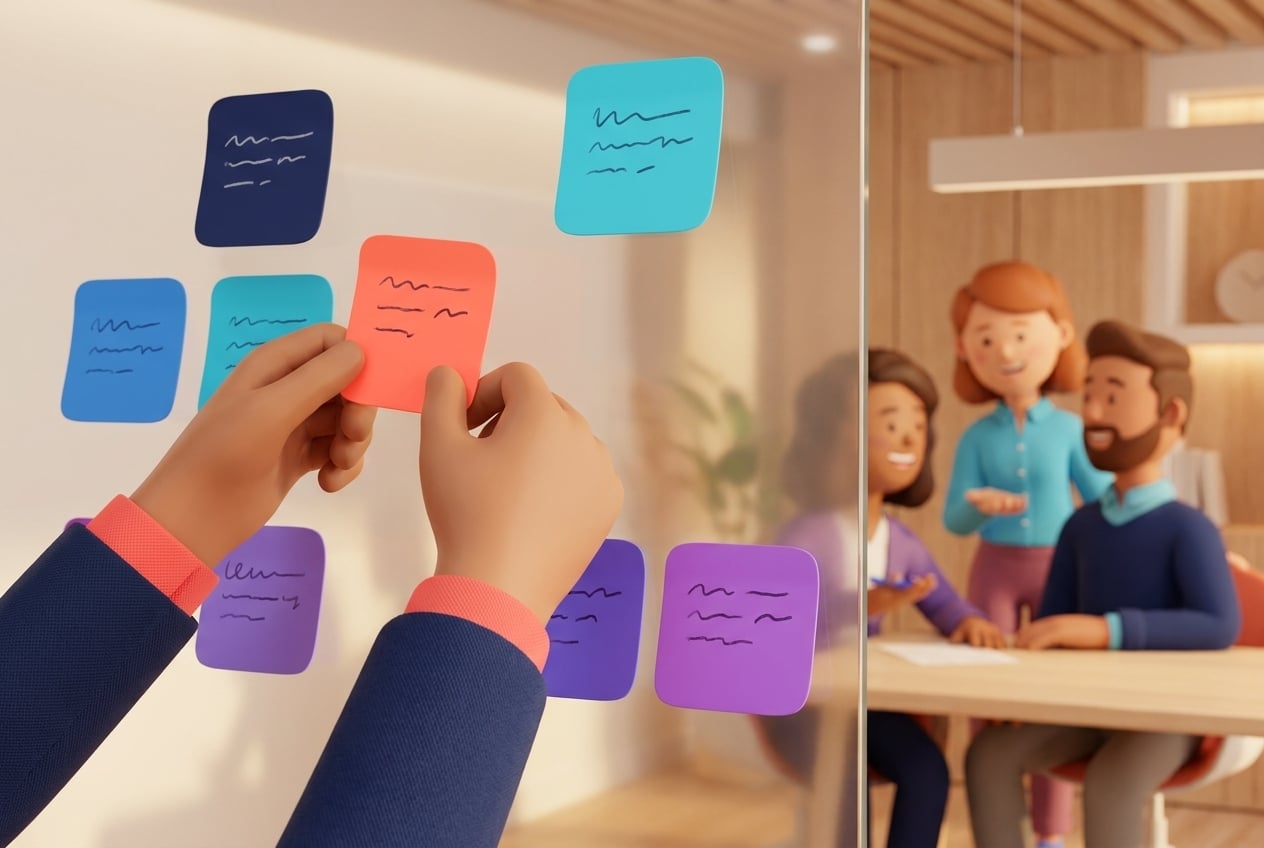
Once everyone is in the room, get them talking about how they work, not just what their label is. An open-ended discussion drifts. A simple worksheet keeps it grounded. Ask specific questions about work habits rather than vague ones about feelings.
Ask what they tend to overdo when they get busy, what other people do that irritates them, and what they look like under pressure. When a team member admits they get scattered and overwhelmed by too many ideas when stressed, it quietly gives everyone else permission to name that behaviour gently when it shows up for real.
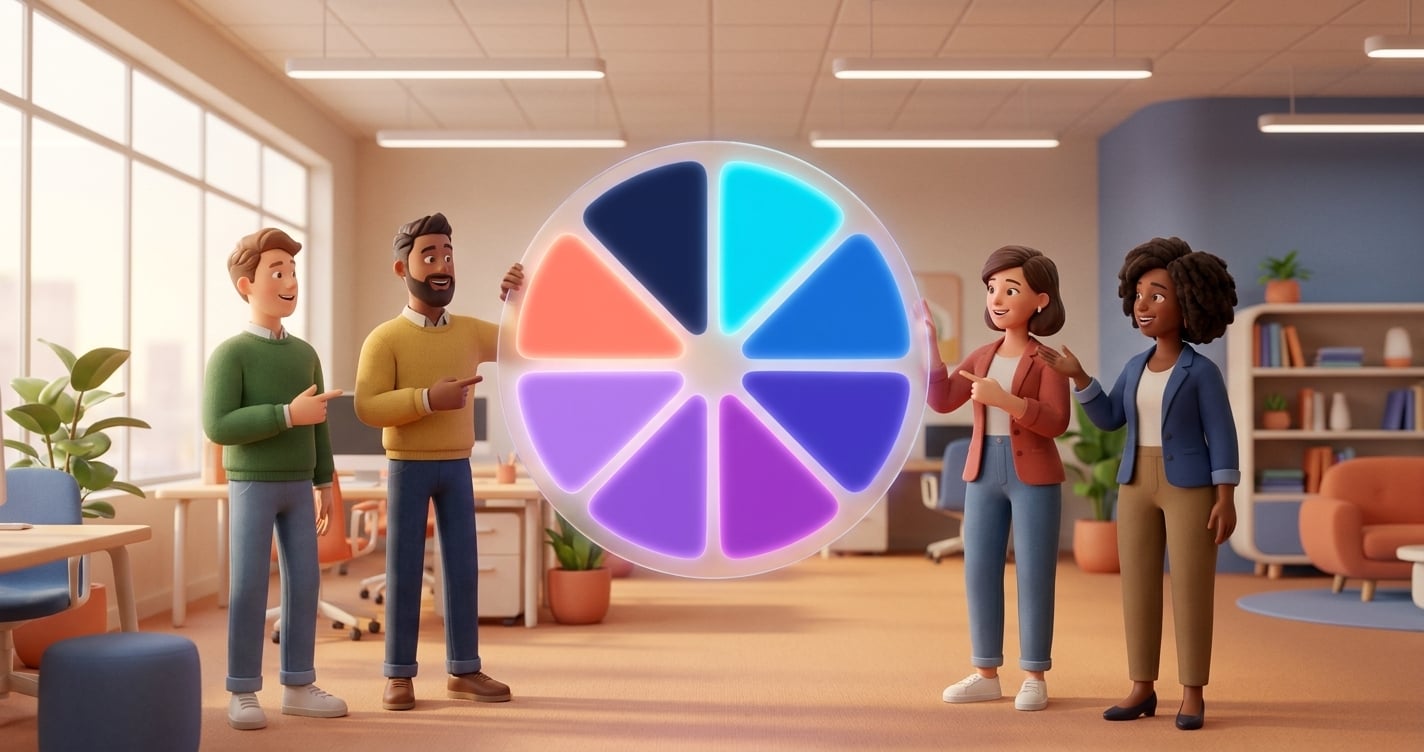
The first visual you share should be a map of the whole team. That shifts the conversation from who are you to who are we. Plotting everyone's dominant work personality on a single wheel makes the team's natural biases obvious. You might find a group packed with Campaigners and Pioneers generating endless ideas but short on the Doer needed to execute and hit deadlines.
The map takes the sting out of performance conversations. Instead of telling a group they are disorganised, you point to the wheel and show the team leans toward ideation over execution. It gives you objective language for a subjective problem, so you stop blaming individuals and start managing the gaps in your team's design.
The most valuable part of the session is not celebrating what you have in common. It is unpacking exactly how and why you get on each other's nerves. Different types handle conflict in different ways. An Evaluator argues head-on with facts and logic. A Helper avoids the confrontation and works toward harmony. When they clash, the Evaluator reads the Helper as oversensitive and the Helper reads the Evaluator as ruthless.
Put those scenarios on the whiteboard and ask the team how they will bridge the gap. If an imaginative Campaigner is paired with a structured Coordinator, agree how they handle disagreement. You might set a rule that the Campaigner brings concrete next steps for their ideas, while the Coordinator leaves room for brainstorming before enforcing deadlines.
Every workshop has someone with their arms crossed who thinks profiling is corporate nonsense. Do not try to win them over with enthusiasm. Keep it fiercely practical instead. Talk only about work behaviours, and frame the whole session around reducing friction and making their day easier. When a sceptic realises the point is stopping colleagues from sending vague emails or interrupting their focus time, they usually lean in.
A workshop only matters if it changes behaviour on Monday. Translate the insights into rules for how the team runs. A team heavy with detail-oriented Auditors might cap the time spent in the review phase to avoid analysis paralysis. A team full of Pioneers might require a named project owner before any new initiative kicks off.
Use the insights to match roles to strengths too. Stop making big-picture thinkers wrangle complex spreadsheets, and stop asking quiet, methodical people to lead the high-energy brainstorm. Many managers find that Hey Compono for teams helps sustain these changes long after the workshop, giving leaders a way to adjust their style to the person in front of them.
Related reading: Coordinator personality traits: the backbone of a team · How to use a team personality wheel to understand people
The free work personality assessment takes four questions and about two minutes, and makes ideal pre-work before any workshop.
Take the Free AssessmentA thorough session usually runs two to four hours. That gives you time to review the team map, discuss individual styles and agree practical operating rules without losing the room. Much shorter and it stays superficial.
Yes. Leaders should go first. When a manager openly shares their blind spots and how they react under pressure, it creates the safety that lets everyone else be honest about their own preferences.
Treat disagreement as a data point. Ask which parts feel inaccurate and how they see their own style. The discussion about why they disagree often reveals more about their real preferences than the result itself.
A workshop alone cannot fix deep dysfunction or weak performance management. It can give you the shared language and framework to start addressing communication breakdowns and conflict in a constructive, non-personal way.
1 min read
A team personality wheel is a visual map that plots the natural work preferences of your employees, showing you exactly what tasks they are motivated...

1 min read
An Advisor in the workplace is an empathetic, open-minded professional who naturally investigates problems by gathering input and ensuring everyone's...

1 min read
Practical help in the workplace starts with acknowledging that we all process information, stress, and collaboration differently based on our unique...