
 Compono

What to do when you have been told you are too much at work
 Compono
Been told you are too much at work? What the label usually means, which work personalities hear it most, how to flex without shrinking, and what to...

The personality types that work best together usually share core values and communication styles, while bringing complementary approaches to problem-solving and execution.
Key takeaways
- Teams click when members share a common way of processing information but differ in how they execute tasks.
- Opposite personalities often build the strongest partnerships by covering each other's natural blind spots.
- Friction usually happens when logic-focused team members clash with empathy-focused team members.
- Understanding your specific work personality helps you adapt your communication style to reduce conflict.
We have all been on teams that click instantly. We have also been on teams where every conversation feels like wading through wet cement. People often blame bad communication or a lack of culture fit when a project stalls. Usually, it is just a mismatch in work personalities.
When you put two people together who process the world differently, friction is inevitable. But friction is not always a bad thing. When managed well, the tension between different personality types actually creates better, more thoroughly tested ideas.
Understanding how different minds interact is the fastest way to turn a dysfunctional group into a high-performing team.
When we ask what personality types work well together, we are really asking what causes two people to understand each other quickly.
Research summaries on MBTI compatibility show that shared preferences, especially on the Intuition/Sensing dimension, correlate with lower conflict and easier communication. When two people process information the same way, they spend less time explaining themselves. They can simply get to work.
But having a team of identical thinkers creates massive blind spots. A personality compatibility guide notes that the best pairings often run on complementary cognitive functions rather than identical letters. Relationship success ties more strongly to communication and shared values than a perfect type match.
This is why a visionary needs a detail-checker. A big-picture thinker needs someone to anchor their ideas in reality. For example, compatibility guides often cite INFJ paired with ENFP or ENTP as incredibly strong matches. One brings structured empathy, while the other brings outward exploration. They balance each other out perfectly.
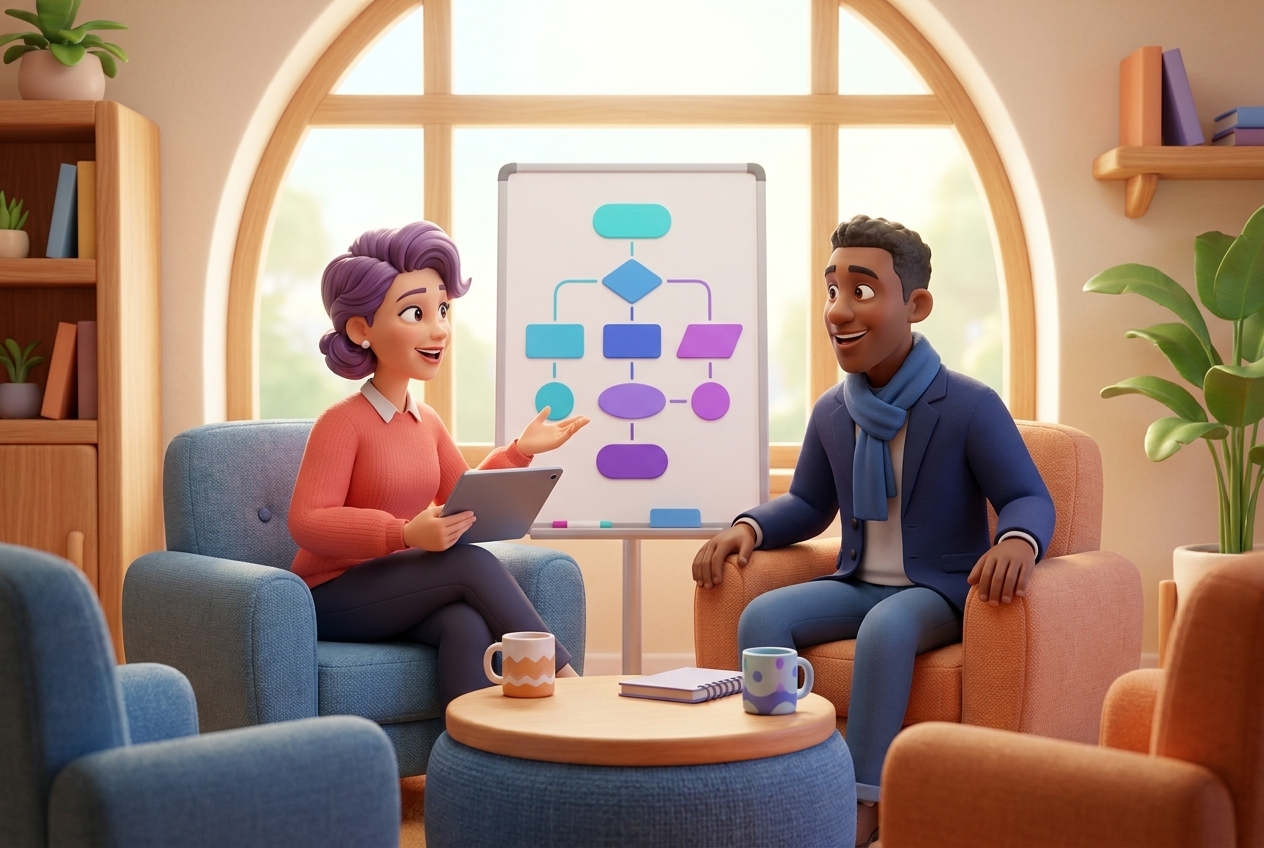
At Compono, we map work personalities across eight specific profiles. This helps teams understand exactly how they naturally behave under pressure and who they work best with.
Consider how The Campaigner works with The Doer. The Campaigner is future-focused and persuasive. They want to sell the dream and rally the team behind a big idea. The Doer is practical, task-oriented, and focused on the present moment. They just want to get the job done.
On paper, they might frustrate each other. The Campaigner feels the Doer is too rigid and lacks imagination. The Doer feels the Campaigner is all talk and no action.
When they understand their differences, they become highly effective. The Campaigner sets the vision and secures the buy-in, while the Doer builds the execution plan and ensures the project actually crosses the finish line.
Conflict happens when we expect others to think exactly like we do. We assume our way of solving a problem is the only logical approach.
MBTI guidance compiled by JobCannon shows that thinking and feeling mismatches create the most friction in relationships compared to other preference differences.
In a work context, this looks like an Evaluator clashing with a Helper. The Evaluator is objective, analytical, and focused on results. The Helper is empathetic, supportive, and focused on team harmony.
If a project is running late, the Evaluator might make a blunt, logical decision to cut a feature. The Helper will immediately worry about how the team who worked on that feature will feel. The Evaluator sees the Helper as overly sensitive. The Helper sees the Evaluator as ruthless.
You can bridge this gap with personality-adaptive coaching. The Evaluator learns to soften their delivery and explain the "why" behind their decisions. The Helper learns to separate objective business feedback from personal criticism.
You do not need a team of best friends. You need a team that understands its own mechanics and respects the value of different approaches.
If you have too many Pioneers on a team, you will generate a hundred brilliant ideas and zero finished projects. If you have too many Auditors, your quality control will be flawless, but you will never launch anything because the team will be paralysed by minor details.
The goal is mutual respect for different working styles. When a Coordinator asks a lot of questions about a new process, they are not trying to be difficult. They are just trying to build a structure that works. When an Advisor pushes back on a rigid deadline, they are trying to maintain flexibility to ensure a better outcome.
Once team members stop viewing different approaches as personal attacks, the entire dynamic shifts. Collaboration becomes a tool for covering blind spots rather than a battle of wills.
Ready to understand the exact personality mix of your team and reduce daily friction?
Related reading
Teams function best when they mix visionary thinkers with practical executors. For example, pairing a creative Pioneer with a structured Coordinator ensures ideas actually get implemented. The key is mutual respect for different approaches.
They often do, because they naturally cover each other's blind spots. A highly analytical person pairs well with a highly empathetic person, provided they share core values and communicate openly about their differences.
When two people have the exact same strengths, they often compete for the same role in a project. Two highly directive leaders might butt heads over who controls the strategy, while two detail-oriented people might get stuck over-analysing a minor problem.
You can take a dedicated work personality assessment that maps your natural preferences. Understanding whether you default to advising, doing, or evaluating helps you communicate better with your colleagues.
Absolutely. Friction usually comes from a lack of understanding rather than genuine incompatibility. Once team members understand why a colleague behaves a certain way, they can adapt their communication style to match and work together effectively.
Been told you are too much at work? What the label usually means, which work personalities hear it most, how to flex without shrinking, and what to...

A run sheet for a workshop people remember: the pre-work, building a team map, talking about real friction, and agreeing how you will work together.

Discover how personality affects communication at work. Learn to identify different communication styles and reduce friction in your team today.