
 Compono
1 min read
How to practise difficult conversations at work (without the awkwardness)
 Compono
To effectively practise difficult conversations, start by identifying your natural communication style, outline the specific outcome you want, and...
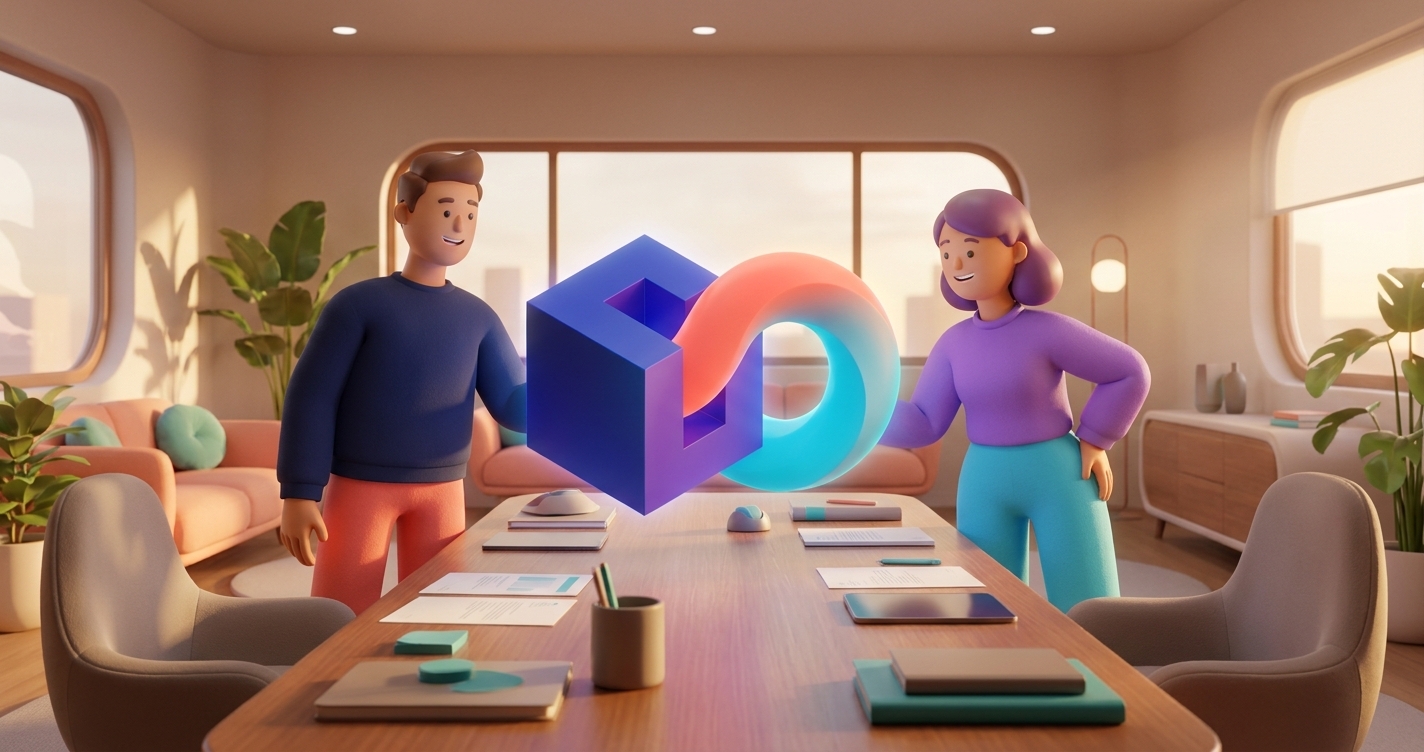
Work personality compatibility is the measure of how different individuals' natural behavioural preferences align, clash, or complement each other within a professional environment.
Key takeaways
- Compatibility at work is about complementing strengths rather than finding people with identical traits.
- Understanding natural work preferences helps teams predict friction points before they escalate into conflict.
- Contrasting personalities often produce the best outcomes when they learn how to communicate across their differences.
- Leaders who adapt their management style to fit their team's personalities see higher engagement and lower burnout.
You have probably worked with someone who drove you up the wall. They might have needed endless details before making a decision, while you just wanted to get moving. Perhaps they wanted to brainstorm for hours, while you needed a structured plan with clear deadlines. These moments of frustration rarely stem from incompetence or malice. They are usually the direct result of mismatched work personalities.
When we talk about compatibility in the workplace, we often confuse it with similarity. We assume that getting along means thinking the same way. The reality is much more complex. A team of identical thinkers might experience very little conflict, but they will also share the exact same blind spots. True compatibility is about understanding how different brains process information, handle stress, and approach tasks.
The modern workplace is full of these structural mismatches. For example, research from Truity reports that about 50% of the workforce is introverted, while 96% of leaders identify as extroverts. That kind of baseline imbalance creates immediate friction if teams do not have a framework for understanding each other. When you understand the mechanics of work personality compatibility, you stop seeing different approaches as roadblocks and start seeing them as necessary counterweights.
Organisational psychologists have spent decades studying how people fit into their work environments. The data shows that compatibility matters just as much as raw skill. A major meta-analysis of 172 studies and 836 effect sizes found that person-environment fit has a stronger effect on attitudes like satisfaction and commitment than on actual behaviour. The research noted that this kind of fit is tied more closely to organisational citizenship behaviour than to basic task performance.
When people feel their natural working style aligns with their environment and colleagues, they are more likely to go above and beyond their basic job description. They help others, contribute to the culture, and stay with the organisation longer. The same review reported that needs-supplies fit had the strongest impact on attitudes among the main fit types.
This means employees need their environment to supply the specific conditions their personality requires to thrive. A highly structured person needs clear expectations. A highly creative person needs room to experiment. When those needs are met, compatibility increases naturally.

It is tempting to hire people who think exactly like you. It feels comfortable. Communication is effortless because you share the same assumptions. A 2026 piece from Psychology Today states that personality similarity at work affects both performance and well-being. The research notes that sometimes similarity works best, while in other cases opposites can complement each other.
If you put five highly dominant, big-picture thinkers in a room, you will get incredible ideas. You will also get a lot of arguments over who is in charge, and absolutely nothing will actually get built. You need someone to audit the ideas, someone to build the project plan, and someone to execute the tasks.
Compatibility is about building an ecosystem. You need the visionary to push boundaries, the auditor to catch the fatal flaws, the doer to grind through the execution, and the helper to ensure the team does not burn out in the process. Friction between these types is not a sign of failure. It is a sign that the ecosystem is functioning correctly, provided the team knows how to manage that friction.
If you are curious about what your own default style looks like under pressure, Hey Compono can show you in about 10 minutes.
To navigate work personality compatibility, you need a language to describe the different approaches people take. At Compono, we map natural work preferences across eight distinct types. Each type brings specific strengths to a team and has specific needs for compatibility.
The Campaigner
brings energy and enthusiasm. They are big-picture thinkers who excel at persuading others and selling a vision. They need variety and excitement. They clash with people who enforce rigid routines or dismiss their ideas without exploring them.
The Evaluator
is logical, critical, and realistic. They make decisions based on data and objective risk assessment. They need clear goals and measurable outcomes. They experience friction with people who make decisions based purely on emotion or who delay action.
The Coordinator thrives on structure. They set priorities, implement targets, and enforce deadlines. They need order and efficiency. They struggle to work with people who change plans spontaneously or ignore established procedures.
The Doer is practical and hands-on. They focus on immediate tasks and getting things done efficiently. They need clear instructions and stability. They get frustrated by vague directions or endless brainstorming sessions that do not result in action.
The Auditor is thorough, accurate, and exacting. They focus on minute details and prefer to work methodically. They need time for review and structured guidelines. They clash with people who rush tasks or ignore quality standards.
The Helper is empathetic and supportive. They focus on team harmony and ensuring everyone feels valued. They need a collaborative environment. They struggle with aggressive conflict or people who prioritise tasks over human well-being.
The Advisor is flexible and open-minded. They seek compromise and want to ensure all voices are heard before making a decision. They need room to explore options. They experience friction with people who enforce strict rules or rush decisions.
The Pioneer is imaginative and spontaneous. They want to innovate and do things differently. They need autonomy and freedom. They struggle to work with people who demand rigid schedules or insist on doing things the way they have always been done.
The real test of work personality compatibility happens when contrasting styles have to deliver a project together. Understanding the natural friction points allows you to adjust your communication style and find common ground. Here is how some of the most contrasting personalities can find compatibility.
This pairing pits future-oriented vision against logical, results-driven analysis. The Campaigner wants to explore possibilities and generate excitement. The Evaluator wants to see the data and understand the risks. Left unmanaged, the Campaigner will feel stifled by the Evaluator's criticism, while the Evaluator will view the Campaigner as unrealistic.
To build compatibility, the Campaigner needs to back up their creative ideas with data-driven examples. They need to provide specific, actionable steps for implementation. The Evaluator needs to acknowledge the potential benefits of long-term ideas before dissecting them. By saying "let us see how this fits with our current strategy" instead of immediately listing flaws, the Evaluator keeps the Campaigner engaged while still satisfying their own need for logic.
The Coordinator wants structure, deadlines, and clear processes. The Pioneer wants freedom, spontaneity, and room to experiment. This is a classic clash between order and chaos. The Coordinator will feel anxious about the Pioneer's lack of planning, while the Pioneer will feel trapped by the Coordinator's rules.
Compatibility here requires a compromise on timing. The Coordinator must allow room for creative brainstorming before enforcing any structure. They can offer organisational support by saying "after we brainstorm, I can help set up the milestones." The Pioneer must commit to practical outcomes and respect the deadlines once they are set. They need to accept that structure is what turns their ideas into reality.
Both of these personalities are practical and focused on the work, but their pacing is entirely different. The Doer wants to take action immediately and get the task finished. The Auditor wants to slow down, check every detail, and ensure absolute accuracy. The Doer will feel dragged down by the Auditor's methodical pace, while the Auditor will feel panicked by the Doer's speed.
To work well together, the Doer needs to respect the Auditor's thoroughness. They must build time into the schedule for quality control. The Auditor needs to engage earlier in the process rather than waiting until the end to point out errors. If they provide feedback in stages, the Doer can maintain their momentum without sacrificing accuracy.
This pairing rarely results in loud arguments, but it can lead to complete stagnation. Both personalities seek harmony and want to avoid conflict. The Helper focuses on how everyone is feeling, while the Advisor focuses on keeping options open to accommodate everyone. Together, they can spend weeks discussing a problem without ever making a decision.
Compatibility for this duo means getting comfortable with firm boundaries. The Helper needs to practice being assertive and stating their needs clearly, rather than just accommodating others. The Advisor needs to take responsibility for driving the decision forward by setting firm timelines. They have to accept that making a choice might cause temporary discomfort, but it is necessary for progress.
While one-on-one compatibility is important, leaders must also consider how the entire team functions as a unit. Research summarized by iResearchNet shows that person-team fit is linked to collaboration and team performance, with reported effect sizes around r = .30 to .50. When the team dynamic works, the output is significantly higher than the sum of its parts.
Building team compatibility starts with mapping out the dominant personalities currently in the group. If your team is entirely made up of Doers and Coordinators, you will hit every deadline with ruthless efficiency, but you will likely struggle to innovate or adapt when the market changes. You need to intentionally bring in a Pioneer or a Campaigner to disrupt the status quo, even if it causes temporary friction.
There is actually a way to figure out which of these patterns fits you and your colleagues. You can explore the work personality framework to see how these dynamics play out in real time.
Leaders play a massive role in facilitating this team-wide compatibility. A leader's natural style will inevitably clash with some members of their team. A highly directive leader who demands strict adherence to process will alienate the Pioneers on their team. A highly democratic leader who wants consensus on every issue will frustrate the Evaluators who just want a decision made.
Effective leaders do not force the team to adapt to them. They adapt their style to fit the situation and the personalities involved. They use directive leadership when the Doers need clear instructions in a crisis. They use democratic leadership when the Campaigners and Advisors need to collaborate on a new strategy. They use non-directive leadership when the Auditors and Pioneers need autonomy to execute their specific expertise.
When you invest the time to understand and improve work personality compatibility, the benefits extend far beyond just having fewer arguments in meetings. It changes the entire trajectory of a person's career experience.
When people do not have to spend all their energy masking their natural preferences or fighting against a culture that does not understand them, they have more capacity for actual work. They experience less stress and higher job satisfaction. They form deeper trust with their colleagues because they know their differences are respected rather than judged.
Compatibility is not a static state you achieve and then forget about. It is an ongoing practice of observation, adjustment, and communication. It requires setting aside your ego and accepting that your way of working is just one option among many. When teams embrace this reality, they stop wasting time trying to change each other and start focusing on how to build something great together.
Understanding the natural working styles within your organisation is the first step to reducing friction and improving team performance. When you map these preferences clearly, you can build teams that complement each other rather than clash.
Related reading
It is how different individuals' natural behavioural preferences and working styles interact in a professional setting. It measures how well people can communicate, collaborate, and resolve conflict based on their underlying personality traits.
Yes, contrasting personalities often make the strongest teams. A visionary needs someone detail-oriented to execute their ideas. The key is understanding each other's communication styles and respecting the different approaches rather than trying to force everyone to work the same way.
You manage it by addressing the underlying need rather than the surface behaviour. If a detail-oriented person is slowing down a project, they do not need to be told to hurry up. They need reassurance that quality standards will be met. Adjusting your communication to speak to their core preference resolves the friction.
Immediate clashes usually happen when two people have opposing needs for pacing or structure. A highly spontaneous person will instantly frustrate someone who requires rigid planning. Without a framework to understand these differences, both parties will assume the other is just being difficult.
Leaders improve compatibility by mapping the personalities on their team, identifying the gaps, and adapting their own management style to fit different individuals. They create psychological safety so team members can express their working needs without fear of judgment.

1 min read
To effectively practise difficult conversations, start by identifying your natural communication style, outline the specific outcome you want, and...
1 min read
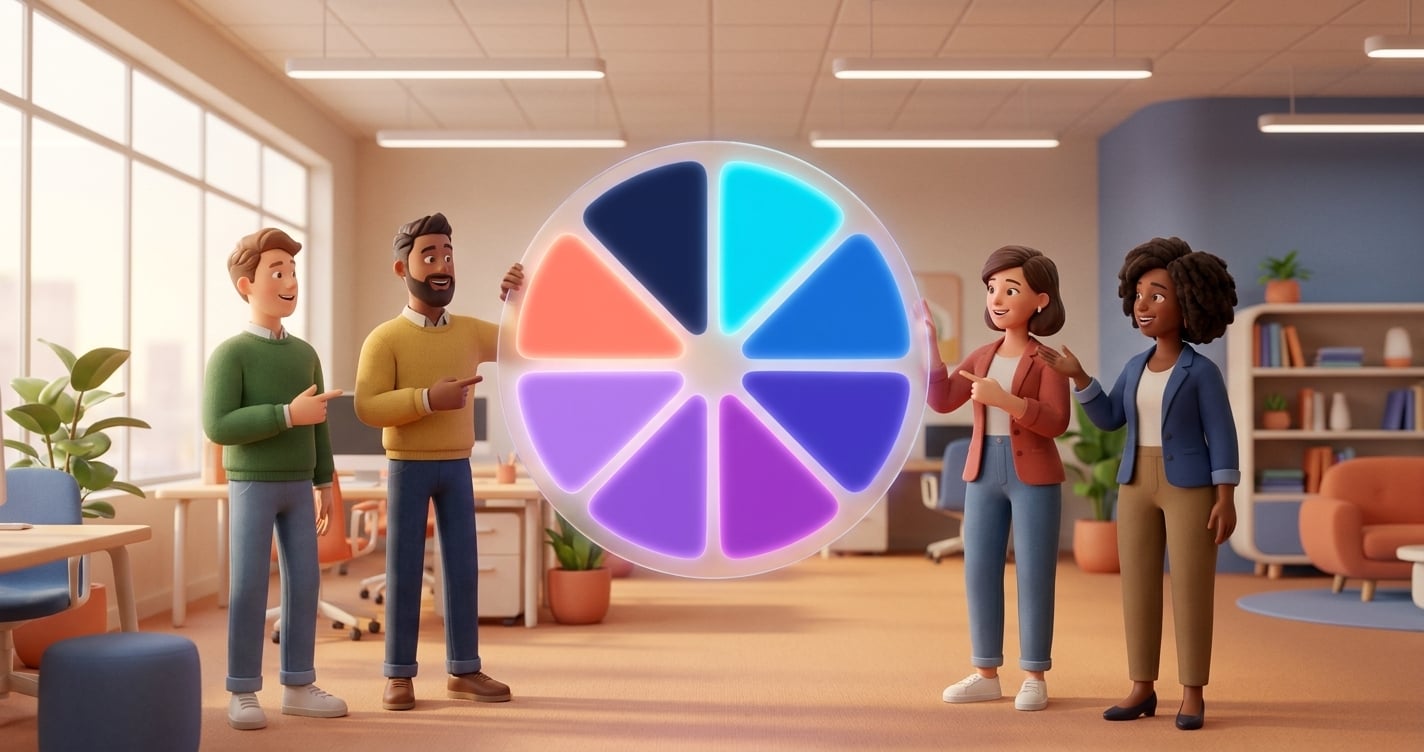
A team personality wheel is a visual map that plots the natural work preferences of your employees, showing you exactly what tasks they are motivated...

1 min read
A workplace coaching platform is a digital tool that helps teams understand their unique work personalities, improve communication, and resolve...