
 Mathan Allington

How to adapt to your manager's work style: a tactical guide
 Mathan Allington
To adapt to your manager's work style without burning out. Get tactical communication scripts, boundary-setting strategies and practical team advice.

An advisory leadership style is a flexible, hands-off approach where a leader helps their team to make decisions while offering expert guidance only when required.
Last reviewed November 2026
Key takeaways
- Advisory leaders blend non-directive autonomy with occasional guidance to help their teams solve problems independently.
- This approach works best with highly skilled teams that require minimal supervision and thrive on trust.
- Unlike autocratic or purely consultative leaders, an advisory leader gives the team the final say on most operational decisions.
- The best advisory leaders remain flexible and change their approach based on the specific situation and the needs of their team.
- You can shift to this style by stepping back from daily details, building feedback channels, and asking questions instead of giving immediate answers.
Modern managers face a constant pull between staying in control and letting their teams run. When you step into a leadership role, the instinct is often to keep your hands on the wheel. You want to make sure the work is done right. You want to protect your team from mistakes. But holding on too tightly creates a bottleneck, and your team quickly learns to wait for your permission before they act.
Traditional command and control is breaking down in modern workplaces. A recent report highlights that in the United States, only 16 percent of employees said their organisation's leadership communicated effectively in August 2025, according to a Gallup survey. The same research noted that just 20 percent of employees strongly agreed they trusted their leadership.
When people do not trust their leaders, they stop sharing ideas. They wait for instructions. If you want a team that thinks critically and acts independently, you need a different approach. You need to transition from the person who dictates every move to the person who advises the experts.
The advisory leadership style sits at the intersection of democratic and non-directive management. It relies heavily on giving people the space to operate while making sure they have access to your experience when they face a roadblock.
Non-directive leadership takes a hands-off approach. It provides teams with autonomy and trusts them to make their own decisions. Leaders using this style focus on giving their team capacity, offering guidance only when necessary. This leadership style is effective in environments that rely on innovation, where highly skilled teams require minimal supervision and are trusted to manage themselves.
An advisory leader does not abandon their team to figure everything out alone. Instead, they act as a sounding board. When an employee brings a complex problem to an advisory leader, the leader asks questions that help the employee find the solution, rather than simply supplying the answer. This builds the employee's critical thinking skills and prepares them for future challenges.

It is easy to confuse an advisory approach with other leadership styles. They all involve communication, but the flow of authority looks very different in practice.
| Leadership style | Decision making | Role of the leader | Best used for |
|---|---|---|---|
| Advisory | Team makes most decisions | Acts as an expert guide and sounding board | Highly skilled, autonomous teams |
| Consultative | Leader makes the final call | Gathers team input before deciding | Complex problems requiring diverse viewpoints |
| Autocratic | Leader makes all decisions | Gives clear, direct instructions | Crisis situations or highly regulated tasks |
| Servant | Shared decision making | Removes obstacles and focuses on team growth | Long-term cultural transformation |
A consultative leader will ask the team for their opinions, gather all the data, and then make the final decision themselves. An advisory leader goes a step further. They present the context, offer their advice, and then trust the team to make the call. The team owns the outcome.
At Compono, our research shows that individuals have natural or preferred leadership styles that align with their personality types. The advisory approach comes most naturally to The Advisor work personality. People with this profile are naturally inclined to observe, synthesize information, and guide others without needing to control every detail.
Advisors are flexible by nature. They adapt their leadership based on the context, sometimes being collaborative and inclusive, and other times providing autonomy with occasional guidance. They understand that different situations require different responses. An effective leader is flexible and changes their approach based on the situation.
However, you do not need to be a natural Advisor to use this style. Any leader can learn to step back and act as a guide. The challenge for leaders who naturally prefer a highly structured, directive approach is learning to tolerate ambiguity. They may struggle when adapting to changing situations that require flexible problem solving, but they can build this muscle over time.
When you get advisory leadership right, the results are clear. Teams with high autonomy work faster because they do not have to wait for management approval on every minor detail. They also feel more invested in the outcomes of their work.
Workplaces that focus on people see a massive difference in morale. According to an Engage for Success report, where leaders actively prioritise people issues, engagement reached 77 percent. Where neither leaders nor managers do, engagement fell to 45 percent. An advisory style directly supports this by showing employees that their input holds real weight.
The biggest risk of the advisory style is falling into the consensus trap. When a leader acts as an advisor, teams can sometimes assume that everyone must agree before action is taken. This grinds progress to a halt. A Deloitte insights report advises leaders to consider input from multiple stakeholders while avoiding consensus at all costs, balancing inclusivity with decisiveness.
An advisory leader must make it clear that while they are there to offer guidance, someone specific still owns the final decision. Autonomy is not the same thing as a democracy where every choice requires a vote.
Shifting from a directive manager to an advisory leader takes deliberate practice. You have to unlearn the habit of fixing things the moment they break. Here are the practical steps to make that shift.
An advisory style does not mean you abandon your team. It means you set clear boundaries and let them run freely within those lines. Building autonomy in teams requires you to define the goal and the budget, and then let the team figure out the method. If they know the limits of their authority, they will feel safe making decisions without asking for permission.
Your team cannot seek your advice or share their challenges if they do not have safe ways to communicate. The same Engage for Success report found that employees with access to five or more voice channels had an average engagement score of 68 percent, compared with 57 percent among employees with only one or two channels.
Voice channels include regular one-on-one meetings, anonymous feedback tools, team retrospectives, and open office hours. The more avenues you provide for communication, the easier it becomes to offer targeted, relevant advice.
When an employee comes to you with a problem, your first instinct is likely to tell them how to fix it. This is fast, but it creates dependency. The next time this happens, pause. Ask them, "What do you think our best option is here?"
By asking questions, you force them to engage their own problem-solving skills. Over time, they will start anticipating your questions and coming to you with solutions already prepared. This is the core of effective team leadership in a modern business.
The advisory style is highly effective, but it is not appropriate for every situation. If there is a sudden crisis, a safety risk, or a brand new employee who does not know the basics of their role, you need to be directive. Good leadership means reading the room. Provide clear instructions when the house is on fire, and offer advisory guidance when the team is planning how to rebuild it.
Learning to step back and advise your team instead of controlling their work is a major transition. It requires high self-awareness and the ability to adapt your communication style to different people. Hey Compono provides personality-adaptive coaching that helps you understand your natural management defaults and shows you exactly how to adjust your approach for the people you lead.
Related reading
No. Laissez-faire leadership is entirely hands-off and often lacks structure or support, leaving teams completely to their own devices. An advisory leader remains highly engaged. They actively monitor progress and are always available to offer expert guidance, coaching, and feedback, even though they leave the final operational decisions to the team.
Yes, though it requires discipline. New managers often feel pressure to prove their worth by solving every problem and making every decision. Using an advisory style from the start helps new managers build trust early, as it shows their team they value their expertise. It is often easiest to start by using an advisory approach for small, low-risk projects.
Mistakes will happen. When they do, an advisory leader treats the failure as a learning opportunity rather than a reason to issue punishment. The leader helps the team analyse what went wrong and how to fix it. However, if a team consistently makes poor decisions, the leader must temporarily switch to a more directive style to steady the ship and rebuild capability.
An advisory leader addresses performance issues through direct coaching and feedback. They ask the employee what barriers are preventing them from succeeding and offer specific advice to help them improve. While the style is supportive, it still requires the leader to hold the employee accountable to the agreed standards and goals.
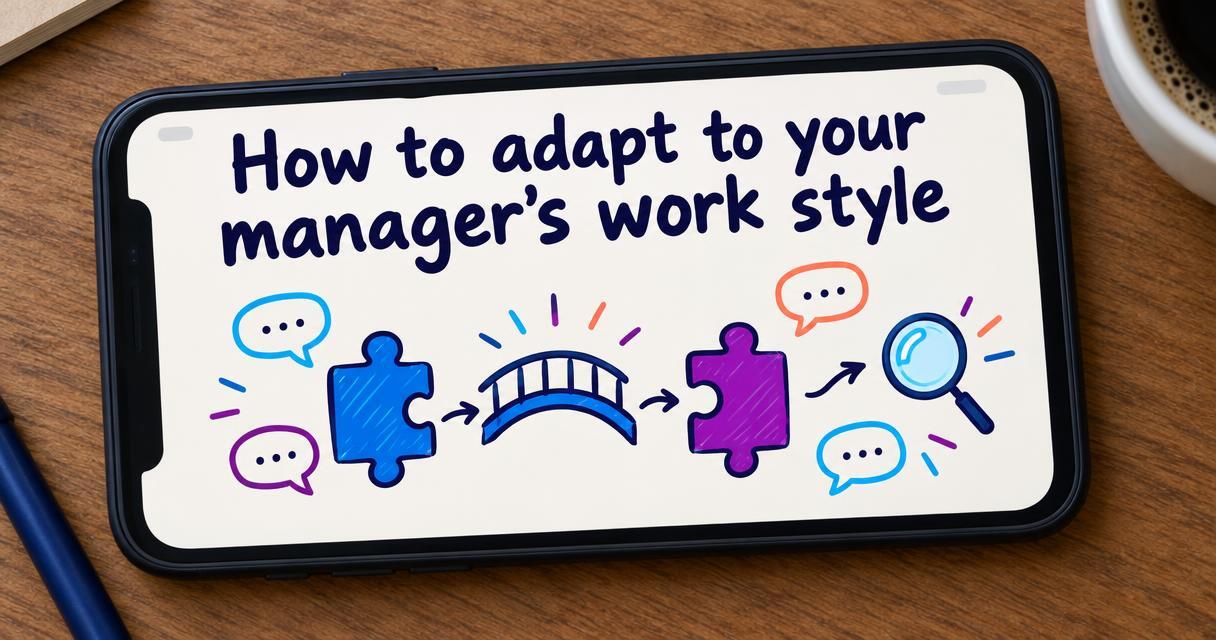
To adapt to your manager's work style without burning out. Get tactical communication scripts, boundary-setting strategies and practical team advice.

Discover why mapping your team's unique work personalities is better than Claude for getting leadership advice that actually works in the real world.

How modern team personality insights software turns static tests into daily tools for better communication and conflict resolution. Get started today.
 Compono