
 Compono
1 min read
Why an AI coaching platform for team leads changes everything
 Compono
An AI coaching platform for team leads provides on-demand, personality-specific guidance to help managers manage difficult conversations and resolve...

What does AI coaching look like for team leads? It looks like having an experienced organisational psychologist in your pocket, ready to offer personality-specific advice exactly when a difficult management challenge arises.
Key takeaways
- AI coaching provides immediate, context-specific guidance for team leads facing unpredictable management challenges.
- Modern platforms adapt their advice to both the leader's natural work personality and the specific traits of their team members.
- Instead of generic leadership theory, AI tools offer practical scripts and steps based on your actual team dynamics.
- Using personality-adaptive coaching helps managers avoid the friction that comes from managing everyone the exact same way.
- Team leads can map out potential conflicts and communication gaps before they derail a project.
You were great at your job. You hit your targets, solved problems, and proved your competence. So they made you a manager.
Suddenly, your actual job is dealing with people. And people are complicated. You might have been told you are "too blunt" when giving feedback, or perhaps "too accommodating" when deadlines are missed. You are caught in the middle-management squeeze, buffering the demands of upper management while trying to keep your team engaged and productive.
Generic leadership training usually happens in a boardroom once a year. It gives you broad theories about active listening and fit. That theory completely falls apart when Dave from accounting is furious about a project change at 3 PM on a Tuesday. You need practical help right then and there.
Being a team lead is often the most stressful position in an organisation. You have high accountability but limited authority. You are expected to be a mentor, a taskmaster, a strategist, and an amateur therapist all at once.
Traditional executive coaching is expensive. It is usually reserved for the C-suite. Even if you get access to a coach, you have to wait two weeks for your scheduled session to discuss a conflict that is happening right now. By the time the meeting rolls around, the damage is already done or the situation has mutated into something worse.
This is exactly what does AI coaching look like for team leads in practice, it bridges the gap between needing advice and getting it. It provides on-demand support that fits into the chaotic reality of your daily workflow. When you are staring at a blank email draft, trying to figure out how to tell a sensitive employee their work missed the mark, an AI coach can help you structure that message based on how they process information.
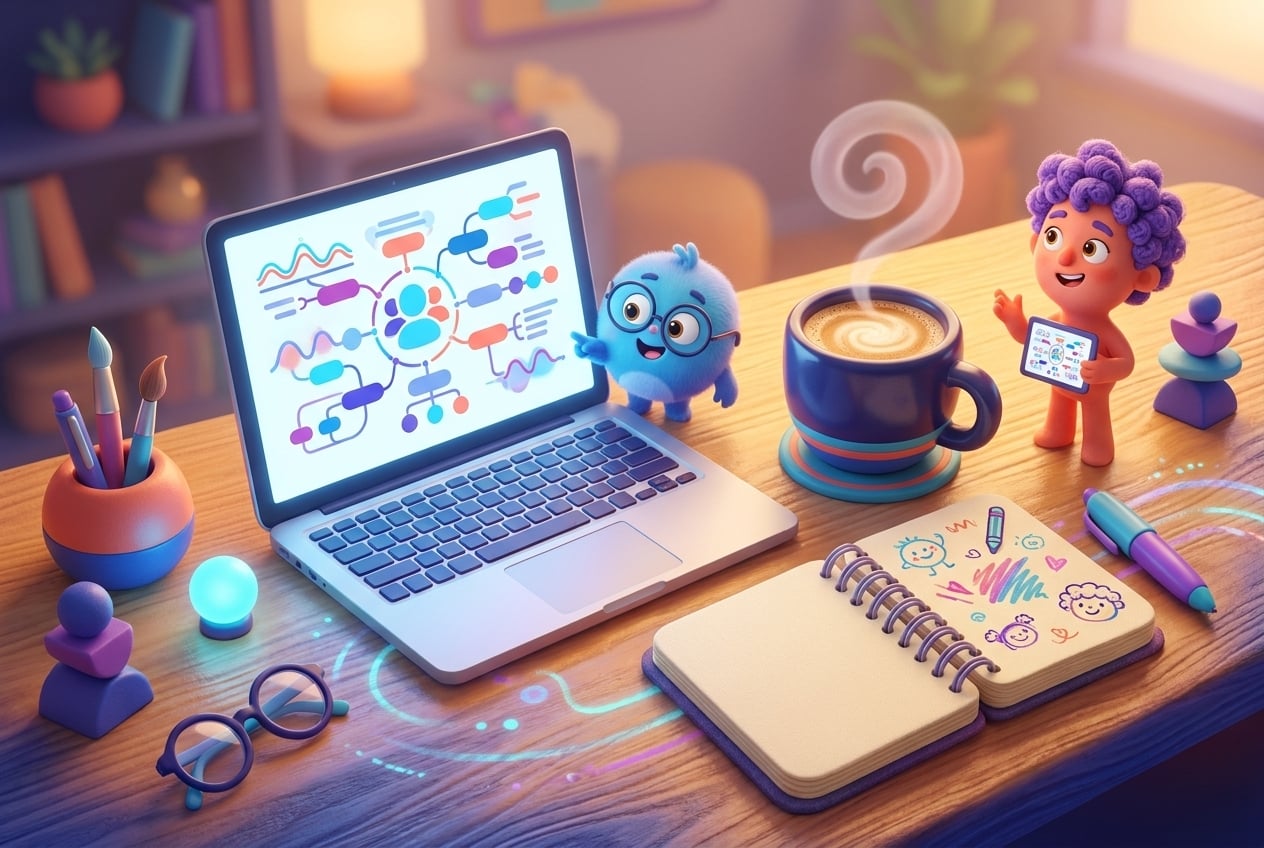
Most management advice assumes everyone thinks the same way. It assumes there is one correct way to run a one-on-one meeting or deliver a performance review. The truth is that your leadership style is heavily influenced by your natural personality.
At Compono, we have spent over a decade researching organisational psychology and high-performing teams. That research shows that people have distinct work personalities. Some people need strict rules and clear boundaries. Others need freedom and creative control. If you manage an analytical person with vague, big-picture ideas, they will become frustrated. If you manage a creative person with a rigid spreadsheet, they will disengage.
If you're curious what personality type you default to under stress, Hey Compono can show you in about 10 minutes.
AI coaching takes these personality differences into account. It does not just tell you what to do. It tells you how to do it based on your specific personality and the personality of the person you are managing. It translates your natural communication style into a language your team member actually understands.
To understand what AI coaching looks like for team leads, you have to look at the people you are leading. Our research identifies eight key work personalities. Each one requires a completely different management approach.
The Doer is practical and task-oriented. They want clear, concrete tasks and hate vague instructions. If you are managing a Doer, AI coaching will remind you to skip the long vision-setting meetings and just give them a checklist with deadlines.
The Auditor is reserved, methodical, and detail-oriented. They need time to process information and despise being rushed into decisions. A coaching prompt might suggest sending an Auditor the meeting agenda 24 hours in advance so they have time to prepare their thoughts.
The Coordinator thrives on structure and efficiency. They are the backbone of any organised project. If you change plans on them at the last minute without a logical reason, they will push back hard.
The Evaluator is logical, direct, and objective. They care about data and results. When giving feedback to an Evaluator, an AI coach will advise you to leave emotions out of it and focus purely on the metrics.
The Pioneer is imaginative and future-focused. They love brainstorming and hate routine. Managing a Pioneer requires giving them the freedom to explore ideas without micromanaging their daily schedule.
The Campaigner is enthusiastic and persuasive. They are great at rallying the team but can sometimes drop the ball on follow-through. AI coaching helps you use their energy while building structures to keep them accountable.
The Advisor is flexible, open-minded, and collaborative. They want to hear everyone's opinion before moving forward. You might need coaching on how to help an Advisor finally make a decision when they are stuck in analysis paralysis.
The Helper is empathetic and harmony-seeking. They care deeply about team morale and will avoid conflict at all costs. When managing a Helper, you need to create a safe space for them to share their concerns without feeling like they are rocking the boat.
Every manager has that one conversation they are dreading. Maybe you need to address a performance issue. Maybe you need to mediate a conflict between two team members who cannot stand each other.
This is where the technology becomes a daily utility. What does AI coaching look like for team leads facing conflict? It looks like a rehearsal space. You can input the scenario and the personalities involved. The platform helps you anticipate how the other person will react. It points out your own blind spots.
For example, if you are a highly logical Evaluator managing a sensitive Helper, your natural instinct is to be blunt. You want to state the facts and move on. The Helper will likely interpret that bluntness as a personal attack and withdraw completely. An AI coach will flag this dynamic beforehand. It will suggest softening your approach, acknowledging the Helper's effort, and framing the feedback around how it helps the overall team.
Some managers use personality-adaptive coaching to map out these team dynamics before projects even begin. It stops conflict before it starts.
You cannot be everything to everyone all the time. Constantly adapting your communication style to fit eight different personalities takes a massive cognitive toll. It is exhausting.
A major benefit of having coaching support in your pocket is cognitive offloading. You do not have to remember every single psychological trigger for every person on your team. You can rely on the tool to remind you of the best approach right before you walk into the one-on-one meeting.
It also helps you understand your own energy drains. If your natural leadership style is highly democratic and collaborative, but you are forced into a situation that requires strict, directive leadership, you are going to feel drained. Recognising that friction is the first step to managing your own stress levels. You can learn to flex into different leadership styles when required, then return to your natural state to recharge.
When you start using personality-adaptive tools, something interesting happens to the wider team. The language changes. People stop taking friction so personally.
Instead of thinking a colleague is being deliberately difficult, team members realise they just process information differently. An Auditor isn't ignoring ideas because they are stubborn, they just need time to review the details. A Campaigner isn't dominating the meeting to be arrogant, they are just verbally processing their enthusiasm.
As a team lead, you set the tone for this culture. When you show that you are actively working on understanding your own blind spots, it gives your team permission to do the same. You move from a culture of blame to a culture of curiosity.
Key insights
Effective AI coaching for team leads moves beyond generic management theory to provide immediate, personality-specific guidance. By understanding distinct work personalities, leaders can adapt their approach to suit both their natural tendencies and their team's needs. This on-demand support helps managers manage conflict, delegate effectively, and maintain their own energy levels without waiting for a scheduled coaching session. It turns unpredictable people problems into structured, manageable conversations.
Understanding your natural leadership style is the first step to managing a team without burning yourself out.
Related reading: What does AI coaching ROI look like in an energy business · What is AI coaching and how does it actually work
Employee coaching, wellbeing support and team personality insights in one platform, built on organisational psychology.
Talk to usIt is an on-demand digital tool that provides managers with immediate, context-specific advice for handling team dynamics. Unlike traditional coaching that requires scheduled appointments, AI coaching gives you practical steps and communication strategies right when you need them, usually based on organisational psychology frameworks.
Your natural personality dictates how you prefer to communicate, make decisions, and handle conflict. Some leaders naturally default to a highly structured, directive approach, while others prefer a collaborative, democratic style. Understanding your default personality helps you see where you might struggle when a situation requires a different approach.
Yes. Most workplace conflict stems from miscommunication and clashing work styles, not actual malice. By mapping the personalities of the people involved, a coaching tool can explain exactly why the friction is happening and provide specific scripts to help both parties understand each other better.
No. It is designed to handle the day-to-day friction and communication gaps that slow teams down. It equips team leads to resolve minor conflicts and improve their management style independently. Complex personnel issues, policy violations, and serious grievances still require human HR professionals.
Managers often see immediate results in their very next meeting. Because the advice is highly specific to the exact conversation they are about to have, they can apply the communication tweaks instantly. Over a few months, this builds into a broader culture of self-awareness across the whole team.

1 min read
An AI coaching platform for team leads provides on-demand, personality-specific guidance to help managers manage difficult conversations and resolve...

1 min read
An AI coaching platform for COOs provides personalised, on-demand leadership guidance that helps operations leaders manage complex team dynamics,...

1 min read
Chief operating officers use AI coaching to find the real cause of operational friction, which is almost always a clash of work personalities rather...