
 Compono
1 min read
How does AI coaching reduce manager burnout
 Compono
AI coaching reduces manager burnout by taking over the daily emotional labour of continuous team development, providing on-demand,...
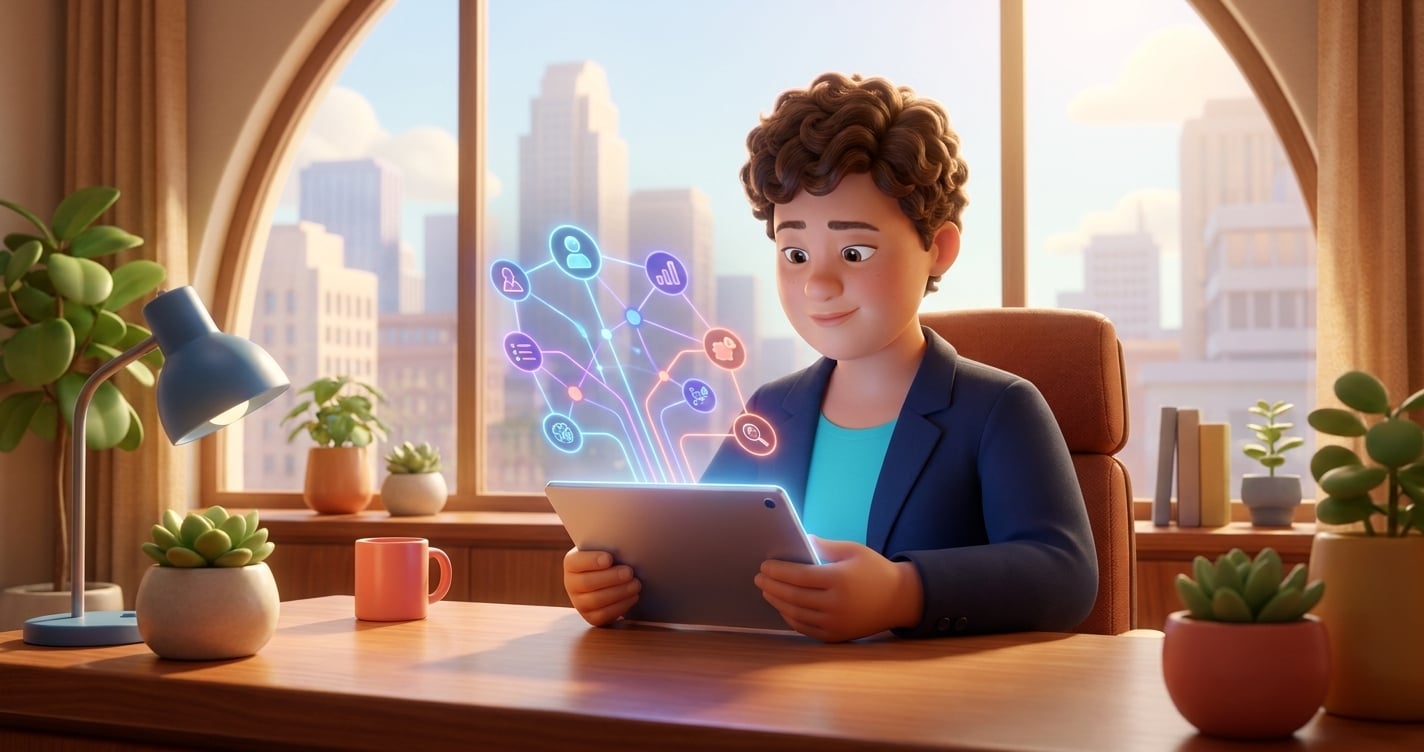
An AI coaching platform for talent managers scales personalised development across your entire organisation by delivering real-time, personality-adaptive guidance that human managers simply don't have the bandwidth to provide.
Key takeaways
- Traditional coaching models are too expensive and time-intensive to scale across every level of a growing business.
- Generic training programs fail because they ignore the fundamental differences in how individual work personalities process feedback.
- An AI coaching platform for talent managers bridges the gap between scalable technology and deeply personal employee development.
- Personality-adaptive systems provide leaders with the exact language and frameworks needed to guide diverse team members effectively.
Talent managers are stuck between a rock and a hard place. You know that individualised coaching drives retention, builds better leaders, and improves daily performance. You also know that your management team is already stretched to breaking point. When you ask managers to spend more time coaching their direct reports, you are usually met with tired eyes and a request for more hours in the day.
The math simply does not work. If a manager has eight direct reports and is expected to provide meaningful, tailored coaching to each of them every week, that is a massive drain on their cognitive load. They are trying to hit their own operational targets while playing amateur psychologist for a diverse group of people. The result is that coaching either drops off the calendar entirely, or it becomes a tick-box exercise that helps no one.
When managers do not know how to coach effectively, they default to their own preferences. A manager who loves structure and detail will try to coach everyone with spreadsheets and rigid timelines. A manager who loves big ideas and flexibility will try to coach everyone with loose brainstorming sessions. This creates immediate friction with team members who have different work personalities.
This friction leads to disengagement. Employees feel misunderstood and micromanaged, or conversely, they feel abandoned and lacking direction. The talent manager is then left to clean up the mess, dealing with retention issues, mediating conflicts, and trying to figure out why a seemingly competent team is failing to hit its goals.
You cannot solve this by sending your managers on a two-day leadership retreat. Human behaviour does not change because of a slide deck or a trust fall. People need in-the-moment support when they are actually facing a difficult conversation or trying to motivate a struggling employee.
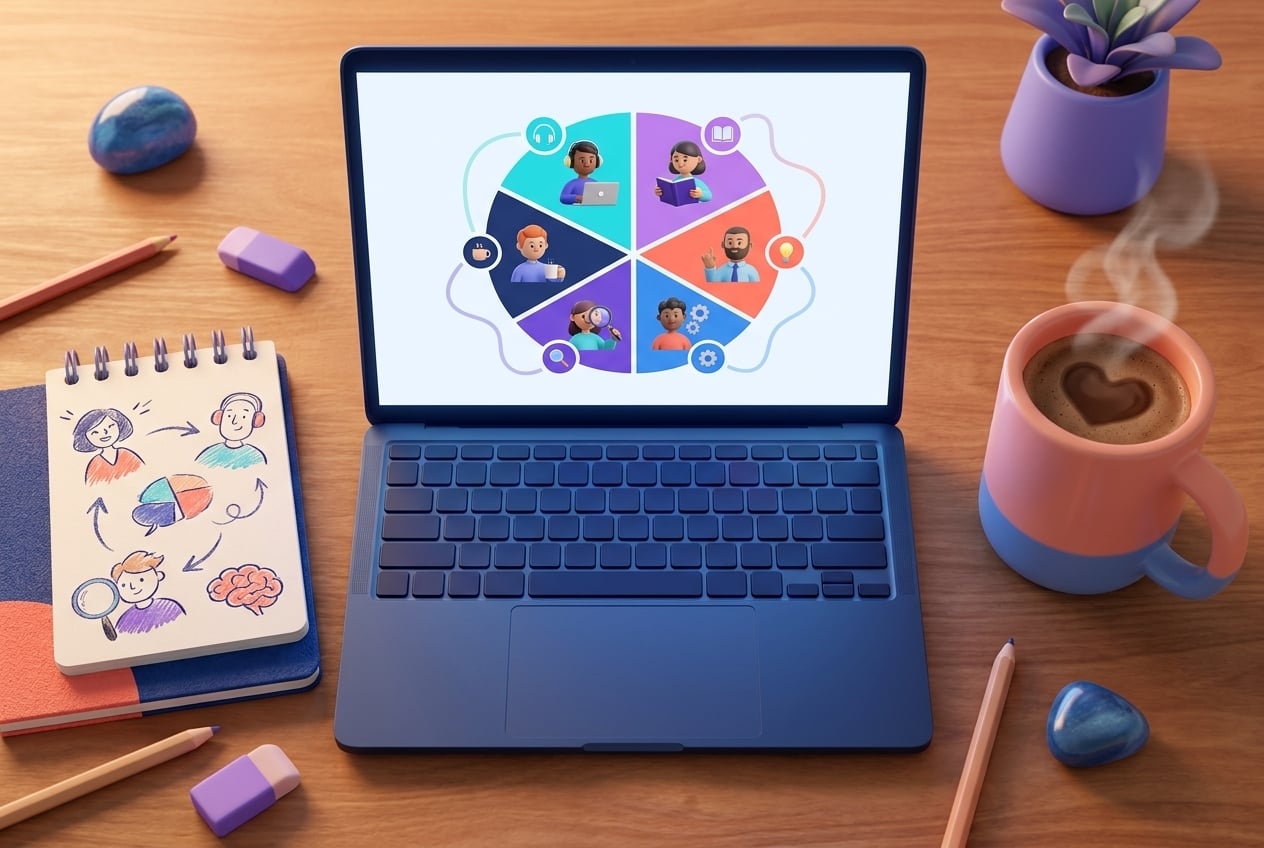
The default solution for scaling development is usually a blanket training rollout. You buy a library of video courses or hire an external speaker, hoping some of the advice sticks. But these generic programs fail because they treat your entire workforce as a single, uniform entity.
People learn, adapt, and respond to feedback based on their specific work personality. A highly analytical person needs data, time to process, and logical frameworks to understand why a change is necessary. A highly creative, big-picture thinker needs to see the vision and understand the future possibilities before they commit to the steps. When you try to coach both of them with the exact same script, you end up frustrating both.
If you want coaching to actually work, it has to be adapted to the person receiving it. It has to speak their language. Until recently, delivering that level of personalisation at scale was financially and logistically impossible for most businesses.
This is where technology actually becomes useful. An AI coaching platform for talent managers does not replace human connection, it supports it. By understanding how different people operate under stress, process feedback, and communicate, the technology can tailor its guidance to the specific dynamic between a manager and their direct report.
If you are curious about how this looks in practice, Hey Compono maps these exact behavioural traits to help managers understand who they are actually talking to. Instead of guessing why an employee is resistant to change, the manager gets clear, objective data on how that person's brain works.
Imagine a manager is preparing for a performance review with an employee who is highly empathetic and avoids conflict. A standard coaching framework might tell the manager to "be direct and firm." But a personality-adaptive AI will advise the manager to frame the feedback around how the employee's actions impact the wider team, tapping into their natural desire to help others. That subtle shift in language is the difference between a defensive employee and a motivated one.
Empathy is hard to scale. Remembering that one team member needs structured, detailed feedback while another prefers a quick, high-level chat is exhausting when you are also trying to manage a crisis or hit a quarterly target. Managers are human, and when humans are stressed, they lose their capacity for nuanced empathy.
AI coaching tools step in as a co-pilot for these moments. They carry the cognitive load of remembering everyone's preferences. Before a one-on-one meeting, the platform can remind the manager of the employee's communication style and suggest specific ways to frame the conversation. It acts as a safety net, ensuring that the human element of management is preserved even when the manager is under pressure.
This approach completely changes the role of the talent manager. Instead of constantly putting out fires caused by poor communication, you can focus on strategic team design and long-term succession planning. You are giving your leaders the tools they need to solve their own interpersonal challenges.
Talent management often relies on gut feeling and proximity bias. You promote the person who speaks up the most in meetings, or you assign critical projects based on who seems the least busy. This leads to imbalanced teams and missed opportunities.
When you integrate an AI coaching platform for talent managers into your workflow, you get objective data on how your team actually prefers to work. You can see where your team is heavy on big-picture thinkers but lacking in people who actually enjoy executing the details. You can identify potential conflicts before they happen by looking at how different working styles interact.
Some teams use personality-adaptive coaching to make these talent decisions without the usual guesswork, matching the right work personality to the right task. This ensures that people are spending their energy on work that naturally motivates them, rather than fighting against their own instincts all day.
A true coaching culture is not built through annual reviews or mandatory training modules. It is built in the small, daily interactions between managers and their teams. It happens in the five-minute chat after a difficult client call, or the way a project brief is handed over.
To influence those daily interactions, you need a system that is present in the daily workflow. An AI coaching platform for talent managers provides that persistent, gentle guidance. It turns abstract leadership theory into practical, actionable advice that managers can use immediately.
By providing your leaders with personality-specific insights, you are setting them up to succeed. You are removing the guesswork from management and replacing it with a clear understanding of human behaviour. That is how you scale development, improve retention, and build a team that actually understands how to work together.
Key insights
- Scaling coaching across an organisation requires technology that understands human nuance and individual work preferences.
- Managers need practical, in-the-moment support rather than abstract leadership theory to become better coaches for their teams.
- Aligning communication styles through personality data reduces workplace friction and accelerates team performance.
- Objective behavioural data allows talent managers to make strategic decisions about team design rather than relying on gut feeling.
Related reading: How AI coaching supports scale-up managers through growth · How an AI coaching platform helps heads of people scale
Employee coaching, wellbeing support and team personality insights in one platform, built on organisational psychology.
Talk to usIt is a digital tool that uses artificial intelligence and behavioural science to provide managers with personalised advice on how to guide, communicate with, and develop their team members based on individual work personalities.
Traditional training relies on one-size-fits-all workshops and abstract theories that are hard to remember in stressful situations. AI coaching provides specific, in-the-moment advice tailored to the exact personalities of the manager and the employee involved in the interaction.
No. The goal of this technology is to support human managers, not replace them. It acts as a co-pilot, providing the manager with the right language and frameworks so they can have more effective, empathetic conversations with their team.
Success is typically measured through improved employee retention, higher engagement scores, fewer interpersonal conflicts, and the amount of time managers save when preparing for one-on-one meetings and performance reviews.
Yes, when used correctly. The focus should always be on understanding work preferences and communication styles to improve collaboration, rather than using the data to judge capability or limit career progression.

1 min read
AI coaching reduces manager burnout by taking over the daily emotional labour of continuous team development, providing on-demand,...
1 min read
Coaching that understands me starts with recognising that your work personality is the filter through which you experience every deadline, meeting,...
1 min read
An AI coaching platform for people and culture managers is a digital tool that scales personalised development across an entire team, giving...