
 Mathan Allington
Why fake it till you make it is holding you back
 Compono
The psychology of why masking at work costs more than it gains, and what to do instead when you feel out of your depth in a new role.
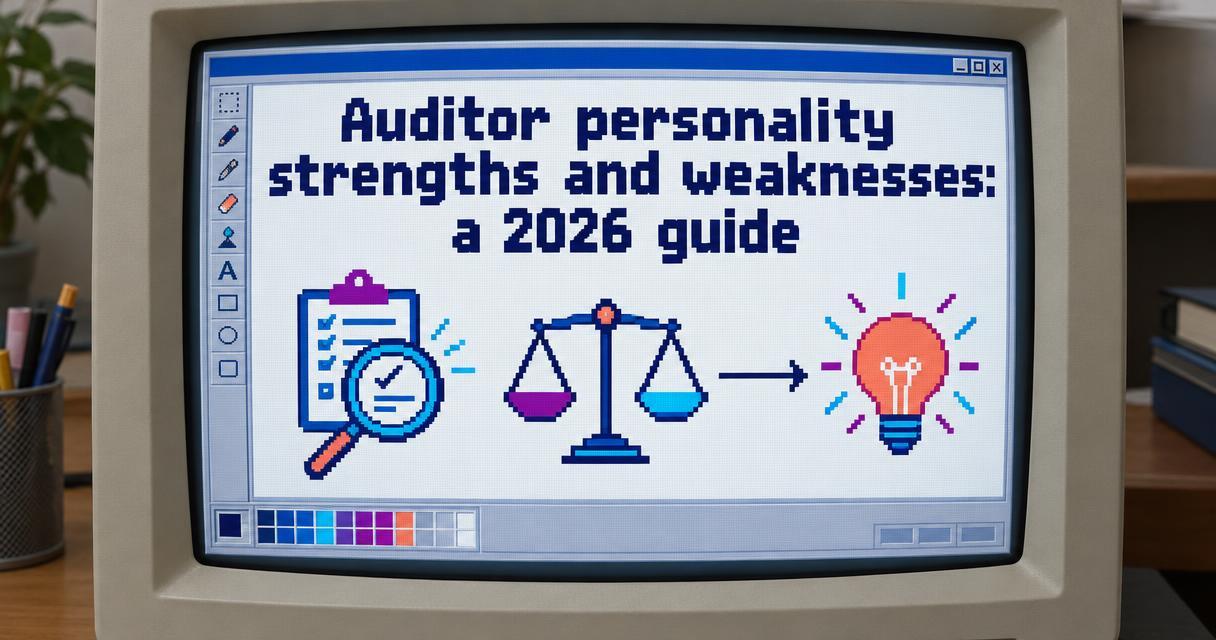
Auditor personality strengths and weaknesses revolve around a deep capacity for precision, objective analysis and risk management, which can sometimes tip into over-deliberation and resistance to change.
Last reviewed October 2026
Key takeaways
- The defining strengths of an auditor include high conscientiousness, emotional stability under pressure, and a methodical approach to problem-solving.
- Common weaknesses emerge as the shadow side of these strengths, such as perfectionism causing analysis paralysis or risk aversion stifling innovation.
- The most effective auditors understand how to frame their natural traits constructively during interviews and performance reviews.
- Balancing a team requires a mix of diplomatic, detail-oriented, and fast-executing personalities to prevent operational bottlenecks.
If you work in audit, you already know the tension. You are the safeguard for the business. People rely on you to catch the errors that could cost millions or ruin reputations, yet they often get frustrated by your need for specifics. You are paid to find the flaws, which means you spend a lot of time delivering difficult news. It takes a specific type of person to handle that changing daily.
At Hey Compono, we know that understanding how you operate is the fastest way to reduce friction at work. Your natural disposition dictates how you handle conflict, process data, and communicate risk. When you understand both sides of your work style, you stop fighting your natural instincts and start using them deliberately.
The Auditor work personality is built on thoroughness and accuracy. People with this disposition are naturally drawn to fact-based, intricate tasks. They persist patiently until they reach their goal, relying on logic rather than gut feeling.
In the workplace, these analytical personality traits show up as a preference for enforcing standards and maintaining control mechanisms. You prefer to focus on present details rather than vague future concepts. While other personality types might jump into action without a plan, you want to see the blueprint, check the math, and verify the assumptions before taking a single step.
Every professional strength comes with a shadow side. When you lean too hard on the very traits that make you successful, they can become career limiters. Understanding these personality flaws at work helps you recognise when you are overplaying your hand.
Auditors are highly valued for their meticulous attention to detail. You notice the anomalies that everyone else glosses over. You are systematic and inquisitive, ensuring that complex findings are accurate and verifiable. This trait is essential for identifying discrepancies in massive datasets.
The shadow side is hyper-perfectionism. Auditors’ attention to detail can become a weakness when excessive focus on minutiae causes them to lose sight of the bigger picture, as noted in a recent Compono guide. You might spend hours chasing a rounding error while missing a massive strategic risk in the broader business model.
Your ability to identify and mitigate risk is what keeps the business safe. You do not accept assumptions at face value, and you demand evidence. This objective mindset protects the organisation from compliance failures and reputational damage.
However, risk aversion supports compliance and error prevention but can make auditors resistant to rapid innovation or sudden changes in methodology, a challenge highlighted by Compono. When a company needs to pivot quickly, your natural instinct to slow down and assess every variable can be perceived as blocking progress.
You make decisions based on concrete data. You synthesise information methodically and refuse to be rushed into a conclusion. This steady approach ensures that your final recommendations are rock solid.
The danger here is a failure to launch. Excessive deliberation may produce analysis paralysis, slowing decisions when auditors wait for complete information before acting, according to Compono. In the real world, you rarely have 100 percent of the data. Learning to make informed calls with partial information is a critical growth area.
If you look at standard psychological models, the typical audit professional clusters around specific dimensions. In the Big Five personality model, conscientiousness is the defining metric. One personality assessment rates auditor-role fit at 88 out of 100 for conscientiousness and 72 out of 100 for emotional stability, suggesting strong follow-through and steadiness under pressure as measured by Traitstack. You are organised, dutiful, and capable of handling tense situations without losing your cool.
In frameworks like the Myers-Briggs Type Indicator, the ISTJ profile often dominates the field. ISTJs represent roughly 11 to 13 percent of the general population, while some CPA-firm and Big Four surveys reportedly place them at about 22 percent of auditors, according to UserNotices. This makes sense, given the role demands introverted focus, concrete sensing, logical thinking, and structured judgment.
Understanding these models gives you a vocabulary for your behaviour. If you know you score low on extroversion, you can actively plan how to manage stakeholder meetings without draining your energy reserves. The Hey Compono app uses the Work Personality framework to help you map these exact patterns.
While the baseline Auditor jobs and career paths share core traits, the specific function demands slightly different behavioural strengths.
| Audit type | Primary focus | Key personality strength needed |
|---|---|---|
| Internal audit | Process improvement and operational efficiency | Diplomacy and collaboration, as you must maintain ongoing relationships with the teams you audit. |
| External audit | Regulatory compliance and financial accuracy | Firmness and independence, requiring the emotional resilience to push back on senior client management. |
| Forensic audit | Investigating fraud and financial discrepancies | Extreme scepticism and lateral thinking, looking specifically for deliberate concealment. |
An internal auditor who is too rigid will quickly alienate their colleagues, making it impossible to gather information. An external auditor who is too agreeable might cave under pressure from a hostile CFO. The environment dictates which version of your personality needs to step forward.
Interviewers know what an auditor is supposed to be good at. When they ask about your strengths and weaknesses, they are testing your self-awareness. They want to see if you understand the shadow side of your traits and how you manage them in a live commercial environment.
Do not just list traits. Provide the business value of your disposition. A strong answer connects your natural tendencies to a tangible outcome for the firm.
For example, you might say: "My greatest strength is my emotional stability under pressure. I am naturally objective, which means when a client becomes defensive during an audit finding, I do not take it personally. I can de-escalate the tension by keeping the conversation entirely focused on the framework and the data, which preserves the client relationship while still enforcing the necessary standards."
Never use the cliché that you are a perfectionist who cares too much. It sounds evasive. Instead, pick a real shadow trait and explain the exact system you use to mitigate it.
Try this approach: "Because I am highly detail-oriented, my natural weakness is wanting to chase every discrepancy down to the final cent, even when it is not material. I can sometimes lose sight of the timeline. To manage this, I now set strict time-boxes for investigations. If a discrepancy falls below our materiality threshold and I have spent an hour on it, I force myself to document the variance, escalate it to my manager, and move on to the higher-risk areas."
If you are managing auditors, your Auditor leadership style needs to balance the diverse personalities within your unit. A team composed entirely of highly sceptical, rigid thinkers will grind to a halt. You need cognitive diversity.
You must balance the forceful individuals with the diplomatic ones. A forceful auditor may expose major risks but also create tension and resistance, while an overly agreeable auditor may avoid challenging management and miss important risks. Your job is to deploy the right personality to the right stakeholder.
When giving feedback to this personality type, rely on logic and specific examples. Auditors do not respond well to emotional appeals or vague corporate jargon. Show them the data behind their performance, give them time to process it, and work with them to build a structured improvement plan.
Understanding your strengths and shadows is the first step to building a career that actually fits you. If you want to stop feeling frustrated by workplace friction and start leveraging your natural analytical traits, AI coaching can help you work through difficult conversations, prepare for interviews, and understand your professional self without the fluff.
Auditors tend to lean toward introversion, as the role requires deep, solitary focus and independent analysis. However, successful auditors must also develop extroverted skills to interview stakeholders, present findings, and manage client relationships effectively.
The most common weakness is analysis paralysis. Because auditors are trained to avoid risk and rely on complete data, they can struggle to make timely decisions or adapt quickly when the business environment changes rapidly.
Professional scepticism ensures an auditor does not take information at face value. It requires a questioning mind and a critical assessment of evidence, which protects the organisation from fraud, bias, and material misstatement.
Provide them with clear materiality thresholds and strict deadlines. Detail-oriented professionals thrive when they know exactly where the boundaries are. Give them the autonomy to inspect the details, but enforce hard stops to ensure they deliver on time.
Yes. Analytical personalities make excellent leaders because they are objective, fair, and base their feedback on observable facts rather than favouritism. Their challenge is remembering to provide positive reinforcement and emotional support, not just constructive criticism.
Related reading
Hey Compono helps teams give and receive feedback that actually moves the needle. Start free and see how it fits your workflow.

The psychology of why masking at work costs more than it gains, and what to do instead when you feel out of your depth in a new role.

Performing a version of yourself all day is exhausting. How to spot the gap between the way you work and what the role keeps asking for.

The best jobs for big picture thinkers. Learn how to find career paths that value strategy and vision over daily administration. Get started today.
 Mathan Allington