
 Mathan Allington
Why you should use an AI interview practice app in 2026
 Compono
Discover how an AI interview practice app can boost your confidence and help you prepare for modern recruitment processes.
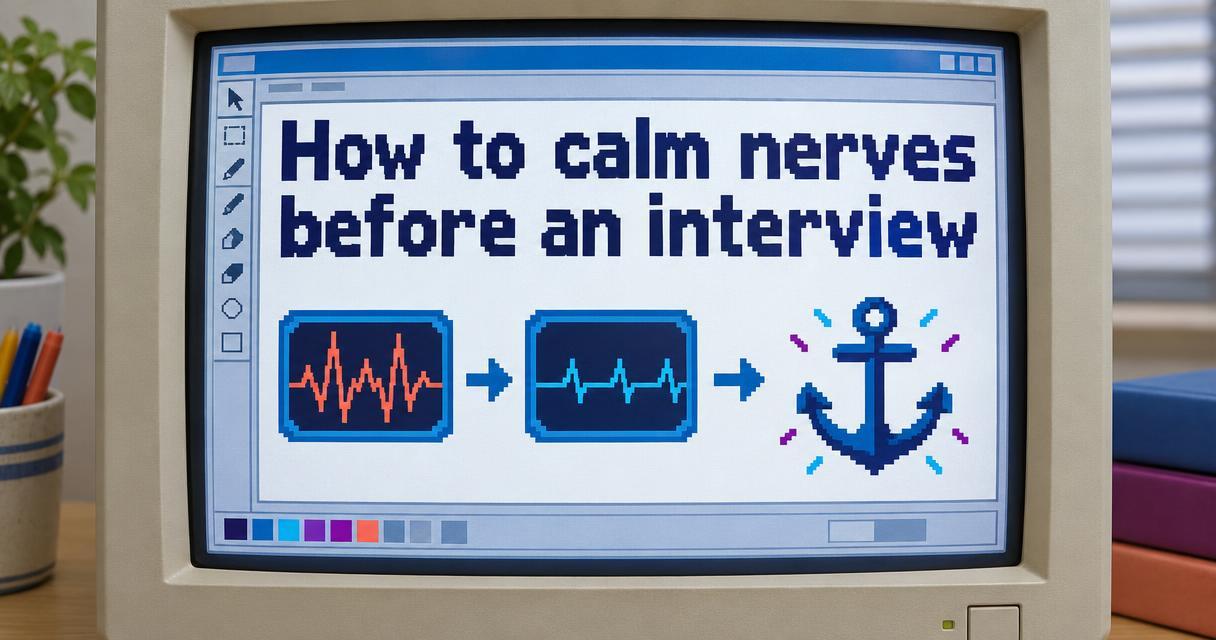
To calm your nerves before an interview, you need to shift your body out of its natural fight-or-flight response using structured breathing, targeted preparation, and in-the-moment recovery tactics.
Last reviewed November 2026
Key takeaways
- Interview anxiety is a biological response to a perceived threat, not a sign that you are underqualified for the role.
- Preparation should focus on vocalising your answers, because speaking out loud builds muscle memory that overrides panic.
- Using specific breathing patterns immediately before the meeting signals physical safety to your brain.
- Having a rehearsed recovery script gives you a safe way to pause and reset if your mind goes blank.
- Understanding your natural work style helps you avoid sounding rehearsed and keeps you grounded under pressure.
Feeling terrified before speaking to a hiring manager is incredibly common. According to a 2024 survey, 93% of job seekers experience interview anxiety, with many describing their stress levels as high or very high. Your brain treats the high-stakes evaluation like a physical threat, flooding your system with adrenaline and cortisol.
At Hey Compono, we know that telling yourself to just relax never actually works. You cannot simply think your way out of a biological response. Instead, you need a systematic approach to short-circuit the anxiety before it derails your performance.
When you anticipate a stressful event, your amygdala takes over. This small part of the brain is responsible for processing fear. It triggers physical symptoms like a racing heart, sweaty palms, and a dry mouth. It also temporarily impairs your prefrontal cortex, which is the area responsible for logical thinking and memory recall.
This is why you can know your resume perfectly at home, only to forget your own job title the moment the camera turns on. Your brain has diverted energy away from complex thought to prepare your body to run away.
To overcome this, you must send physical signals of safety to your nervous system. You also need to build muscle memory through practice so your mouth can deliver the answers even when your brain feels frozen.
Most candidates spend too much time worrying and not enough time rehearsing. Job seekers reported spending more than five hours worrying about interviews, compared with roughly three hours actively preparing. That imbalance fuels the panic cycle.
Career guidance from experts recommends practising common interview questions, researching the organisation, and planning your route as foundational steps to reduce nerves. The key is to practice out loud. Silent reading does not create the vocal muscle memory required for high-stress situations.
Practising with an AI mock interview tool helps you vocalise your answers without the pressure of a human audience. Hearing yourself speak the words aloud makes them feel familiar. When you get into the real meeting, your brain will recognise the task and feel less threatened.
By this point, you should move away from memorising scripts and focus on core themes. If you try to recite an essay word for word, losing your place will cause instant panic.
Instead, write out your career highlights in bullet points. A common preparation approach is to write three brief stories about your past work and say the opening answer aloud twice before the interview. Have one story about a success, one about a problem you solved, and one about a mistake you learned from.
This is also the time to lean into your natural strengths. If you have an analytical work style like The Evaluator, you might naturally need a moment to process complex questions. Practise taking a deliberate pause before answering, rather than forcing yourself to speak immediately.
Decision fatigue drains your mental energy before the interview even starts. Eliminate as many choices as possible the night before. Lay out your clothes, pack your bag, and print your resume. If the meeting is virtual, test your camera and lighting early.
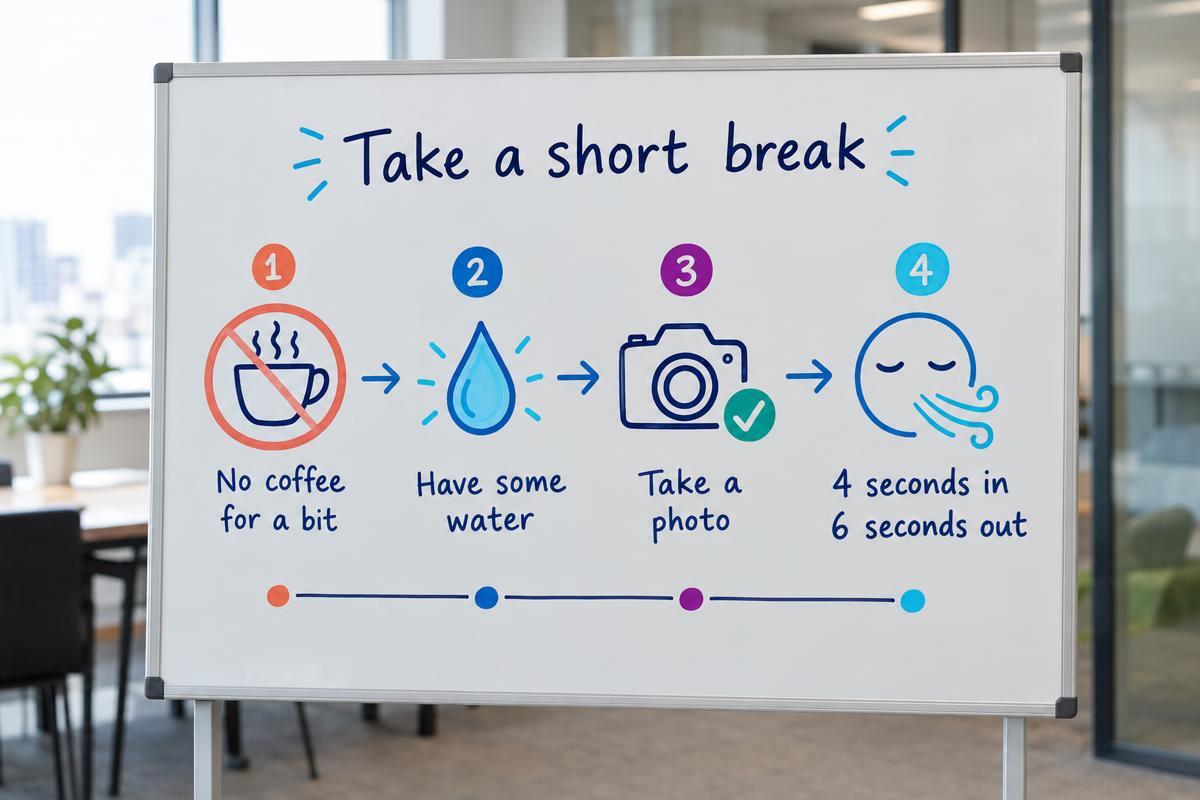
On the morning of the interview, manage your physical inputs. Caffeine mimics the symptoms of anxiety by raising your heart rate and making your hands shake. Limit yourself to one coffee well before the meeting, and drink plenty of water to prevent a dry mouth.
If you are joining a remote meeting, running a quick video interview practice session ensures your microphone is working and your background looks professional. Knowing the technology is stable removes a major source of unpredictable stress.
The waiting room is where anxiety peaks. This is the moment to use somatic grounding techniques to force your heart rate down.
Speaking coach guidance recommends breathing in for about four seconds and exhaling for about six seconds for two minutes immediately before an interview. The longer exhale stimulates the vagus nerve, which tells your brain that you are safe.
If you are standing, try pushing your feet firmly into the floor. Notice the weight of your body against the ground. This physical sensation pulls your attention away from spiralling thoughts and anchors you in the present moment.
Even with right preparation, your mind might still go blank. It is incredibly common to freeze. In fact, 86% of surveyed job seekers said they freeze or experience blank-page syndrome during interviews.
The secret is having a rehearsed recovery script. When the panic hits and you lose your train of thought, do not try to speed up. Instead, use a phrase that buys you time.
You can say something simple. Try replying with a compliment about the question, like "That is a great question, let me take a second to think about the best example." You are entirely allowed to take a sip of water while you gather your thoughts. The hiring manager expects you to think, and a five-second pause feels much longer to you than it does to them.
If you have ADHD, autism, or social anxiety disorder, standard interview advice often falls short. The sensory environment or the pressure of constant eye contact can be overwhelming.
For virtual interviews, hiding your self-view on the video platform is highly effective. Staring at your own face increases cognitive load and heightens self-consciousness. You can also use a small, silent fidget tool off-camera to help regulate your nervous system.
Understanding how to stop an anxiety spiral is vital if you experience sensory overload. Give yourself permission to look away from the camera when you are thinking. You can even state your process out loud, telling the interviewer you are just looking at your notes for a moment.
The adrenaline crash after an interview can leave you feeling exhausted and highly critical of your performance. It is easy to spend the next three days obsessing over a single word you used incorrectly.
Learning how to manage broader job search anxiety means protecting your energy for the next opportunity. Write down any difficult questions you want to practice for next time, then physically close your laptop and step away from your workspace.
The tools available through Hey Compono focus on building this resilience. You are interviewing the company just as much as they are interviewing you. Treating the event as a mutual conversation, rather than an interrogation, fundamentally changes how your body responds to the pressure.
Practising your answers out loud is the most effective way to short-circuit interview anxiety and build genuine confidence. Our voice-first AI coach listens to your responses, adapts to your unique communication style, and gives you actionable feedback before you face a real hiring manager.
Related reading
Your brain perceives the high-stakes evaluation as a physical threat, triggering the fight-or-flight response. This releases adrenaline and cortisol, which cause the physical symptoms of panic and temporarily impair your ability to recall information easily.
A shaking voice is caused by shallow, rapid breathing under stress. Before you answer a question, take a deep breath into your stomach, not your chest. Speak slightly slower than you normally would, and keep a glass of water nearby to prevent a dry throat.
Do not panic and try to rush an answer. Instead, use a recovery script to buy time. You can say, "That is a great question. Let me take a moment to consider the best example." Take a sip of water, take a deep breath, and then begin your answer.
Yes, briefly acknowledging your nerves can actually relieve the pressure. A simple comment like, "I am a little nervous because I am so excited about this opportunity," humanises you and shows the hiring manager that you care about the role.
Eliminate technical stress by testing your camera and microphone early. In the final minutes, do a box breathing exercise: breathe in for four seconds, hold for four seconds, exhale for four seconds, and hold for four seconds. Hide your self-view once the call begins to reduce distractions.

Discover how an AI interview practice app can boost your confidence and help you prepare for modern recruitment processes.

Run a mock interview with an AI tool, get feedback on your answers, and walk into the real one calmer and sounding like yourself.
Want to know how to improve your interview to offer ratio? Discover standard benchmarks, structured scoring strategies, and practical candidate.
 Mathan Allington