
 Mathan Allington
How to debrief a candidate after an interview
 Mathan Allington
Learn exactly how to debrief a candidate after an interview. Get practical steps, conversation scripts and feedback techniques to protect your...
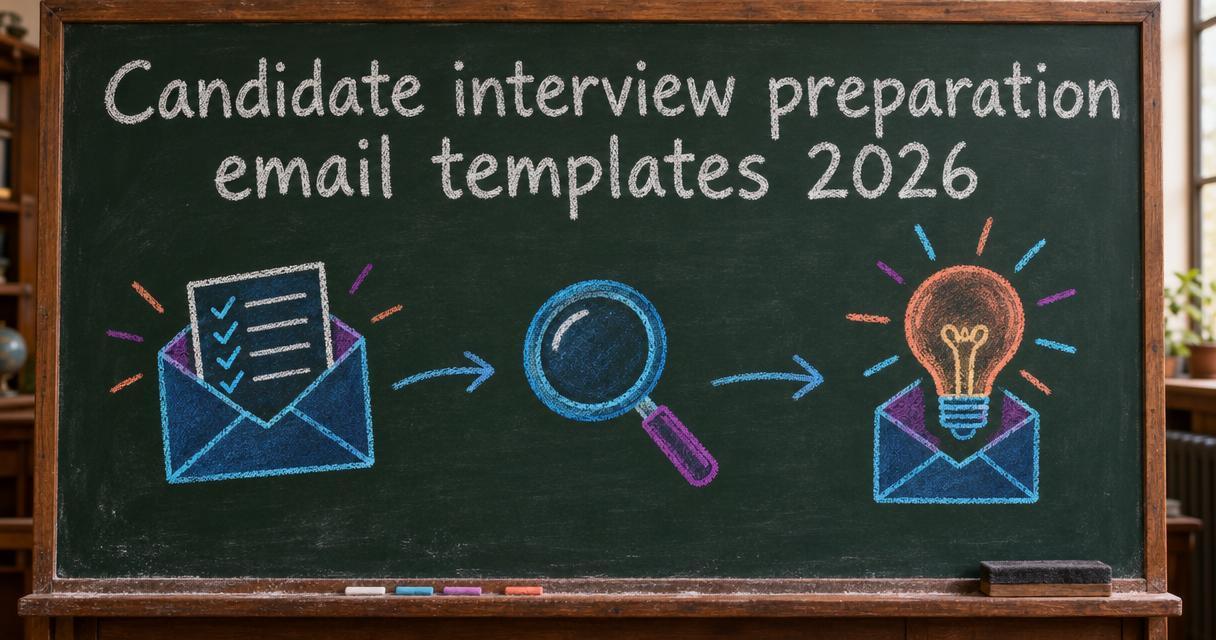
A candidate interview preparation email template is a structured message that gives job seekers the exact logistical details, agenda breakdown, and coaching resources they need to perform at their best during an interview.
Last reviewed November 2026
Key takeaways
- A standard interview invitation only tells a candidate when to show up, while a preparation email tells them how to succeed.
- Including an agenda, formatting details, and technical setup instructions drastically reduces candidate anxiety.
- Providing clear assessment criteria creates a fairer interview process and improves the quality of candidate answers.
- Role-specific preparation emails ensure engineers, sales staff, and leaders know exactly what tasks they will face.
- Recruitment agencies and internal teams use structured preparation to protect placement fees and reduce candidate dropout.
Most candidates walk into important interviews with a quick phone briefing and a frantic Google search. They spend the first ten minutes of the conversation trying to guess what the interviewer actually wants to hear. This guesswork benefits no one. The employer gets a nervous, guarded version of the person, and the candidate leaves feeling like they never had a real chance to show their skills.
Sending a calendar invite with a Zoom link is not preparation. An effective candidate interview preparation email template changes the entire changing of the hiring process. It moves the relationship from a high-stakes test to a collaborative conversation. When a recruiter or hiring manager provides clear expectations, pre-reading materials, and assessment frameworks, candidates can focus on giving authentic answers rather than trying to decode the process.
There is a massive difference between inviting someone to an interview and actually preparing them for it. A basic invitation focuses entirely on logistics. It tells the candidate where to go, who they will meet, and what time to log on. While this information is necessary, it does nothing to help the candidate put their best foot forward.
According to 2025 research from Survale, candidate resentment increased by 70% when applicants received no interview preparation or follow-up. The data also showed that only 6% of North American candidates received none of the surveyed interview-preparation or communication supports in 2025, which is down from 24% in 2024. This means your competitors are already coaching their candidates. If you send a bare calendar invite, you are falling behind.
True preparation focuses on performance. It tells the candidate what topics will be covered and what format the interview will take. It gives them the rules of the game before the whistle blows. A recent Pickr report recommends scheduling, interviewer details, format, time zone, and preparation guidance as the core elements of all interview communications. When recruiters fail to provide this, they artificially inflate the difficulty of the interview.
Candidates who receive proper preparation are less likely to drop out of the hiring process. They feel respected by the employer and supported by the recruiter. Candidate preparation is not about giving people the answers. It is about removing the anxiety that prevents great candidates from showing their true capabilities.
A strong preparation email needs to answer every logistical question a candidate might have before they have to ask it. It also needs to set a welcoming tone. CareerBuilder data reported by Gaugius shows 69% of job seekers said transparent communication during hiring would improve their candidate experience in 2024. To achieve that transparency, your email must include several specific components.
First, you must outline the exact format of the interview. Will it be a behavioural interview based on past experience? Will there be a technical test? Will the candidate need to present a case study? Tell them directly. This allows them to organise their thoughts and prepare relevant examples.
Second, provide a clear agenda. Break the interview down by time. Let them know there will be five minutes of introductions, thirty minutes of core questions, and ten minutes at the end for them to ask their own questions. This structure helps candidates pace their answers.
Third, include explicit instructions for technical setup or physical logistics. If the interview is remote, specify which software you use and include a link to test the connection. If the interview is in person, provide parking details, public transport options, and instructions for the security desk. You do not want a candidate starting their interview flustered because they could not find a visitor badge.
Finally, always include a clear path for accommodation requests. Give candidates a direct, judgment-free way to ask for accessibility adjustments. This is a critical part of modern, inclusive hiring.
This template works well for standard behavioural and experience-based interviews. You can copy and adapt this structure for almost any mid-level corporate role. It covers all the necessary bases without overwhelming the reader.
Subject: Interview Preparation: [Job Title] at [Company Name]
Hi [Candidate Name],
We are looking forward to your upcoming interview for the [Job Title] position. We want you to feel as prepared and comfortable as possible, so I have included everything you need to know about the session below.
Logistics and timing
Date: [Date]
Time: [Time] to [Time] [Timezone]
Format: [Video Call via Microsoft Teams / In-person at our Sydney office]
Link/Location: [Insert Link or physical address with building floor]
Who you will meet
You will be speaking with [Interviewer Name], [Interviewer Job Title], and [Interviewer Name], [Interviewer Job Title]. You can find their LinkedIn profiles linked here if you would like to review their backgrounds.
The agenda
The interview will last for [Total Minutes] minutes. Here is how we will use the time:
1. Introductions and role overview (5 minutes)
2. Behavioural and experience questions (30 minutes)
3. Scenario discussion (10 minutes)
4. Your questions for us (15 minutes)
How to prepare
We will be asking questions about your past experience. We recommend using the STAR method (Situation, Task, Action, Result) to structure your answers. Please come prepared to discuss a time when you had to manage a difficult stakeholder, as well as a project you led from start to finish.
Accommodations
If you need any adjustments or accommodations to participate fully in this interview, please reply to this email and let me know. We are happy to arrange closed captioning, extra time, or any other support you require.
Please let me know if you have any trouble accessing the video link before the interview. We look forward to a great conversation.
Best regards,
[Your Name]
Different roles require entirely different assessment methods. An engineering candidate faces a vastly different interview than a sales director. You need to adjust your templates to match the specific hurdles each candidate will face.
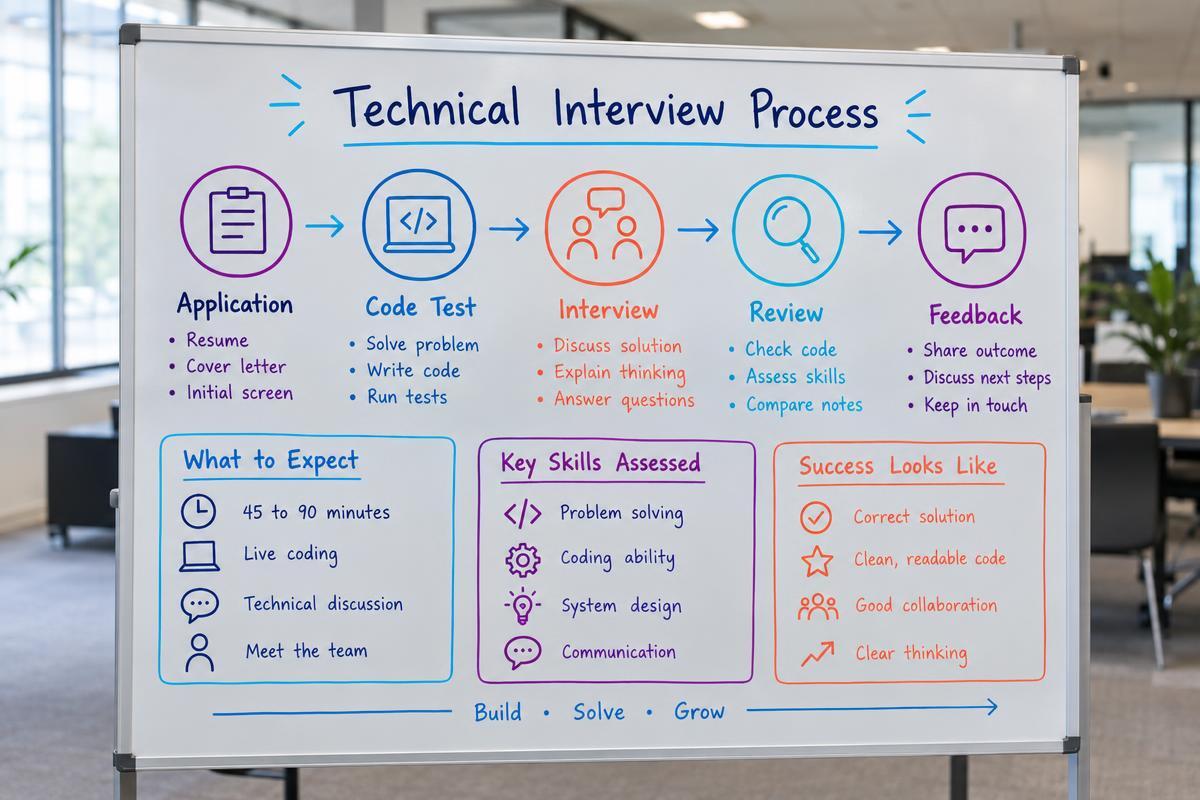
When improving technical recruitment processes, the preparation email must explicitly address the coding environment. Technical candidates often fail interviews not because they lack skills, but because they are unfamiliar with the specific testing platform.
Technical candidate interview preparation template:
Subject: Technical Interview Preparation: [Job Title] at [Company Name]
Hi [Candidate Name],
Your next interview will focus on your technical skills and problem-solving approach. This session will be paired programming with [Interviewer Name], one of our senior engineers.
What to expect
You will spend 45 minutes working through a practical coding challenge. We are less interested in right syntax and more interested in how you break down problems. We encourage you to think out loud, ask clarifying questions, and use Google just like you would on a normal workday.
The environment
We will be using [Tool Name, e.g., HackerRank or a shared IDE]. You can access a practice sandbox here: [Link]. Please test your audio, video, and screen-sharing permissions before the call.
For leadership or sales roles, the focus shifts from technical execution to strategy and presentation. These candidates need to know the business context to succeed.
Leadership candidate interview preparation template:
Subject: Leadership Interview Preparation: [Job Title] at [Company Name]
Hi [Candidate Name],
Your upcoming interview will focus on your leadership style, strategic thinking, and team management approach.
What to expect
We will spend the first half of the interview discussing your past leadership experience. Please prepare specific examples of how you have handled team underperformance and how you have scaled a department. The second half will involve a brief, informal presentation. We ask that you prepare a 10-minute overview of how you would approach your first 90 days in this role.
You do not need to prepare a slide deck unless you prefer to use one. We are looking for clarity of thought and strategic alignment with our current goals.
Every candidate absorbs information differently. The way a candidate prefers to work and communicate will dictate how they use your preparation email. By understanding these differences, recruiters can provide more targeted support.
Consider a candidate with the Evaluator work personality. This type of candidate is highly analytical, detail-oriented, and prefers having all the facts before making a decision. An Evaluator will read your preparation email line by line. If you provide a vague agenda, they will feel unsettled. They want to know exactly how they will be scored and what metrics matter.
On the other hand, a candidate who leans toward high-level vision and fast action might skim the logistical details. They care more about who they are meeting and the overarching goals of the role. A good preparation email caters to both extremes by using clear headings, bullet points, and bold text to highlight the most critical information.
At Hey Compono, we know that understanding a candidate's natural working style changes how you coach them. When you know how someone naturally communicates, you can give them feedback that actually lands. This is why standardising your email templates is only the first step in building a reliable preparation strategy.
Email templates are highly effective, but they still rely on the candidate to read the advice and practise on their own. For recruitment agencies and internal talent teams managing dozens of open roles, sending emails manually is difficult to scale. You cannot sit on a phone call with every single candidate to run through a mock interview.
This is where modern technology steps in. Many top agencies are now using AI tools for recruitment agencies to automate the heavy lifting. Instead of just sending an email with the STAR method, recruiters can send candidates a link to practise their answers with a voice-based AI coach.
The Hey Compono app allows recruiters to offer every candidate a private, adaptive mock interview. The candidate gets to practise their answers out loud, receive instant feedback on their communication style, and refine their approach before the real interview. The recruiter gets visibility into the candidate's readiness score without having to spend an hour on the phone.
When you combine a clear preparation email with a tool that lets the candidate actually practise, you drastically improve your placement rates. Coached candidates simply perform better. They walk into the room confident, articulate, and ready to demonstrate their value.
Timing is a critical factor in candidate preparation. Do not send a detailed preparation email two hours before the interview. Candidates need time to absorb the information, research the interviewers, and practice their responses. The gold standard in recruitment best practices is to send the preparation email at least 48 to 72 hours before the scheduled interview time.
Keep the tone professional but welcoming. The goal of the email is to reduce stress, not add to it. Avoid using overly formal corporate jargon. Speak to the candidate like a peer. Phrases like "We want you to succeed" and "We are looking forward to learning more about your experience" go a long way in building rapport.
Post-interview follow-up is just as important as the preparation. Yomly research found that 36% of candidates declined job offers because of a negative interview experience. The same study noted that 94% of candidates want post-interview feedback, and candidates who receive it are four times more likely to consider future roles with the employer. Your preparation email sets the standard for communication; your follow-up must match that standard.
| Standard Invitation | Preparation Email |
|---|---|
| Focuses only on date, time, and location | Includes date, time, location, and technical requirements |
| Names the interviewers with no context | Provides interviewer titles and LinkedIn profiles |
| Leaves the interview structure a mystery | Breaks down the agenda minute by minute |
| Offers no guidance on assessment criteria | Explains exactly what skills and behaviours will be tested |
| Ignores accessibility needs | Provides a clear, simple way to request accommodations |
By shifting from standard invitations to comprehensive preparation emails, you change the candidate experience entirely. You stop testing how well people guess what you want, and start testing how well they can actually do the job.
When you want to give every candidate the best chance of success, standard emails are just the beginning. Hey Compono's Recruiter Hub gives internal TA teams and external agencies the ability to provide per-candidate AI interview coaching, ensuring everyone gets the exact practice they need before they meet the hiring manager.
Related reading
You should send the preparation email at least 48 to 72 hours before the interview. This gives the candidate enough time to review any pre-reading materials, test their technical setup, and practise their answers without feeling rushed.
You do not need to provide the exact questions, but you should outline the themes. Telling a candidate they will face behavioural questions about conflict resolution and project management helps them select the right past experiences to discuss.
For panel interviews, your email should list every person on the panel, their job title, and their role in the conversation. Explain the format clearly so the candidate knows they will be answering questions from multiple stakeholders in the same session.
If a candidate ignores clear instructions or fails to prepare despite receiving a comprehensive guide, it gives the hiring manager valuable insight into their work habits. Preparation emails level the playing field, making a lack of effort very obvious.
Agencies use detailed preparation emails to ensure their candidates always present well to the client. When a candidate is fully prepared for the format and agenda, they perform better, reducing the chance of rejection and protecting the recruiter's placement fee.
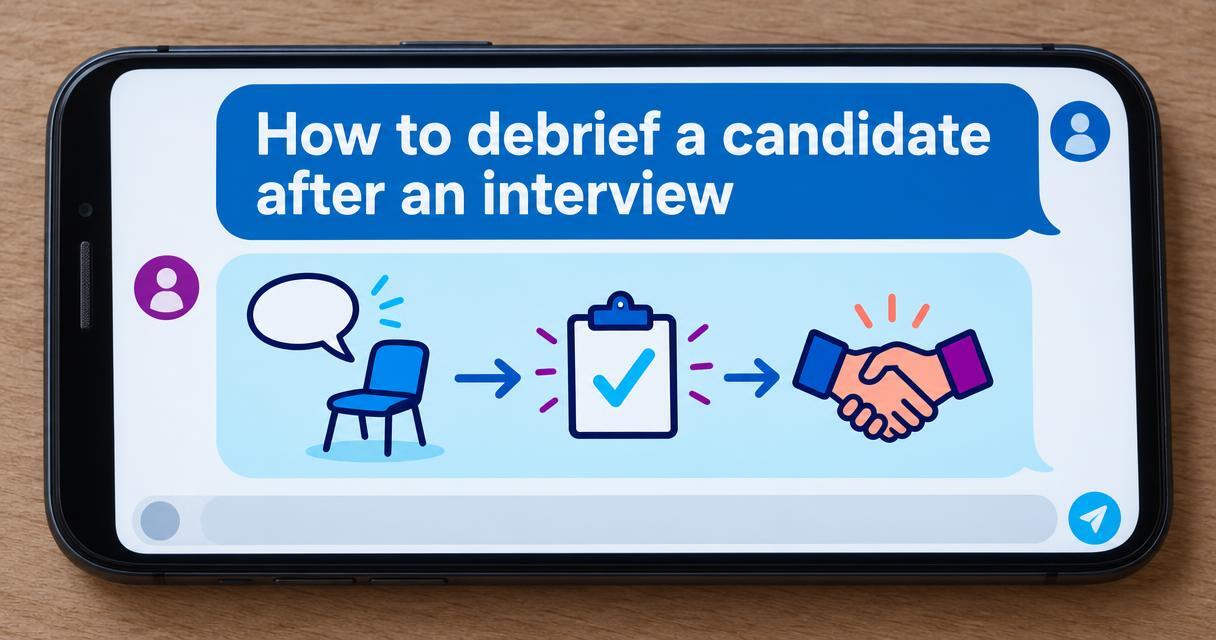
Learn exactly how to debrief a candidate after an interview. Get practical steps, conversation scripts and feedback techniques to protect your...
To prepare a candidate for a presentation interview. Discover practical frameworks, Q&A strategies, and dry run techniques to boost placement rates....
Want to know how to improve your interview to offer ratio? Discover standard benchmarks, structured scoring strategies, and practical candidate.