
 Mathan Allington

Doer mindset: why practical action drives career success
 Compono
The Doer mindset gets things finished. How to use routines for career growth, and how to stop it tipping into burnout.
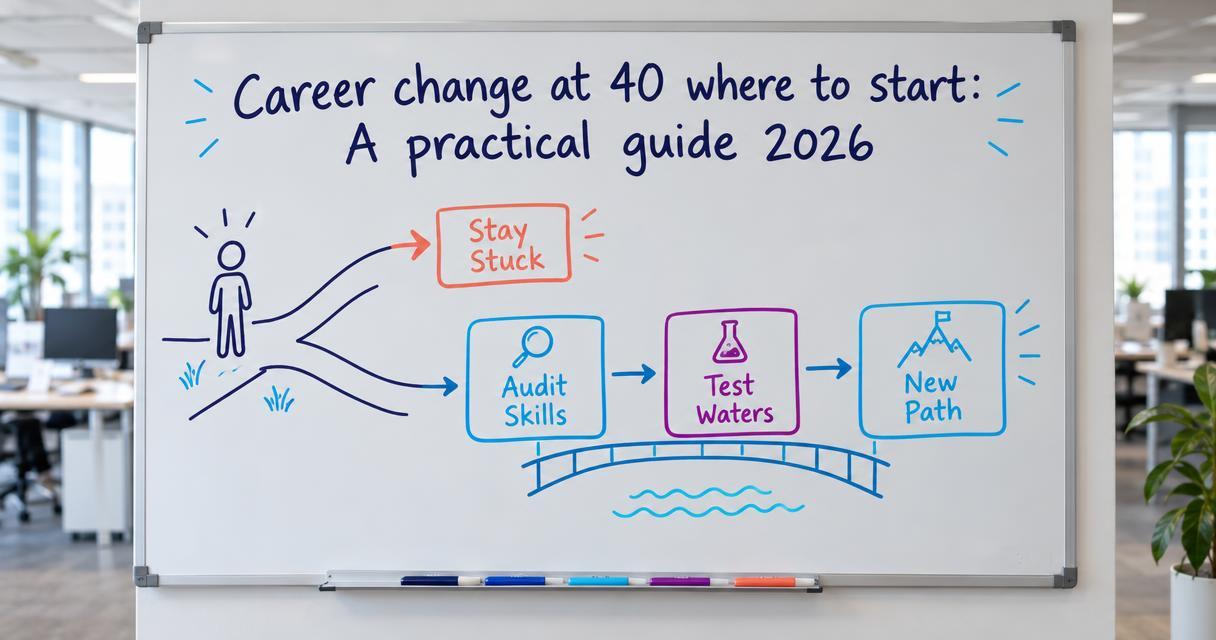
If you are looking at a career change at 40 and wondering where to start, the first step is to audit your natural working style and existing skills before you even look at a job board.
Last reviewed September 2026
Key takeaways
- Starting over at 40 does not mean starting from zero because you bring two decades of transferable skills to your next role.
- The biggest mistake you can make is jumping into a new industry without understanding what actually drains your energy.
- Your natural work personality dictates what roles will feel fulfilling and what roles will lead straight back to burnout.
- Testing the waters through side projects or shadowing is much safer than handing in your notice without a plan.
You hit 40 and look around. You have spent 15 or 20 years building a career. You might have a decent salary and a senior title. You also might be completely miserable. The thought of doing this exact thing for another 25 years feels suffocating.
But you have a mortgage. You have real obligations that make the idea of starting over terrifying. You are not a 22-year-old who can live on cheap noodles while figuring it out. You need a plan that does not blow up your life.
Your values change as you get older. The things that motivated you in your twenties often stop working in your forties. You might have spent your early career chasing money and promotions. Now you might crave autonomy and a schedule that actually lets you see your family.
Many professionals hit a wall when they realise they are playing someone else's game. You might have followed a path that your parents suggested. You might have just taken the next logical promotion until you ended up in a management job you hate. This realisation is uncomfortable. It is also the right trigger for change.
Burnout is another major factor. Pushing yourself through a job that drains your energy works for a while. Eventually your body and brain refuse to cooperate. If you are waking up with a knot in your stomach every Monday morning, your current path is not sustainable.

The panic quit is the most dangerous move you can make. Handing in your notice after a terrible Tuesday meeting feels amazing for exactly 24 hours. Then the financial reality sets in. Desperation makes you take the first job offered to you, which is usually worse than the one you left.
Another common mistake is the "grass is greener" illusion. People often assume a completely different industry will solve all their problems. If you hate office politics in finance, you will probably hate office politics in a non-profit organisation. The setting changes but human behaviour remains the same.
The biggest trap is ignoring your natural traits. If you are highly analytical but take a sales job because it sounds exciting, you will eventually burn out. You need to understand your work personality before you make any major decisions. Finding a role that fits how your brain naturally operates is the only way to ensure long-term satisfaction.
You need to start by auditing your existing capital. You are not starting from zero. You have two decades of communication skills, project management experience, and professional resilience. The technical skills might need updating. Your core professional skills are highly valuable.
Take time to map out exactly what drains your energy and what gives you energy. Be brutally honest with yourself. If managing people exhausts you, do not apply for leadership roles in a new industry. Look for individual contributor paths where you can focus on deep work. If you are trying to figure out your next steps, this personality guide can help you identify your natural strengths.
Once you know what you are looking for, you need to build a bridge. This means testing your new career idea while keeping your current paycheck. You might take a short course on weekends. You might shadow someone in the industry you want to join. You need to validate the reality of the new career before you commit to it.
Grab a piece of paper and write down every major project you have delivered in the last five years. Do not write down your job titles. Job titles are meaningless outside your specific industry. Write down the actual actions you took to get things done.
Did you organise complex schedules? Did you talk angry clients down from the ledge? Did you find errors in reports that everyone else missed? These are the skills that transfer. A tech company needs people who can handle angry clients just as much as a retail business does.
When you start weighing up your next career move, match these actions to the requirements of the new role. You will find you already meet half the criteria. The gap is usually just industry jargon and specific software tools. You can learn jargon easily.
Changing careers requires difficult conversations. You will have to explain your pivot to recruiters. You will have to negotiate salaries from a non-traditional background. You might even have to explain the pay cut to your partner.
These conversations are stressful. You do not want to figure out your talking points during a live job interview. You need to practise your narrative until it feels completely natural. If you need a safe space to test your answers, Hey Compono provides an environment where you can refine your pitch without any real-world consequences. You can try it now to see how it feels.
The goal is to move from feeling defensive about your career change to feeling proud of it. You are bringing a unique perspective to a new field. That is a massive advantage if you know how to frame it. Taking the time for building a career transition plan ensures you control the narrative.
Figuring out your next career move is incredibly difficult to do in isolation. You need an objective sounding board to help you identify your transferable skills and prepare for transition interviews.
Related reading
Absolutely not. You likely have 25 more years in the workforce. That is more time than you have spent working so far. Staying miserable for another two decades is a much bigger risk than making a change now.
Often you will need to take a temporary step back in salary while you build industry-specific experience. However, because you bring mature professional skills to the table, your progression in the new field is usually much faster than a junior employee.
This depends entirely on the field. Regulated professions like nursing or law require formal degrees. Many other fields like tech, marketing, or project management value practical skills and micro-credentials over full degrees.
A successful transition usually takes between six and eighteen months from the moment you decide to change. This includes time for self-assessment, upskilling, networking, and the actual job search.
Focus on your transferable skills and the specific results you achieved rather than listing chronological duties. Use a summary at the top of your resume to clearly state your pivot and explain why your previous experience makes you uniquely qualified for the new direction.

The Doer mindset gets things finished. How to use routines for career growth, and how to stop it tipping into burnout.

Discover the best helper career paths. Learn how your empathy and supportive nature can lead to a fulfilling career in HR, healthcare, or counselling.

Generic leadership advice does not build a pipeline. How to grow women leaders in banking around the strengths each person already has.