
 Compono
1 min read
Why every COO needs an AI coaching platform to scale operations
 Compono
An AI coaching platform for COOs provides personalised, on-demand leadership guidance that helps operations leaders manage complex team dynamics,...

The best AI coaching platform for a SaaS company coaches the executive team and the newly promoted engineer-turned-team-lead with the same engine, adapts to how each person naturally works, and is there the morning a hard conversation lands rather than at next month's scheduled session. Everything else, from dashboards to contract terms, sits underneath those three things.
Last reviewed August 2026.
You promoted your best engineer to team lead. They know the codebase back to front and have never managed a person in their life. Now they're drowning in one-on-ones, performance reviews and a simmering conflict between two developers, and they're too proud to ask you for help. This is the reality in most growing software companies, and it repeats every time you add a layer.
The obvious answer, a human executive coach for every new lead, blows the budget before you've finished the first cohort. So the support goes to the executives (if anyone) and the people with the least experience and the most direct reports get a binder and good wishes. That gap between the support your leaders need and what you can afford to provide is what people are really searching for when they look for an AI coaching platform.
We first wrote this for New Zealand SaaS companies, which tend to scale globally from day one while trying to keep the close-knit local culture that got them started. The pattern is the same anywhere a tech business grows faster than its management layer.
Executive AI coaching gets searched for a lot, so it's worth being straight about it. For a senior leader, an AI coach is a private thinking partner: somewhere to rehearse the board update, work through how to give a co-founder hard feedback, or untangle why a particular direct report keeps pushing your buttons, at 11pm the night before rather than at the next booked session. Used that way, it extends whatever human coaching an executive already has, and it's honest about being coaching rather than therapy or clinical care.
What it can't do is replace a seasoned human coach for deep, long-term executive development, and it shouldn't be sold that way. Its real strength in a SaaS company is reach. The same engine that helps the CEO think through a restructure can help the new engineering lead prepare for a performance conversation, and that second person has almost certainly never had a coach at all.
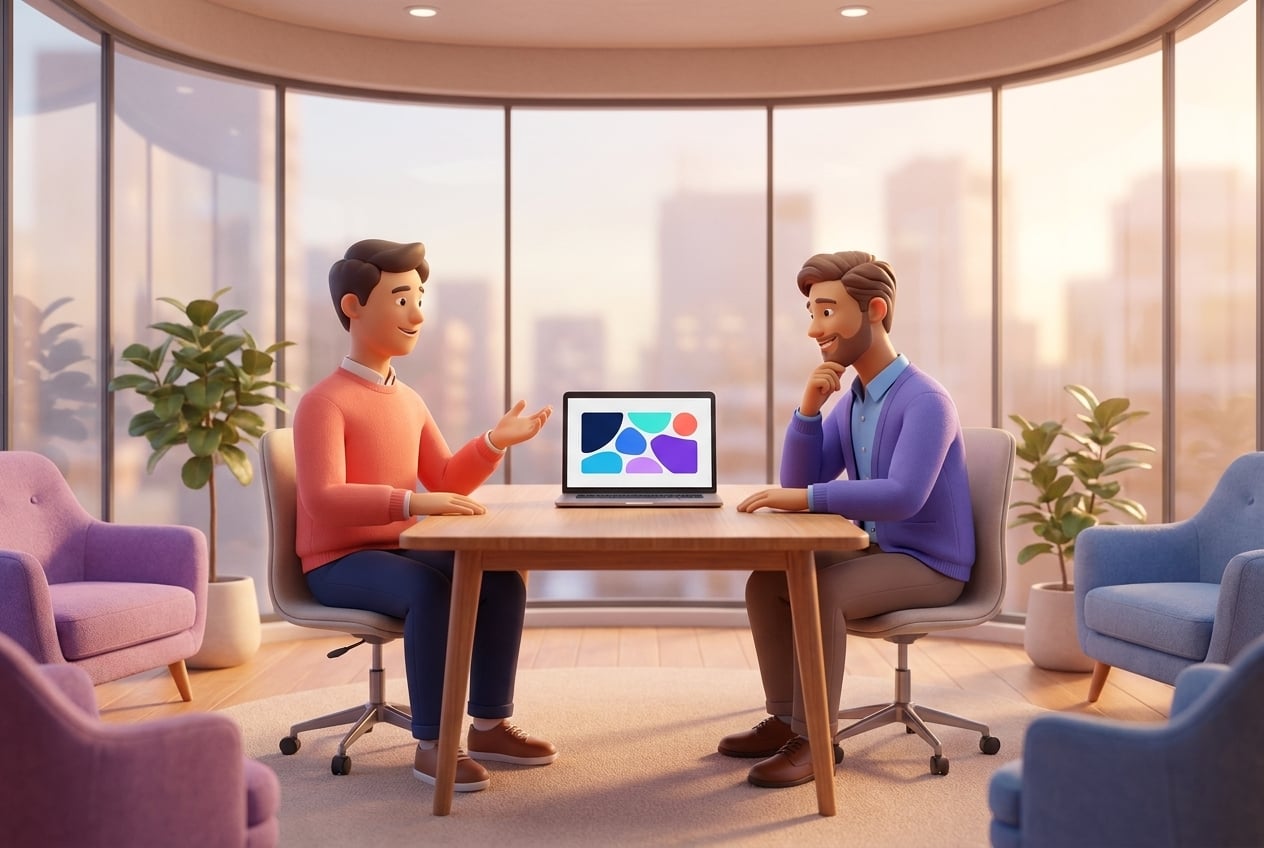
Most leadership training assumes everyone learns and leads the same way. It hands your new manager a set of best practices and expects universal application. That ignores how people actually behave under stress. A highly analytical person needs different techniques from a highly empathetic one, and if you give a structured, detail-first manager advice written for a spontaneous visionary, it feels unnatural and gets abandoned the first busy week.
The standard learning management system makes it worse by treating management like compliance. Watch the module on active listening, pass the quiz, forget it by lunch. It doesn't stick because it was never about the specific mess on that manager's desk that day.
An AI coach built on a personality model doesn't hand out generic management theory. It knows how the person asking naturally prefers to work and shapes the answer to fit. Compono's framework describes eight work personalities: Doer, Auditor, Helper, Advisor, Pioneer, Campaigner, Evaluator and Coordinator. You can see your own in about two minutes with the free four-question work personality assessment, and once you have, the difference is easy to picture.
Take a project delay. A Doer's instinct is to put their head down and push through the checklist, so their coach tells them to pause and tell stakeholders about the slip before they disappear into the work. A Campaigner's instinct is to throw five creative alternatives at the problem, so their coach nudges them to pick one concrete step rather than overwhelming the team. Same situation, opposite advice, both right for the person receiving it.
Conflict works the same way. A developer wants to explore every edge case; the product manager wants to ship by Friday. Neither is being difficult. One is acting like an Auditor, who reduces risk through detail, and the other like a Coordinator, who protects the deadline. When the whole company shares one framework, that argument turns into a conversation about working styles, and the coach can help each of them script the feedback in a way the other will actually hear. That's what rehearsing a difficult conversation with a coach that knows both personalities is for.
It also protects the quiet contributors. In a fast SaaS company the Pioneers and Campaigners get the airtime because they pitch and rally, but a product doesn't ship on ideas. Helpers carry the team's emotional load and avoid conflict, so their coach pushes them to say when a timeline is unrealistic. Evaluators bring the objectivity that saves you from bad calls and can land as harsh in a code review, so their coach helps them balance the critique so it's heard.
Traditional coaching is hard to measure: you pay a retainer, your manager meets someone monthly, and you hope. A platform gives you a better read, as long as it does so without exposing anyone's private sessions. Look at whether people keep using it past the launch, which topics your managers keep raising (if a lot of new leads are asking for help with giving negative feedback, you've found your next internal session), and whether the teams using it are quieter on the escalations front. In a competitive tech talent market, keeping the people you have is cheaper than replacing them, and the management layer is usually where they decide to stay or go.
Hey Compono Business is one AI coach for the whole company: coaching every person can talk to by voice or text, shaped to their work personality, plus wellbeing support that complements what you already offer and team personality insight every member can see. It's built by Compono on organisational psychology, and it stays coaching, with a clear hand-off when someone needs professional care. Your CTO gets a thinking partner. Your newest team lead gets one too, and stops learning management the hard way on real people.
Related reading: Best AI coaching platform for education: a 2026 guide · Finding the best AI coaching platform for healthcare in ANZ
Employee coaching, wellbeing support and team personality insights in one platform, built on organisational psychology.
Talk to usExecutive AI coaching is an AI coach a senior leader uses as a private thinking partner: to rehearse hard conversations, work through decisions and get guidance shaped to how they naturally lead, available whenever they need it. It is coaching rather than therapy, and it works alongside human coaching rather than as a substitute for complex development.
Not for deep, long-term executive development. Where AI coaching stands out is reach: it gives the same quality of in-the-moment guidance to team leads and mid-level managers who would otherwise get no coaching at all, and it gives executives support between human sessions.
It gives newly promoted engineers and specialists support at the moment they need it, for things like performance reviews, delegating and handling conflict, without waiting for a scheduled training session. Because it adapts to their work personality, the advice fits how they naturally operate, so they actually use it.
Most conflict in tech teams comes from different natural working styles rather than bad intent. A detail-first Auditor and a deadline-first Coordinator will clash on a release plan. When the team shares one personality framework, those clashes become conversations about how each person works, and they resolve faster.
No. AI coaching is personal and professional development: guidance, practice and reflection on work situations. It does not diagnose or treat, and a responsible platform will point someone to professional support when what they raise is beyond coaching.

1 min read
An AI coaching platform for COOs provides personalised, on-demand leadership guidance that helps operations leaders manage complex team dynamics,...

1 min read
Chief operating officers use AI coaching to find the real cause of operational friction, which is almost always a clash of work personalities rather...

1 min read
What does AI coaching look like for team leads? It looks like having an experienced organisational psychologist in your pocket, ready to offer...