
 Mathan Allington
How to manage someone with a different work style: a guide
 Mathan Allington
To manage someone with a different work style without the daily friction. Get practical steps and scripts for your next one-on-one meeting.
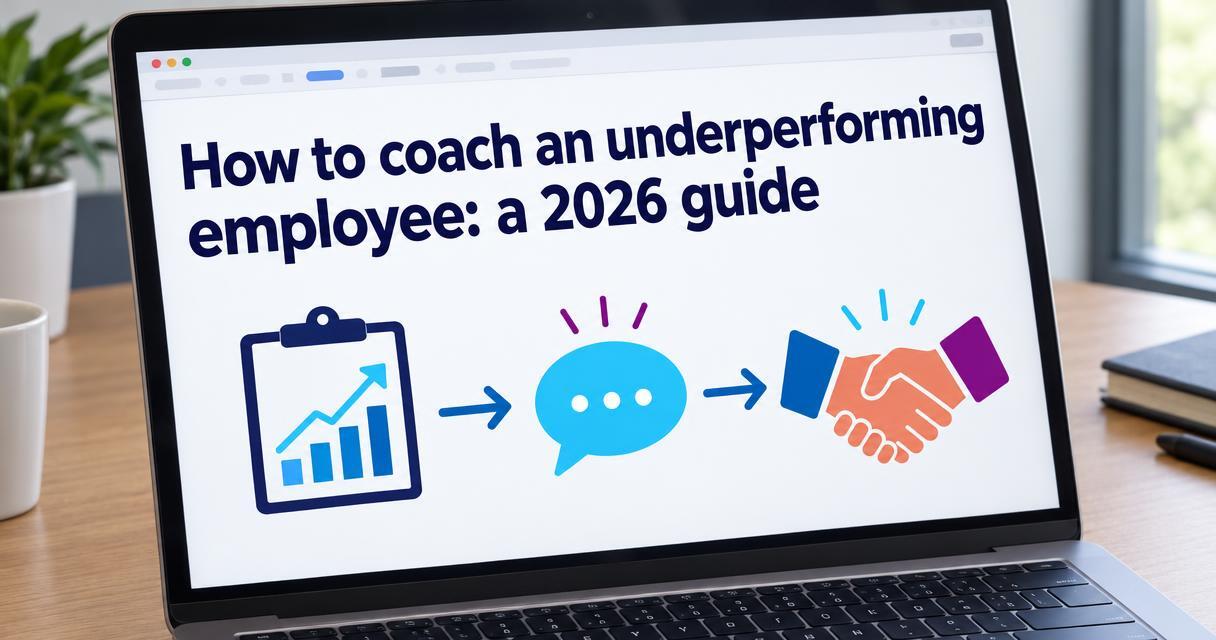
To coach an underperforming employee, you need to identify the root cause of their struggle, shift from a corrective mindset to a supportive one, and co-create a clear action plan with weekly feedback loops.
Last reviewed November 2026
Key takeaways
- Distinguish between a skill deficit, an environmental blocker, or a motivational drop before starting the conversation.
- Use objective data and specific observations rather than broad judgments about character or work ethic.
- Frame the conversation around mutual problem-solving to prevent defensive reactions.
- Establish a consistent cadence of weekly feedback to build accountability and momentum.
- Recognise when a person is no longer coachable and when to transition to a formal performance improvement plan.
It is the conversation every manager dreads. You notice a team member missing deadlines, dropping the ball on communication, or withdrawing from meetings. You want to help, but you do not want to micromanage or ruin the relationship. Often, leaders jump straight into fix-it mode. They point out the mistakes and demand better results. That is managing, not coaching. Coaching is about understanding why the performance dropped and helping the person find their own way back to standard.
According to Gallup, just 44% of managers globally have ever received management training, limiting their ability to coach performance effectively. You are not alone if this feels unnatural. At Hey Compono, we know that helping someone improve requires empathy, structure, and a lot of self-awareness. Here is how to work through the process effectively.
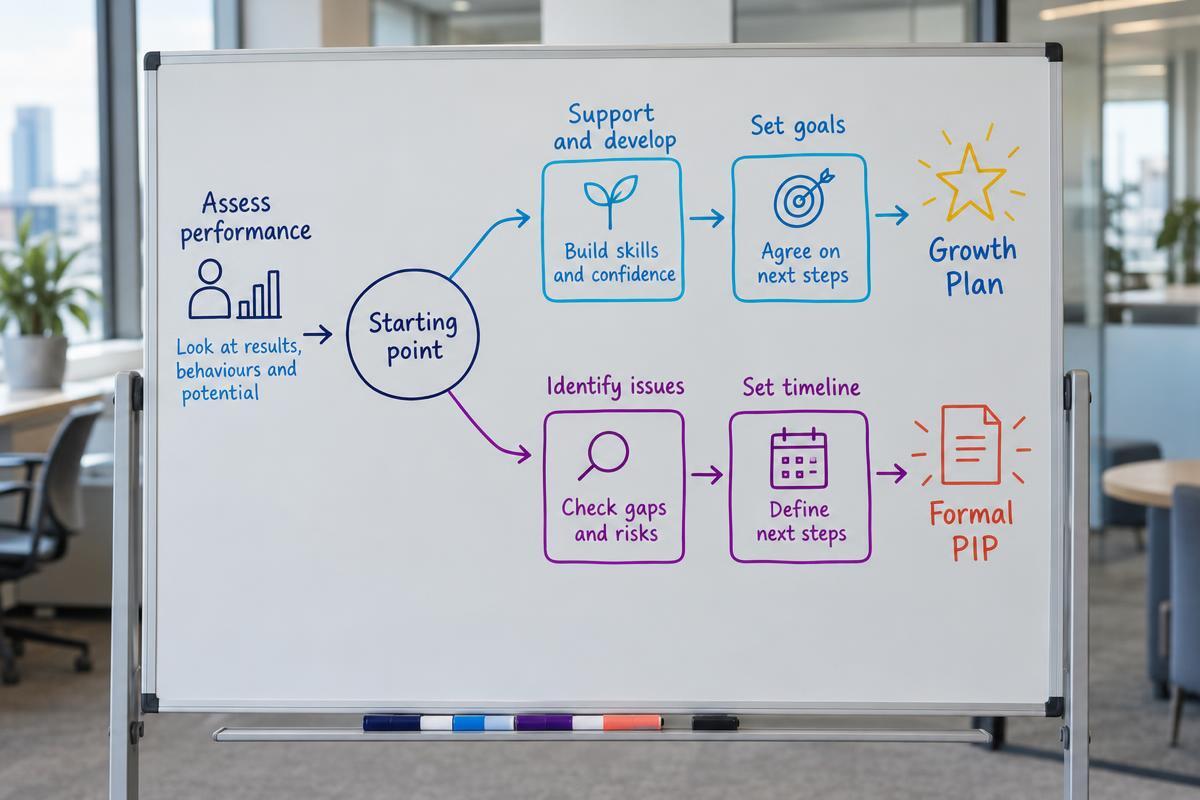
Before you book a meeting room, you need to step back. What looks like laziness is usually something else entirely. People rarely wake up wanting to do a bad job. You need to look for the hidden blockers impacting their work.
Is it a skill gap? Perhaps they lack the training for a new software tool or a recent promotion placed them in a role they are not ready for. Is it an environmental issue? A hybrid worker might be struggling with vague remote communication or external stressors at home. Or is it a motivational drop? Sometimes a person is simply bored, burning out, or feeling entirely disconnected from the team's mission.
Different personalities also react to stress in unique ways. A Doer might become frantic and make careless errors when overwhelmed, while a highly analytical person might freeze and miss deadlines because they are stuck in analysis paralysis. Understanding their baseline helps you approach the conversation with curiosity instead of frustration.
Gathering objective data is your safety net. If you walk into a meeting and say they have been dropping the ball lately, they will immediately go on the defensive. You need specific examples to anchor the discussion in reality.
Note the exact dates a report was late or the specific customer interaction that missed the mark. This shifts the focus from their character to the work itself. When you practise a difficult employee conversation in advance, you learn to strip the emotion out of your feedback.
| Subjective feedback | Objective feedback |
|---|---|
| You are always late with your reports. | You missed the Friday deadline for the last three weekly reports. |
| You seem disengaged in meetings. | You have not contributed to the brainstorming sessions for the past month. |
| Your work is getting sloppy. | The recent client presentation had four calculation errors on slide three. |
Start the conversation by stating your intent clearly. You are there to support them, not to punish them. The goal is mutual problem-solving.
Open with a supportive statement. You might say something like, "I want to talk about how things are going with the new project. My goal is to make sure you have everything you need to succeed." This lowers their guard.
Next, state your objective observation without adding a judgment. "I noticed the last three weekly reports were submitted on Tuesday instead of Friday." Then, hand the floor over to them with an open inquiry. Ask, "Can you walk me through what is happening on your end?"
Now comes the hardest part: listening. Wait for their response without interrupting. A meta-analysis published in the Academy of Management Learning & Education found a medium positive effect of workplace coaching, with an effect size of 0.59. Coaching works when it is collaborative. You have to let them speak and validate their experience before you can fix the problem.
Once you agree on the problem, you need to design the solution together. Do not dictate the steps. Ask them what they think needs to change and what support they need from you. Set SMART goals so you both know exactly what success looks like in the coming weeks.
Then, establish a follow-up cadence. Gallup research shows that employees who receive meaningful feedback every week are four times more likely to be engaged than those who do not. Yet, only 21% strongly agree they received such feedback in the past week. Do not wait for the next quarterly review to check on their progress.
Check in weekly. Meaningful manager conversations can be effective in 15 to 30 minutes when held consistently and focused on goals, priorities, and strengths, according to Gallup. Measuring coaching effectiveness comes down to observing steady, incremental improvements in these weekly catch-ups.
There is a distinct difference between managing and coaching. Managing is about enforcing standards, tracking metrics, and ensuring compliance. Coaching is about developing the person, asking the right questions, and opening up their capability.
If you only manage, you will create a team that only performs when you are watching. If you coach, you build autonomy. For leaders overseeing large departments, providing this level of individual attention is exhausting. This is why many organisations adopt an AI coaching platform for teams to provide continuous, personality-adapted support between scheduled one-on-ones.
Not every coaching conversation ends in a turnaround. You need to know the difference between a person who is struggling and a person who is uncoachable. An uncoachable employee deflects blame, refuses to acknowledge objective facts, or agrees to a plan and makes zero effort to execute it.
When coaching fails, you must pivot to formal performance management. This usually means initiating a Performance Improvement Plan (PIP) with clear, documented consequences. If the PIP does not result in sustained improvement, you need a graceful exit strategy. Delaying a necessary termination only drains the rest of your team and damages your workplace culture. Improving your leadership capability means knowing when to offer a hand and when to draw a line.
Handling these moments is a heavy lift for any manager. The more you use Hey Compono to understand your own leadership style, the easier it becomes to regulate your emotions and lead these conversations with clarity.
Working through underperformance is one of the hardest parts of leadership. If you want to build your confidence before stepping into the room, you can simulate the discussion in a safe environment first.
Related reading
Coaching a remote worker requires intentional communication. Since you cannot rely on informal office interactions, you must schedule dedicated video calls for feedback. Be clear about expectations and ensure they have the right digital tools. Watch out for proximity bias, where you unconsciously favour in-office staff over remote team members.
Managing focuses on the past and present, ensuring tasks are completed to a specific standard. Coaching focuses on the future, guiding the employee to build new skills, solve their own problems, and change their behaviour over time.
This depends on the complexity of their role and the severity of the underperformance. Generally, a manager should spend four to eight weeks providing active coaching and weekly feedback. If there is no measurable improvement in that timeframe, it is usually time to initiate a formal Performance Improvement Plan.
Defensiveness is a natural reaction to feeling threatened. If they become defensive, pause. Do not argue. Return to the objective facts of the situation and validate their feelings without agreeing to their excuses. You might say, "I understand this is frustrating. My goal is to figure out how we can fix this together."
Yes. A previously high-performing employee who suddenly starts missing deadlines or withdrawing from the team is often experiencing burnout or personal stress. In these cases, coaching should focus on workload management, prioritisation, and potentially encouraging them to take time off to recover.
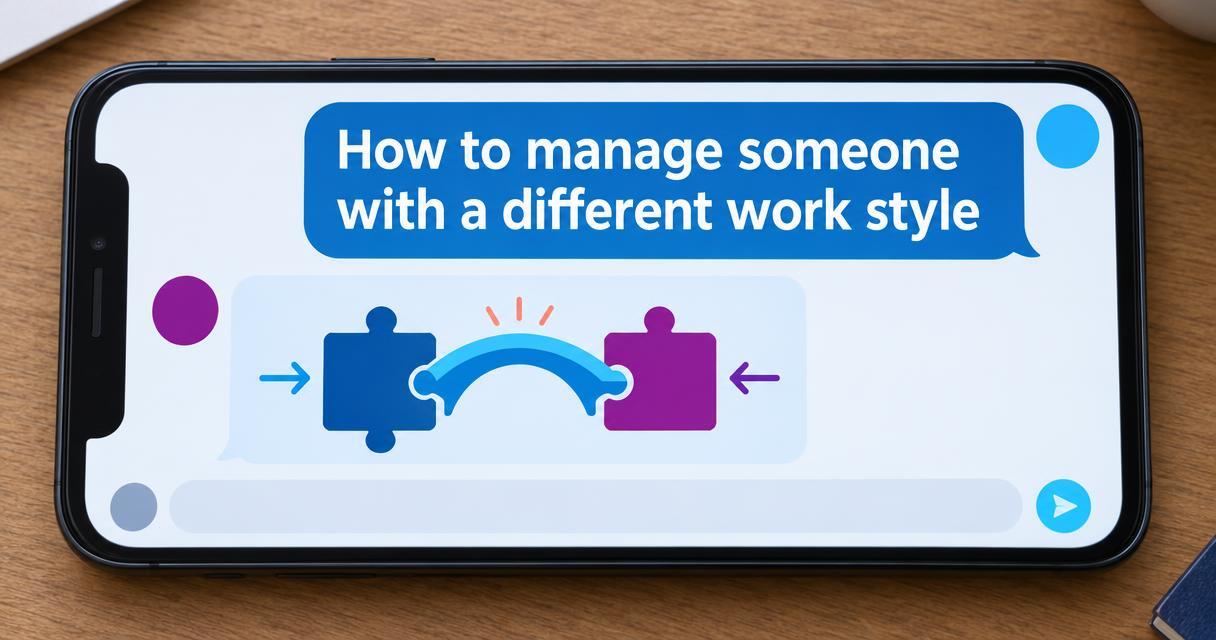
To manage someone with a different work style without the daily friction. Get practical steps and scripts for your next one-on-one meeting.

How AI coaching gives managers tailored support, adapts to different people, and takes some development load off a small HR team.

Learn how to practice a difficult conversation with an employee. Get practical steps to prepare, manage your anxiety, and deliver clear feedback.
 Compono