
 Mathan Allington
How To Practice A Difficult Conversation With An Employee
 Compono
Learn how to practice a difficult conversation with an employee. Get practical steps to prepare, manage your anxiety, and deliver clear feedback.
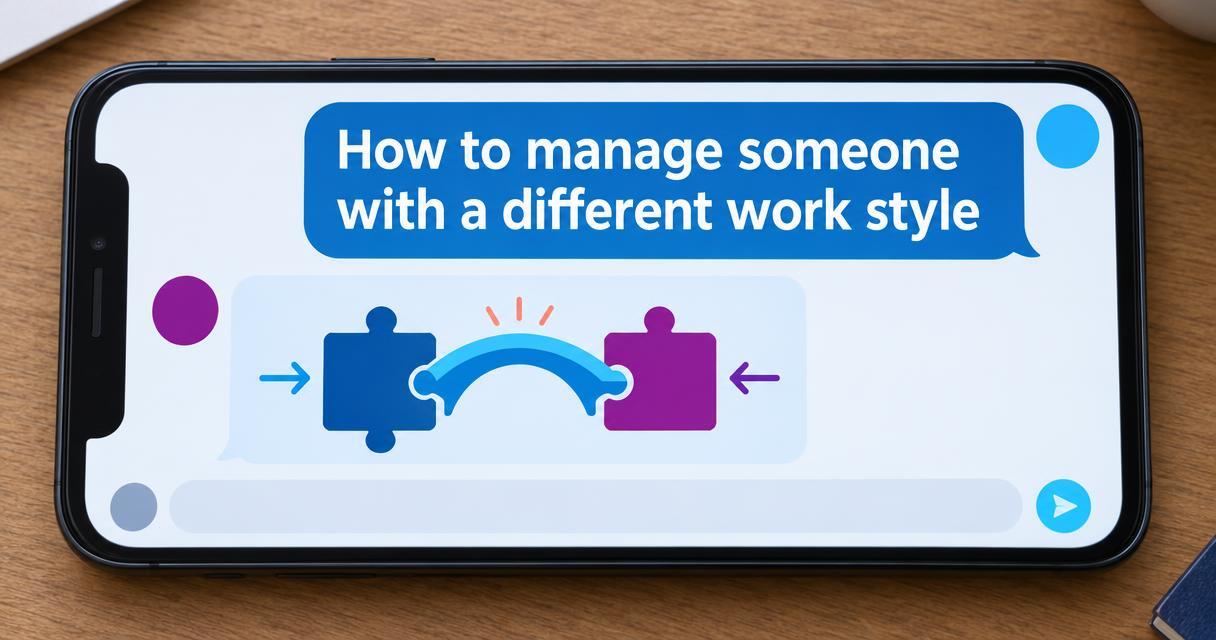
You send a brief, bulleted message to get a quick answer, and your direct report replies with a four-paragraph email outlining every possible risk.
Last reviewed November 2026
Key takeaways
- Friction often comes from contrasting defaults rather than incompetence or stubbornness.
- Setting clear outcome expectations allows employees to choose the method that suits them best.
- A personal user manual helps managers and reports openly share their communication preferences.
- Distinguishing a genuine style difference from a performance issue requires a focus on final results.
When you manage someone with a different work style, every interaction can feel like you are speaking different languages. You might value speed and forward momentum, while they value precision and careful planning. You want a high-level summary, but they bring you step-by-step instructions. It is easy to write this off as a performance issue or a bad attitude. Most of the time, it is simply a clash of natural working defaults.
As a manager, you probably expect things to be done in a way that makes sense to you. That is human nature. We assume our methods are the most logical because they have worked for us. The reality is that adapting your approach to fit the people in your team takes effort, but it is the only way to get the best out of them.
Before you can fix the friction, you need to name it. People process information and approach their work through completely different lenses. At Compono, our research into the Work Personality framework highlights that these differences are wired into how we operate.
For example, someone with an Auditor work personality focuses heavily on mitigating risk, ensuring compliance, and checking the details. If you are a fast-moving, big-picture leader, their constant questions might feel like they are dragging their feet or resisting your ideas. They are not trying to slow you down. They are just trying to make sure the project does not fall apart.
Taking the time to map out the types of working styles in your team changes the conversation. Instead of seeing a direct report as difficult, you start to see what they are solving for. Someone who is highly collaborative wants consensus. Someone who is highly independent just wants to be left alone to execute. Recognising these patterns is the first step toward better communication.
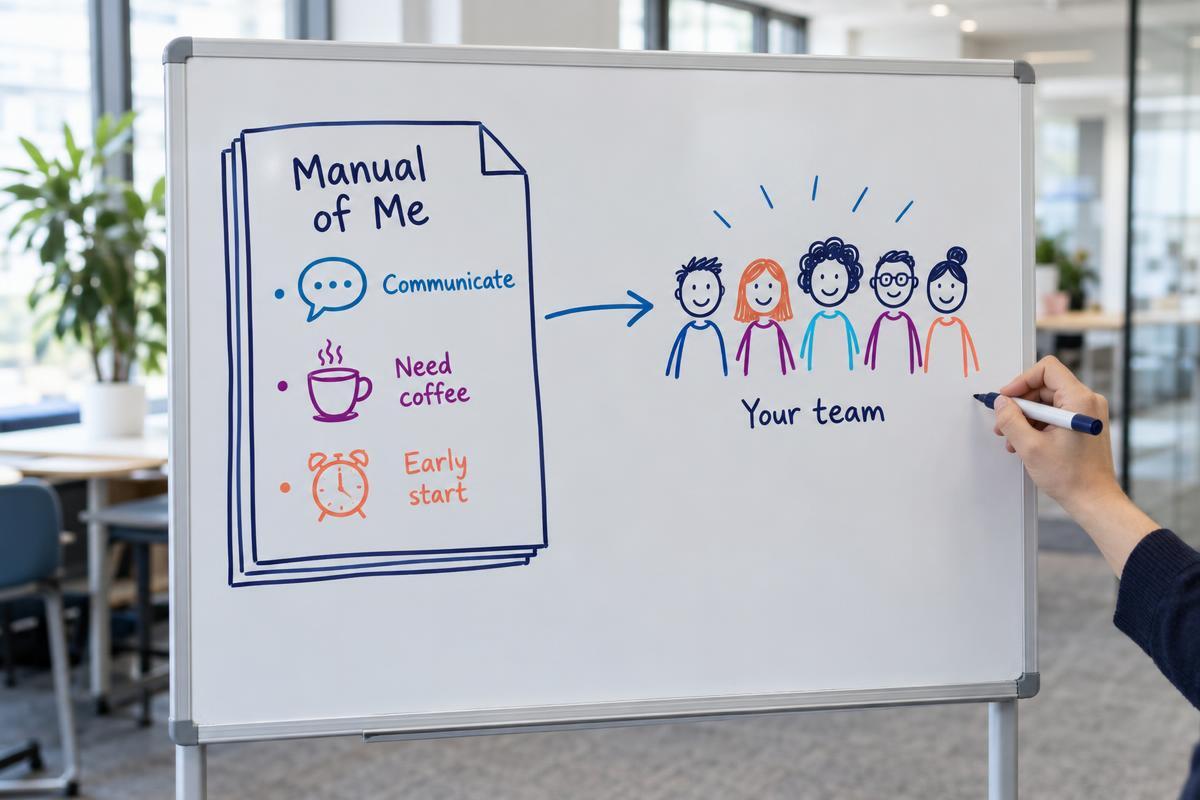
The weekly one-on-one meeting is where you can bridge the gap between your style and theirs. Instead of guessing how your direct report prefers to work, ask them directly. A great way to do this is by introducing a 'Manual of Me' or a personal user manual.
This is a simple document where both you and your report write down your preferences. You might cover questions like what time of day you do your best focus work, whether you prefer a Slack message or an email for urgent issues, and how you prefer to receive feedback. When you share your manual with them and they share theirs with you, the guesswork disappears.
According to Gallup research, effective managers are associated with four times higher employee engagement and well-being, regardless of how often employees work remotely. The best managers do not force everyone into the same box. They adapt their feedback and their check-ins to suit the person sitting across from them.
Hybrid and remote work increases stylistic differences. In an office, you can read body language and quickly clear up a misunderstanding. Online, a short message can be read as aggressive, and a long message can be read as micromanagement.
If you have an employee who needs long blocks of deep, uninterrupted focus time, but your management style relies on quick-fire communication throughout the day, you are going to frustrate each other. Aalto University Executive Education notes that managers of hybrid teams need empathy to understand employees’ unique needs and work styles and provide appropriate support.
You can fix this by setting clear communication agreements. Agree on a response window for standard messages (like within three hours) and a separate channel for genuine emergencies. This gives the deep-worker the autonomy they need and gives the quick-communicator peace of mind that nothing urgent will be missed.
When you pair people with polar-opposite styles on a project, you either get a disaster or a highly effective partnership. The outcome depends entirely on how you set it up. If you put a visionary idea-generator and a careful rule-follower together without any ground rules, they will drive each other mad.
As their manager, your job is to define their lanes. Let the big-picture thinker outline the strategy and the broad goals. Let the detail-oriented person build the timeline, set up the tracking, and manage the execution. When both people know what they own, they stop stepping on each other's toes.
If you find yourself constantly mediating conflict between reports, it might be time to look at your own communication habits. Using the Hey Compono app, you can practise difficult conversations at work in a private space before you have them for real. It helps you test different ways to deliver feedback so it lands the way you intend it to.
The hardest part of managing different personalities is knowing where to draw the line. You want to be flexible, but you still have deadlines to hit and standards to maintain. How do you know if an employee just works differently, or if they are actually underperforming?
The answer lies in focusing on the outcome rather than the process. If a report delivers excellent work on time, but they do it by working odd hours and taking a messy approach, that is a style difference. If their messy approach causes them to miss deadlines and drop important details, that is a performance issue.
Worklytics research shows that productivity management should account for differences in roles, industries, and individual work styles rather than applying one universal standard. You have to separate your preference for how the work gets done from the reality of whether the work is actually good.
| Different work style | Performance issue |
|---|---|
| Takes longer to start a task because they are planning, but always finishes on time. | Consistently misses deadlines because they leave everything to the last minute. |
| Prefers to communicate via written updates rather than speaking up in meetings. | Fails to communicate blockers or avoids giving updates entirely. |
| Needs quiet, independent focus time to get through their task list. | Refuses to collaborate or share information when the team needs it. |
If you identify a genuine drop in standards, you have to address it directly. Research on hybrid performance management from Frontiers in organisational Psychology identifies structured feedback, digital equity, and trust-based monitoring as key conditions for accountability. If you are dealing with underperforming colleagues or direct reports, anchor your feedback in those final results, not in how they arranged their desk to get there.
Friction does not only happen downwards. Often, you are the one trying to adapt to a boss who operates completely differently to you. If you are a methodical planner and your manager is highly reactive, their constant last-minute requests will burn you out quickly.
You cannot change your manager's personality, but you can manage how you interact with them. Ask for clarity on priorities. When they give you a new urgent task, lay out your current workload and ask them which item they want you to drop. Managing up is about creating boundaries that protect your focus while still delivering what the business actually needs. Hey Compono can help you script these push-back conversations so you stay professional without rolling over.
Understanding how your people work naturally takes the friction out of management and helps you get the best out of your team. Our AI coaching platform adapts to individual personalities, helping leaders and their reports bridge communication gaps without the guesswork.
Related reading
Give them clear parameters around when a project needs to be right and when it just needs to be done. A detail-oriented person often treats every task with the same level of high scrutiny. Sit down with them and define what a first draft looks like compared to a final product, so they know when it is safe to lower their guard.
Stop trying to force one person to completely adopt the other's style. Instead, find a middle ground. If you hate long emails but they need a written record, agree that they will send bullet points rather than paragraphs. Small compromises on both sides usually fix the worst of the friction.
Tailor your delivery to what they value. If they are highly analytical, bring data and specific examples. If they are relationship-focused, start by acknowledging their good intentions and how their work impacts the team. Always focus the feedback on the outcome of their work, rather than attacking the process they used to get there.
You do not need to change your core personality, but you do need to adjust your tactics. Effective leadership requires flexibility. You might need to be more directive with a junior employee who needs guidance, and completely hands-off with a senior specialist who thrives on autonomy. The goal is to provide what they need to succeed.
Lead by example. Write your own manual first and share it in a team meeting. Keep it light and honest. Acknowledge your own quirks, like saying you are terrible at checking emails after lunch, so urgent things need a Slack message. When you show vulnerability, your team will feel safe enough to share their own preferences.

Learn how to practice a difficult conversation with an employee. Get practical steps to prepare, manage your anxiety, and deliver clear feedback.
To give upward feedback to your manager safely. Get practical scripts, frameworks and advice for managing up without damaging your career.

How to give a coworker hard feedback without wrecking the relationship, with practical steps for the conversation itself.
 Mathan Allington