
 Compono
1 min read
What is the best leadership development approach for early childhood education?
 Compono
The best leadership development approach for early childhood education is personality-adaptive coaching, which trains centre directors and room...
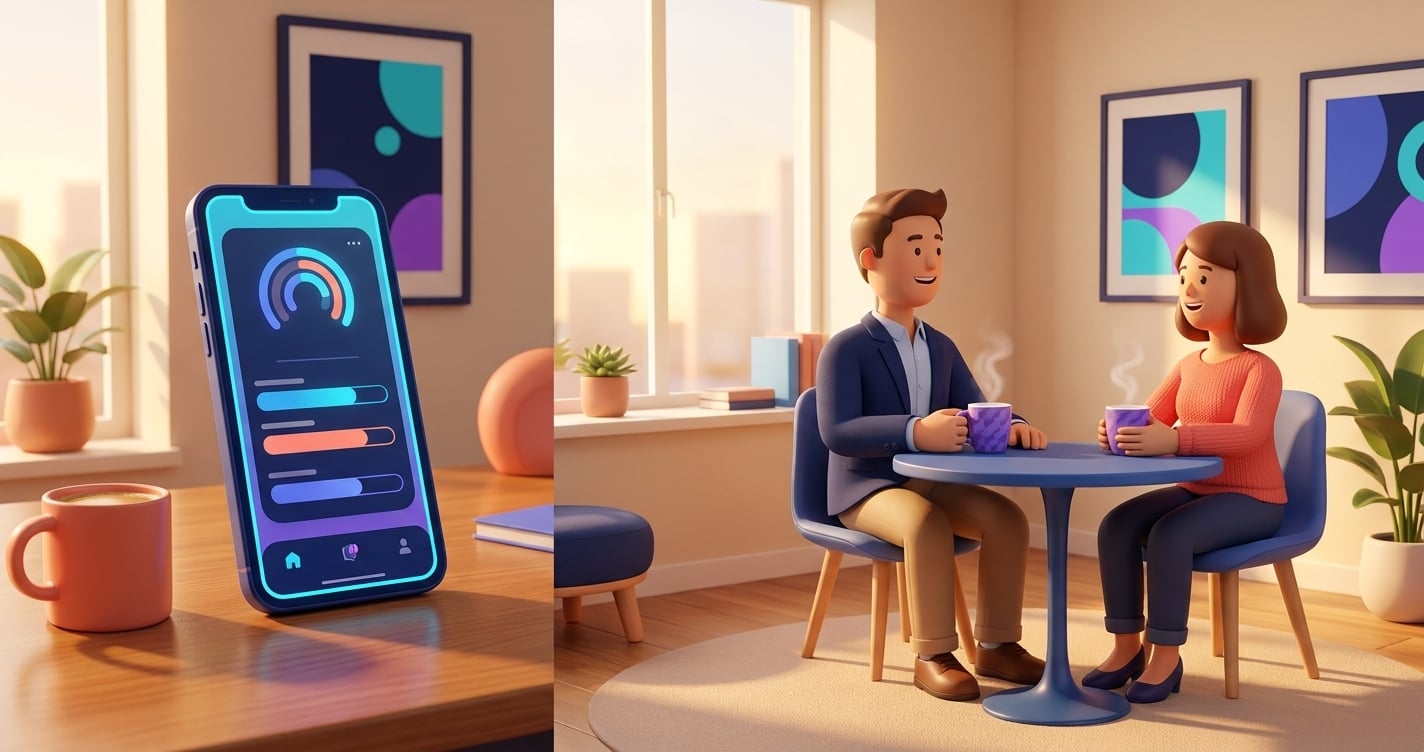
Yes, AI coaching is highly effective for structured goal-setting, routine skill development, and daily accountability, though it falls short of human coaching when dealing with complex emotional or nuanced leadership challenges.
Key takeaways
- AI handles routine career development and daily accountability tasks exceptionally well.
- Human coaching remains superior for deep behavioural change and complex workplace relationships.
- The effectiveness of digital coaching depends heavily on your natural work personality.
- The most successful teams use a hybrid approach to combine digital structure with human empathy.
You have probably interacted with a customer service chatbot that sent you in circles. When someone suggests using artificial intelligence for career coaching, that frustrating experience is usually the first thing that comes to mind. It feels cold. It feels disconnected. You might wonder how a machine could possibly understand the nuance of your specific workplace struggles.
The reality is that the technology has moved past generic automated responses. Modern systems analyse patterns, remember past conversations, and adjust their advice based on your specific context.
People often assume coaching has to be a deep, philosophical conversation. Most day-to-day career development is actually highly structured. It involves setting clear targets, reviewing progress, and getting gentle nudges to stay on track.
This is where algorithmic guidance excels. According to The Conference Board, AI can provide up to 90% of day-to-day coaching functions, with 96% of workers reporting the responses were tailored to their goals. The machine does not get tired. It does not judge you for missing a target. It is available at 2:00 AM when you are stressing over an upcoming presentation.
Users generally respond well to this immediate access. The same research found that 90% of surveyed users found AI coaching easy and comfortable to use, and 89% got specific and useful next steps to apply to their work.

Digital platforms are excellent at structure. They struggle with empathy. When you are dealing with a toxic manager, navigating a complex team conflict, or facing severe burnout, a structured framework is rarely enough.
A study published in Human Resource Development International found that AI chatbot coaching did not match human coaching on key outcomes. The human-coaching group showed substantial gains in wellbeing and self-efficacy, alongside better goal attainment.
A human coach can hear the hesitation in your voice. They can challenge your underlying assumptions and provide emotional validation that a machine simply cannot replicate. AI is a tool for skill development, not a replacement for human connection.
We all process information differently. The success of any coaching – digital or human – depends heavily on how your brain works.
Some people are natural Doers. They want clear instructions, practical steps, and immediate action items. For this group, a digital coach is often perfect. It provides the exact framework they need without any unnecessary emotional processing.
Other people are Helpers or Advisors. They process challenges by talking them through. They need to feel heard and understood before they can move forward. For these personalities, a purely digital interface can feel frustratingly hollow.
There is actually a way to figure out which of these patterns fits you. You can take a quick personality read with Hey Compono to see what comes up and understand your default working style.
The most practical approach combines both methods. Teams use digital platforms for the routine tracking of goals, getting quick feedback on communication styles, and building daily habits. They save human interaction for the complex, messy human problems.
Research shows this combination works. Another study reported that AI coaching was as effective as human coaching for helping participants achieve specific, structured goals. When you handle the routine development digitally, human managers have more time to focus on genuine mentoring.
Some teams use personality-adaptive coaching to have these development conversations without it getting weird. It provides the structure of a digital tool while acknowledging the human differences in how we all work.
Key insights
- Digital coaching excels at providing consistent, non-judgmental accountability for daily tasks.
- Human intervention is required for complex conflict resolution and emotional support.
- Understanding your work personality helps you determine which type of coaching will actually stick.
Understanding your natural work preferences makes any professional development more effective. We help you map those traits so you can build skills in a way that actually makes sense for your brain.
Related reading
Yes. AI coaching is particularly effective for beginners because it provides clear, structured steps without the intimidation factor of speaking to a senior executive or professional coach. It allows you to ask basic questions without fear of judgment.
No. While AI can handle task tracking and routine skill development, it cannot replace the empathy, contextual understanding, and relationship-building required for effective leadership. Good managers use AI to handle the admin side of coaching so they can focus on human connection.
Digital coaching works best when it is consistent, highly structured, and tied to specific daily actions. It is effective because it is available on demand and removes the friction of scheduling formal coaching sessions.
This depends entirely on the platform's privacy policy. You should always verify how your data is stored and whether your inputs are used to train public language models before sharing sensitive workplace information.
Task-focused personalities usually appreciate the direct, logical nature of AI guidance. Relationship-focused personalities often find it lacking in empathy and may need to supplement digital tools with human mentorship to stay engaged.

1 min read
The best leadership development approach for early childhood education is personality-adaptive coaching, which trains centre directors and room...
1 min read
An AI coaching platform for talent managers scales personalised development across your entire organisation by delivering real-time,...
1 min read
AI coaching software for L&D uses artificial intelligence to deliver personalised, personality-adaptive development at scale, giving every employee...