
 Mathan Allington
Real world AI coaching applications: what works in 2026
 Mathan Allington
Practical AI coaching applications that actually work in 2026. Find out how digital tools help you handle conflict and build self-awareness.
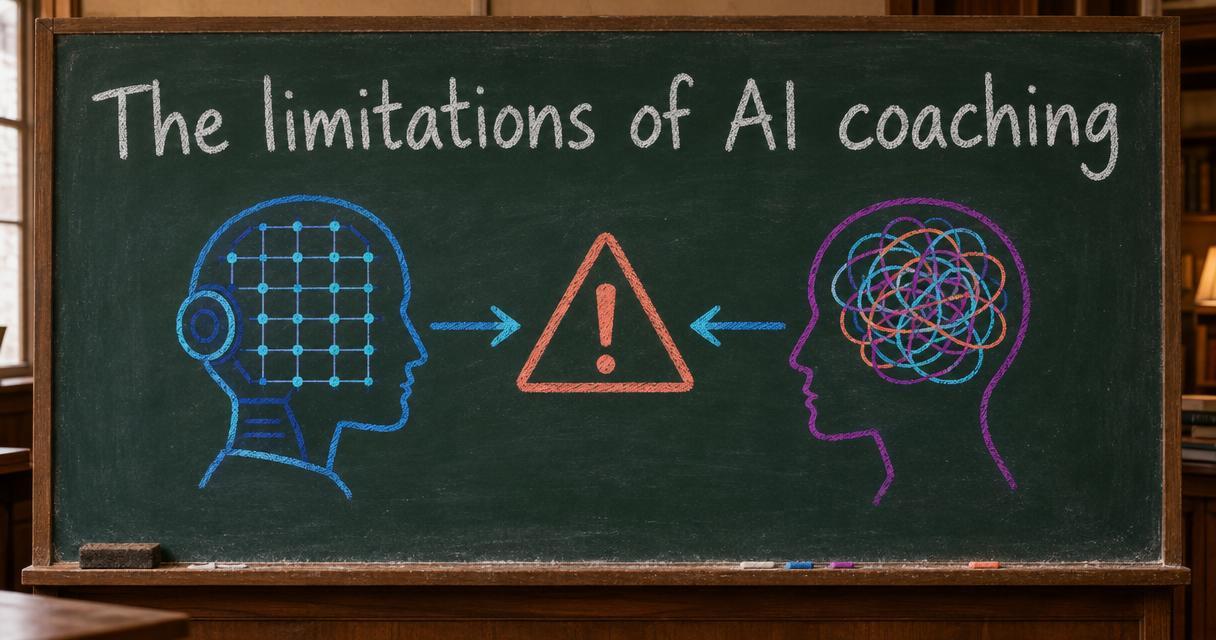
The main limitations of AI coaching are its inability to replicate genuine human empathy, its struggle to interpret highly nuanced emotional contexts, and the ongoing risks of algorithmic bias and data privacy breaches.
Last reviewed November 2026
Key takeaways
- AI coaching excels at structured skill building but cannot replace human intuition or deep relational connection.
- Privacy, ethical accountability, and algorithmic bias remain significant hurdles for widespread organisational adoption.
- Generative AI models can occasionally produce convincing but incorrect advice, known as hallucination.
- The most effective coaching models combine AI for procedural, daily guidance with human oversight for complex emotional support.
Technology is reshaping how people develop at work. You might be looking at a new coaching app and wondering if a machine can actually understand your specific career hurdles. While digital tools provide excellent scale and accessibility, treating them as a direct replacement for human relationships is a mistake. There is a profound difference between a system that predicts text and a person who understands human behaviour.
At Hey Compono, we build personality-adaptive tools to help you work through work. We also know exactly where those tools stop. Understanding the boundaries of artificial intelligence helps you get the most out of it without expecting it to fix systemic organisational issues or deep personal struggles.
The most glaring limitation of automated coaching is the absence of human empathy. An algorithm can parse your text and simulate a supportive tone. It cannot actually feel what you are experiencing. This emotional void becomes obvious when you face complex workplace trauma, intense burnout, or severe impostor syndrome.
A recent study found that AI can substitute for procedural parts of coaching but remains constrained in building emotional engagement, sustained participation, and goal pursuit (PLOS ONE, 2026). Real coaching relies heavily on the unspoken changing between two people. A human coach reads body language, hears the hesitation in a voice, and uses intuition to challenge a limiting belief.
This limitation hits different people in different ways. If you have an Advisor work personality, you naturally seek deep understanding, tolerance, and diverse perspectives. A generic automated response might feel hollow when you need genuine validation. When you explore an AI coaching vs a human coach comparison, the human element always wins on pure emotional resonance.

Artificial intelligence operates on pattern recognition. It excels at procedural advice, such as structuring a difficult conversation or preparing for an interview. It struggles immensely with unpredictable, highly nuanced real-world contexts that fall outside its training data.
When faced with a unique career dilemma, a large language model might confidently invent a solution that sounds professional but makes no practical sense. AI-generated coaching can produce plausible but incorrect information, a phenomenon known as hallucination, which creates risks when users rely on the system’s advice (Springer Nature, 2026).
This is why Hey Compono vs ChatGPT is such an important distinction. General generative chatbots simply guess the next best word. Tailored coaching algorithms use specific psychological frameworks to ground their advice, limiting the risk of hallucination. However, even the best algorithms cannot account for office politics, unspoken cultural rules, or a toxic manager.
Coaching requires vulnerability. You need to be able to share your frustrations, mistakes, and fears safely. When you type those thoughts into an enterprise application, data privacy becomes a serious concern. Employees are rightly sceptical about who owns their data and whether their manager can read their confidential coaching transcripts.
Researchers identified data privacy, ethics, regulatory compliance, and organisational readiness as major barriers to adopting AI coaching (International Journal of Training and Development, 2026). If you are using a tool to complain about your boss, you need ironclad assurance that your words are secure. Reviewing AI coaching privacy standards and checking the platform's privacy policy is essential before you share sensitive information.
There is also the question of liability. If a human coach gives negligent advice, they are professionally accountable. If a machine gives harmful advice that leads to a career misstep, accountability is blurred. AI coaching agents may operate as black boxes, making their decision-making difficult to explain even to developers and undermining user trust (Springer Nature, 2026).
Algorithms learn from historical data. If that data contains human biases, the technology will repeat them. In a coaching context, this can mean giving advice that works well for a dominant demographic but fails completely for minority groups or neurodivergent employees.
AI coaching systems can reproduce or increase inequities when biased training data or algorithmic design influences their recommendations (International Journal of Training and Development, 2026). A biased system might advise a female employee to be more accommodating in a salary negotiation while pushing a male employee to be aggressive.
Personalisation limits also apply to team changing. When teams use an AI coaching platform for business, the software must adapt to different working styles. A system that only gives highly directive, structured advice will frustrate creative types. It is important to use tools that adapt to your actual personality rather than forcing you into a generic corporate mould.
There are specific, high-stakes domains where automated tools should never be used. Digital coaching is designed for professional development, skill acquisition, and behavioural reflection. It is not designed to handle clinical mental health crises, severe trauma, or deep psychological distress.
If work is pushing you to the edge, an app will not save you. If you are dealing with severe mental exhaustion or distress, you need professional intervention. Accessing professional crisis resources is always the right step when you are overwhelmed.
Recognising these limitations does not mean abandoning the technology. It means using it for what it is actually good at. The most effective approach is a hybrid model that uses technology for scale, practice, and procedural guidance while retaining human connections for complex emotional work.
A survey of 205 coaching professionals found that generative AI is used mainly for research, content creation, and administration, while its role in relational and interpretive coaching remains limited (arXiv, 2026). You can use Hey Compono to practise a difficult conversation at midnight before a big meeting. You can then take the clarity you gained into a real conversation with a human mentor the next day.
Automated coaching provides immediate, objective feedback and a safe space to fail. It gives you the repetitions you need to build confidence. As long as you treat it as a powerful practice tool rather than a human replacement, you can work through its limitations safely.
We build our tools to complement your career growth, focusing on personality-adapted frameworks while remaining completely transparent about what technology can and cannot do.
Related reading
Hey Compono helps teams give and receive feedback that actually moves the needle. Start free and see how it fits your workflow.
It depends entirely on the platform's security architecture. Reputable platforms anonymise data and have strict confidentiality agreements. Always check the privacy terms before sharing highly sensitive workplace conflicts or personal grievances.
No. Technology is excellent for procedural practice, script building, and objective behavioural feedback. It cannot provide human empathy, read complex office politics, or offer the deep relational support that a human mentor provides.
Generative models can hallucinate or provide generic advice that does not fit your specific workplace culture. You should always use your own judgment to filter automated advice. Think of it as a sounding board rather than an absolute authority.
Some people find digital coaching highly effective because they feel less judged by a machine than a person. Others find it frustrating because they crave human connection. Its effectiveness often depends on your specific work personality and learning style.
When used correctly, it should do the opposite. The goal of a good digital coach is to ask you probing questions that force you to reflect on your own behaviour, ultimately sharpening your self-awareness and intuition over time.
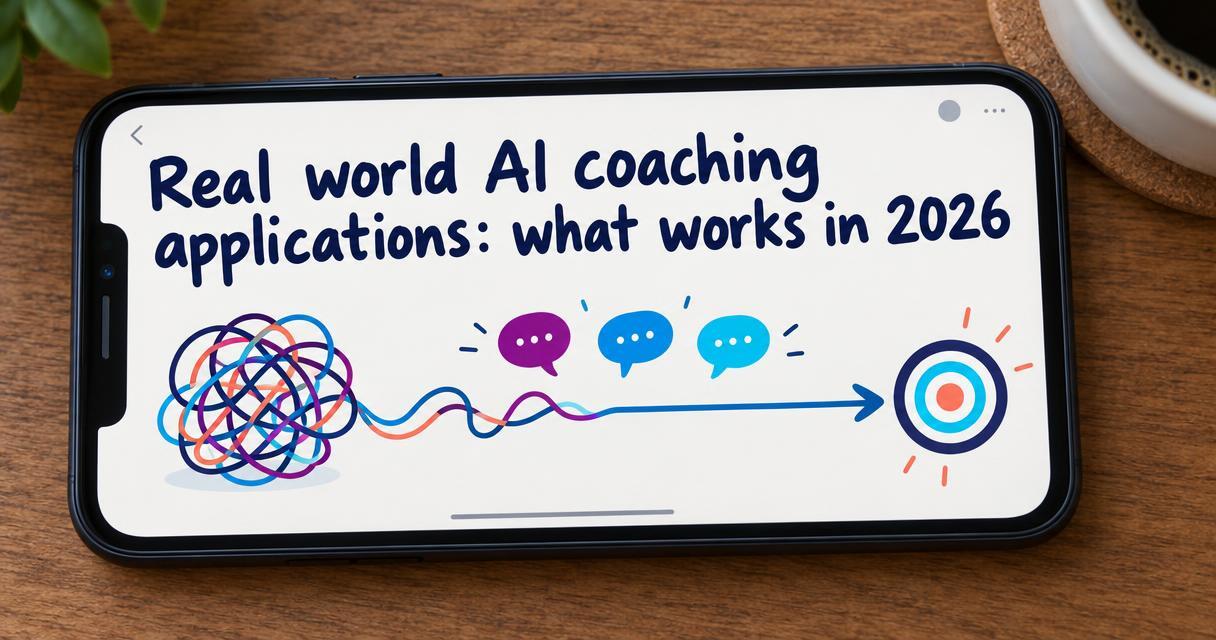
Practical AI coaching applications that actually work in 2026. Find out how digital tools help you handle conflict and build self-awareness.
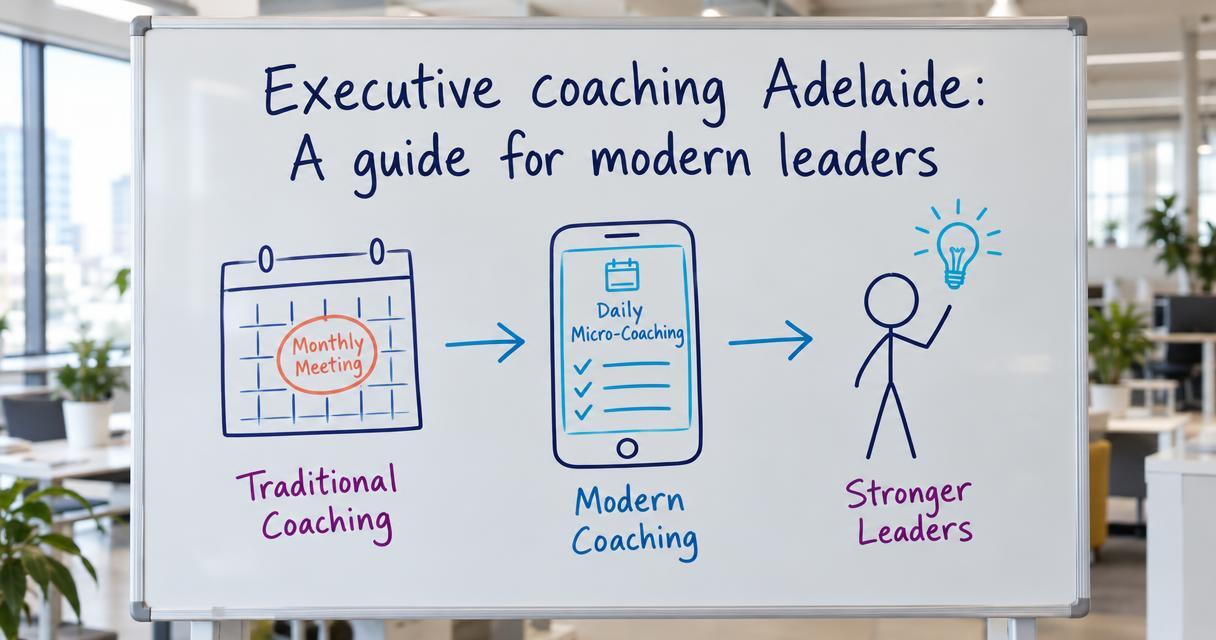
Executive coaching in Adelaide? Discover how modern leaders are moving beyond monthly sessions to continuous, personality-adaptive support.

What it is like having a coach available between meetings, what AI coaching is good for, and where a human still does it better.
 Compono