
 Mathan Allington
Job exploration and finding work that actually fits your brain
 Compono
Feeling stuck but unsure what else to do? A practical way to explore jobs based on the work you are good at, not the titles that sound impressive.
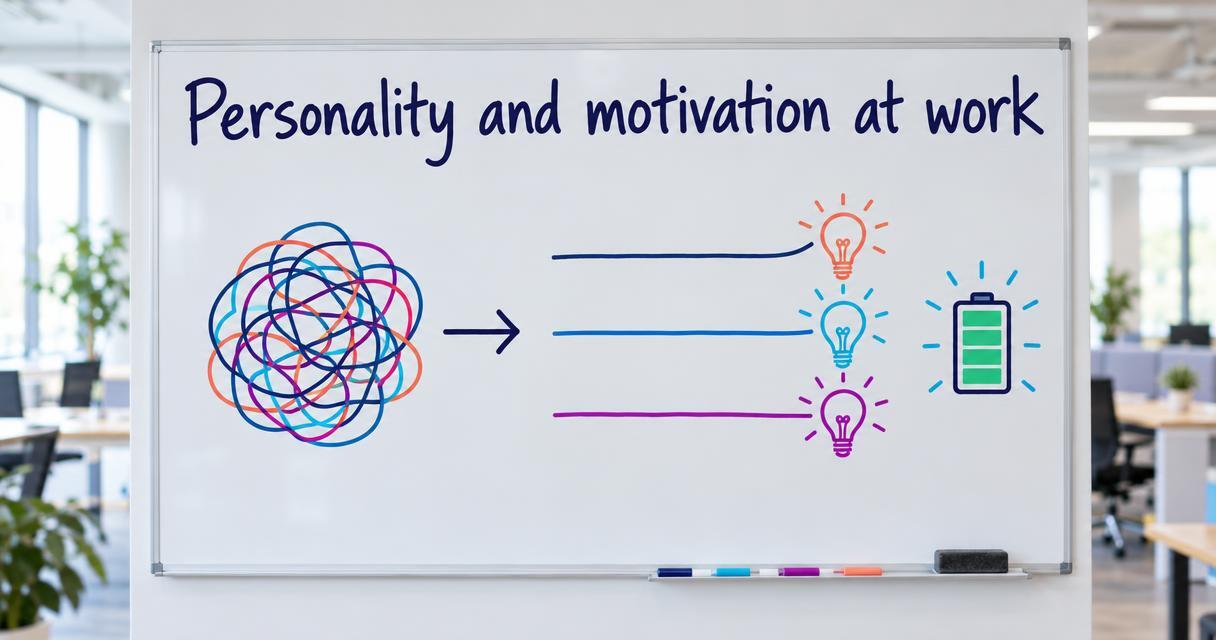
Your personality and motivation at work are directly linked because what energises one person will often exhaust another, meaning true motivation comes from aligning your natural work preferences with your daily tasks.
Last reviewed November 2026
Key takeaways
- Motivation is not a fixed resource you either have or lack; it is a changing energy level created by how well your job fits your natural personality.
- Different work personalities require entirely different conditions to thrive, with some needing deep autonomy and others needing close personal connection.
- Remote and hybrid work environments change how your personality interacts with your tasks, making intentional job crafting more important than ever.
- You can reshape your daily routine to match your traits without needing to change your title or your employer.
Have you ever watched a colleague dive into a chaotic, high-pressure project with genuine enthusiasm while you felt completely drained just thinking about it? You might have wondered if you lacked ambition or if something was wrong with your work ethic. The truth is much simpler. You just have a different work personality. When you spend your days doing tasks that fight your natural instincts, your energy drops. When you align what you do with who you are, work feels entirely different.
We have all heard the feedback that we are too direct, too quiet, too analytical, or too focused on the details. People often treat these traits as flaws to fix. At Hey Compono, we know these traits are actually your greatest sources of professional energy. Understanding the connection between your personality and your drive is the first step to reclaiming your focus and your confidence.
Motivation is often misunderstood as sheer willpower. People assume that if you just try harder, you will feel more engaged. However, science tells a different story. Employee motivation is dropping across the board. An analysis of workforce engagement in 2025 found that employee motivation declined from 74.1 percent to 71.1 percent, showing a clear weakening in how people feel about their jobs, according to a recent LinkedIn engagement analysis. People are tired because they are pushing against their natural grain.
Your motivation is tied directly to how well your environment suits your traits. A review of workforce data showed that stronger personality and job fit is closely associated with higher employee performance and engagement, according to Personos. If you are an analytical thinker stuck in a role that requires constant, unscripted public speaking, your motivation will plummet. This does not mean you are bad at your job. It means your environment is actively draining your batteries rather than charging them.
To fix this, you have to look at what actually provides you with energy. This is where understanding your unique traits becomes so useful. You do not need to change who you are. You just need to change how you approach your work.
People value vastly different things when they clock in each day. Some want to hit targets, some want to solve complex puzzles, and others want to build strong team bonds. Recent research highlights just how varied these drives are. Among approximately 10,000 Gen Z and Millennial candidates, four primary motivators accounted for the main drive of 69.4 percent of respondents: comfort, personal connection, excellence, and autonomy, according to research by Cangrade.
This variation maps perfectly onto different work personalities. For example, if you have a Doer personality, you are likely driven by excellence and getting things over the line. You want clear goals and the freedom to execute them. If you have an Advisor personality, you are likely driven by personal connection and helping others succeed. You want to see the human impact of your work.
When you know your type, you can stop feeling guilty for not caring about the things your manager cares about. In a broader look at 71,728 personality assessments, roughly 17 percent of Gen Z and Millennial candidates identified autonomy as their top motivation, while approximately 17 percent prioritised excellence and 17 percent personal connection, according to Cangrade data. Surprisingly, only about 7 percent ranked compensation as their top motivator. You can learn more about finding your specific style by exploring this guide on understanding your work persona.
Many traditional personality tests put you in a neat little box and leave you there. They give you a four-letter acronym and tell you that is who you will be forever. The problem with this approach is that motivation is not static. It is a changing state that changes based on your environment, your team, and your current life circumstances. A label cannot tell you why you felt energised last month but feel completely exhausted today.
Your personality provides the baseline preference, but your context dictates your motivation. You might naturally love collaborative problem-solving. However, if your current team is highly critical and lacks psychological safety, your desire to collaborate will vanish. This does not mean your personality changed. It means your motivational needs are not being met by your environment.
Instead of relying on rigid labels, it is better to look at your work preferences as a map. This map shows you where you want to spend your time and energy. When you feel stuck, you can look at the map to see if you have drifted away from your core preferences. This flexible approach allows you to adjust your day without feeling like you are fighting your own nature.
The shift to remote and hybrid work has completely rewired the relationship between personality and motivation at work. For some, working from a quiet home office is a dream. It provides the deep focus and autonomy they crave. For others, the lack of spontaneous office interactions is deeply isolating and drains their drive entirely.
If your motivation comes from personal connection, remote work requires you to be highly intentional. You can no longer rely on bumping into people in the kitchen to feel part of the team. You have to schedule catch-ups, join virtual social calls, and actively seek out collaborative projects. If you are driven by autonomy, you might thrive at home, but you also risk working too many hours because the boundary between work and life has disappeared.
Your mood also plays a massive role in how you handle these environments. A positive mood at work was associated with a 145 percent increase in employee motivation, outperforming meaningful work, strategic alignment, upskilling access, psychological safety, and trust in managers, according to a recent PwC Global Workforce Hopes and Fears Survey.
Finding ways to maintain a positive, aligned mindset at home is important for your long-term energy. If you are struggling with this balance, reading about how to build autonomy at work can help you structure your remote days better.
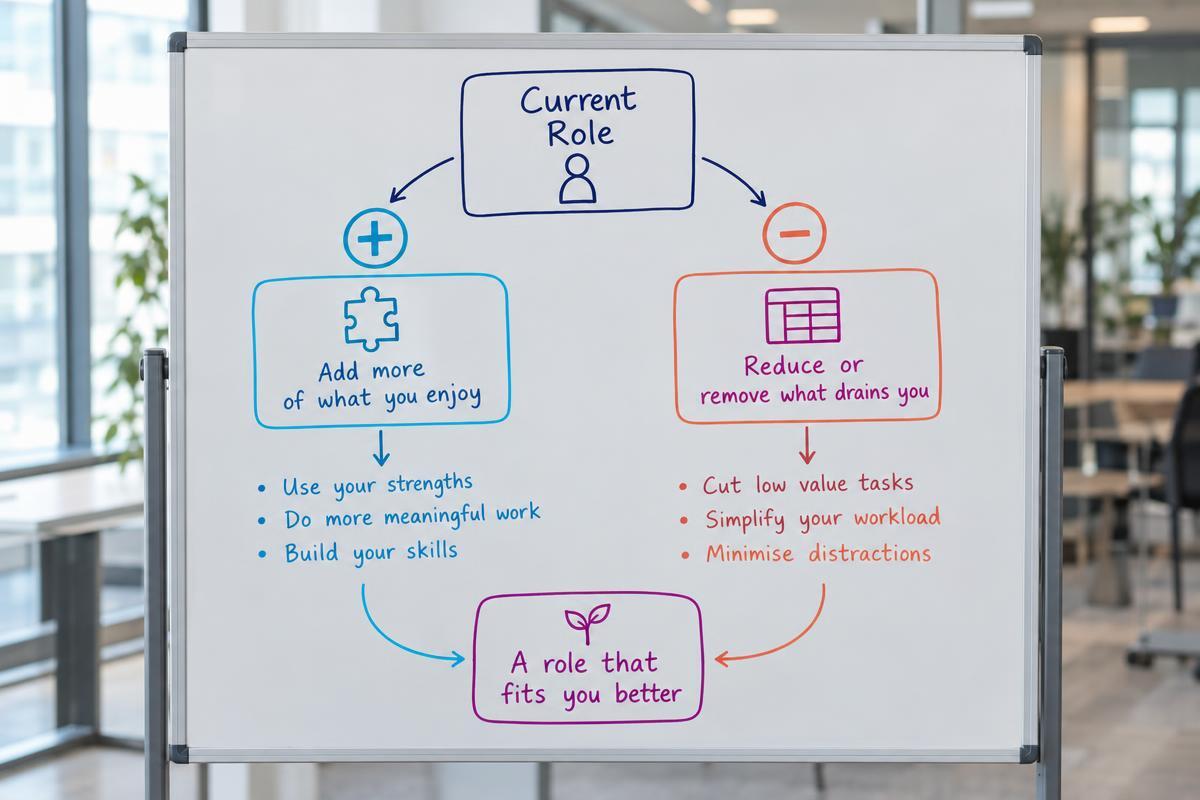
If your current role does not match your personality, you do not necessarily need to quit. You can use a technique called job crafting to slowly reshape your responsibilities. Job crafting involves taking the job description you were hired for and tweaking the tasks, relationships, and boundaries to better suit your natural energy sources.
Start by auditing your week. Note down which tasks make you lose track of time and which ones make you want to take a nap. Once you have your list, look for patterns. Do you hate solitary spreadsheet work but love leading project kick-offs? See if you can trade some data entry tasks with a colleague who loves quiet focus work. Most managers are happy to let you adjust your role as long as the team's overall goals are still met.
| Work Preference | Motivation Strategy | Job Crafting Example |
|---|---|---|
| Deep analysis and logic | Focus on complex problem solving | Volunteering to audit the new team budget |
| Interpersonal connection | Focus on team support and coaching | Taking over the onboarding process for new hires |
| Fast execution | Focus on clear, short-term targets | Breaking large projects into weekly sprints |
| Creative innovation | Focus on brainstorming and strategy | Running the monthly ideas workshop |
Job crafting takes time, but small changes compound. By intentionally moving your daily tasks closer to your personality preferences, you slowly rebuild your motivation. If you want to dive deeper into how different people handle these tasks, it helps to understand the changing of working with different personalities across your team.
If you lead a team, understanding the link between personality and motivation at work is your most important job. Treating everyone the same is a guaranteed way to disengage half your staff. A blanket approach to recognition, feedback, and goal setting simply does not work when your team has diverse natural drives.
Instead of guessing, have honest conversations about what energises each person. Ask them directly what their best day at work looks like. Some of your team will want public praise in a meeting, while others will cringe at the thought and prefer a quiet thank-you email. Some will want you to give them a goal and get out of their way, while others will want you to brainstorm alongside them.
When people feel understood, their commitment grows. You do not need to be a psychologist to get this right. You just need to pay attention to what lights people up and what shuts them down. If you need help having these conversations, Hey Compono offers AI coaching that can help you prepare for specific team changing. You can also explore formal career change coaching strategies to help your team work through their own growth paths.
If you are feeling drained and disconnected from your role, understanding your work personality is the best way to get your energy back. We help you identify your natural strengths and provide tailored coaching to help you reshape your work life.
Related reading
Your personality dictates the types of tasks and environments that give you energy. When your daily work aligns with your natural traits, you feel highly motivated. When your work forces you to act against your natural instincts, you quickly become exhausted and disengaged.
Yes. Your personality traits are relatively stable, but motivation is a changing energy level. If your work environment, your manager, or your personal circumstances change, your motivation will fluctuate even though your core personality has not changed at all.What are the most common workplace motivators?
Research shows that modern professionals are heavily driven by autonomy, personal connection, and excellence. Surprisingly, compensation often ranks much lower than these factors as a primary day-to-day motivator, provided baseline financial needs are being met.
Remote motivation requires you to consciously build the environment your personality needs. If you are highly social, you must actively schedule digital connection time. If you need structure, you must create rigid boundaries between your work hours and your personal time.
Job crafting is the process of intentionally adjusting your daily tasks, relationships, and responsibilities to better align with your natural personality. It allows you to improve your motivation and energy without needing to change your job title or find a new employer.

Feeling stuck but unsure what else to do? A practical way to explore jobs based on the work you are good at, not the titles that sound impressive.

The same frustration turning up in every job is usually a pattern, not bad luck. How to spot yours and change what you do next time it appears.
To answer why do you want to work here without sounding fake. Get practical examples, a 3-part formula, and advice for when you just need a job.
 Mathan Allington