
 Mathan Allington

What to do if your boss doesn't like you in 2026
 Mathan Allington
Learn exactly what to do if your boss doesn't like you. Get conversation scripts, documentation strategies, and steps to protect your career and...
When your manager drops an impossible deadline on your desk, your stomach likely drops with it.
Last reviewed November 2026
Figuring out how to push back on a deadline with your manager can feel like choosing between your weekend and your career. You want to be reliable, but you also need to sleep. The good news is that negotiating a timeframe is a standard professional skill, and there is a structured way to do it without damaging your reputation.
Key takeaways
- An unrealistic deadline is a scoping problem, not a personal failure on your part.
- Presenting a risk-tradeoff matrix shifts the conversation from task avoidance to project management.
- Providing concrete choices makes it easier for your manager to say yes.
- Documenting the agreed changes in writing prevents misunderstandings and clarifies expectations.
Saying yes to everything is a fast track to burnout. Employees who feel they have little control over work decisions are more likely to report burnout, making autonomy and workload negotiation relevant to deadline discussions (American Psychological Association, 2024). It is easy to assume that pushing back makes you look incompetent. The reality is quite different.
Leaders respect professionals who know their capacity and communicate risks early. A practical deadline pushback should identify the constraint, explain its effect on delivery, and offer a specific alternative date rather than simply refusing (VirtualInterview.ai, 2026). The challenge is finding the right words to use.
To negotiate effectively, use a risk-tradeoff matrix. Every project has three levers: time, scope, and resources. You cannot fix all three at once. Effective deadline negotiations make the trade-off explicit: preserve the date by reducing scope, add resources, or move the deadline (Vinayak Kapoor, 2026).
| Project lever | What it means | How to frame it |
|---|---|---|
| Scope | Reducing the amount of work delivered | We can hit Friday if we cut the secondary features. |
| Time | Moving the deadline out | To deliver the full project, I need until next Wednesday. |
| Resources | Getting extra help | If we need this by Friday, I will need a colleague to handle the data entry. |
Framing the conversation around these levers removes the emotion. You are no longer complaining about being tired. You are simply asking your manager to choose which lever they want to pull.
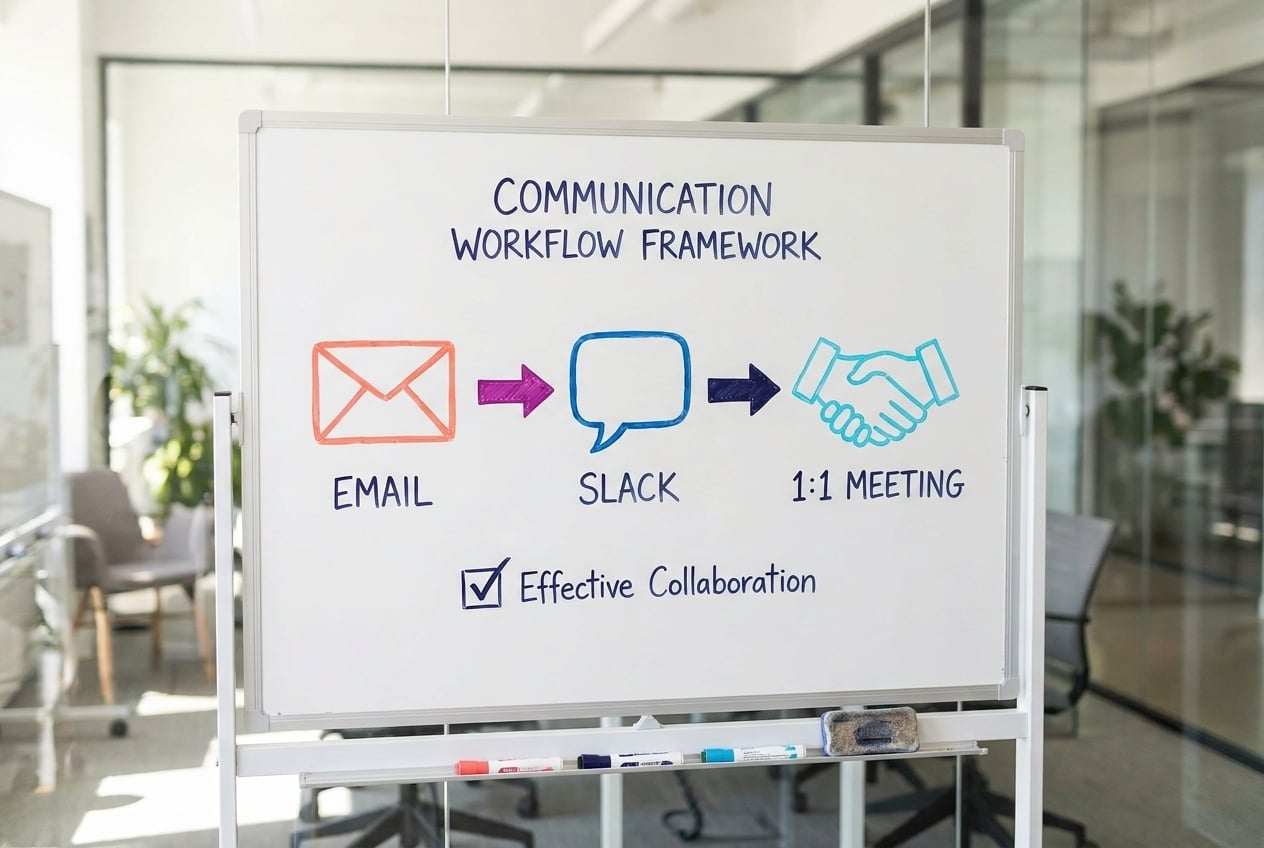
Data removes the emotion from the conversation. When you rely on feelings, your manager might just encourage you to work harder. When you show them your actual capacity, the conversation changes completely.
Open your project management tool and map out your hours for the week. Show exactly where your time is going. If your work personality is The Doer, you might naturally try to force your way through the workload. Resist that urge. Instead, present the math. If you have forty hours of capacity and sixty hours of assigned work, ask your manager which twenty hours should be dropped.
For a deeper dive into this changing, you can learn more about how to master managing up to ensure these conversations happen smoothly.
Knowing the theory is one thing. Typing the actual words into Slack is another. Here are a few scripts you can adapt for your own situation when learning how to push back on a deadline with your manager.
If you work in a remote or hybrid team, you often need to push back asynchronously. Keep it brief and solution-focused.
"Hi team. I have looked at the request for Thursday. Given my current work on the quarterly report, I cannot complete both to the required standard. I can either deliver this new request on Monday, or pause the quarterly report. Which is the priority?"
When dealing with high-stakes deadlines driven by leadership, outline the risks clearly.
"Thanks for sending this through. I have scoped the effort required. Delivering by Friday means we will skip the final quality assurance phase. To ensure we do not expose the client to errors, I propose moving the delivery to Tuesday. Let me know how you would like to proceed."
When you are face to face, bring your capacity data. Ask them to help you solve the puzzle. Say something like, "I want to get this done, but I am at capacity. Can we look at my list together and decide what gets pushed back?"
How you push back changes as you grow in your career. Entry-level staff should focus on asking for help with prioritisation. If you are junior, your job is to highlight the clash and ask your manager to make the call.
Senior staff need to own the solution. If you are a lead engineer or a senior manager, you should propose the revised timeline yourself. You are not asking for permission to delay. You are informing stakeholders about the reality of the timeline.
If you find these conversations terrifying, you are not alone. Tools like Hey Compono can help you build the self-awareness to work through these stressful moments without sacrificing your professional relationships.
Sometimes, your manager will not accept your pushback. They might tell you that everything is a priority and you just need to make it happen. This is a clear sign of an unsupportive boss.
In these scenarios, you must protect your own boundaries. Send an email summarising the conversation. After agreeing on a revised deadline or scope, documenting the decision in writing helps prevent misunderstandings and clarifies accountability (Masters in Communications, 2026).
If the pressure continues, you may need to evaluate whether the role is right for you. Chronic unrealistic deadlines are a structural failure, not a reflection of your work ethic.
If you dread pushing back on deadlines, practising the conversation first can make all the difference. The Hey Compono app helps you rehearse difficult scenarios so you can walk into your next meeting with confidence.
No. It is highly professional to communicate your true capacity. Accepting a deadline you know you cannot meet is far more damaging to your reputation than negotiating a realistic timeframe upfront.
Frame your pushback around quality and risk. Clients prefer a slight delay over receiving work that is full of errors. Offer a staggered delivery, sending the most critical components first and the rest later.
If everything is a priority, nothing is a priority. Ask them to force-rank your tasks from one to ten. If they refuse, you must make the call yourself and inform them of the order in which you will complete the work.
You should flag any concerns as soon as you receive the request. Raising a problem on the day the work is due looks like an excuse, whereas raising it immediately shows strong project management skills.
Learn exactly what to do if your boss doesn't like you. Get conversation scripts, documentation strategies, and steps to protect your career and...

To deal with a manager who doesn't manage. Discover practical scripts, remote work strategies, and steps to protect your career from an absent boss.

Starting a job is a big shift. How to learn the place quickly, build trust with a new team, and avoid the mistakes most people make early on.
 Compono