
 Mathan Allington

How to Give Hard Feedback to a Coworker (Without Making It Weird)
 Compono
How to give a coworker hard feedback without wrecking the relationship, with practical steps for the conversation itself.
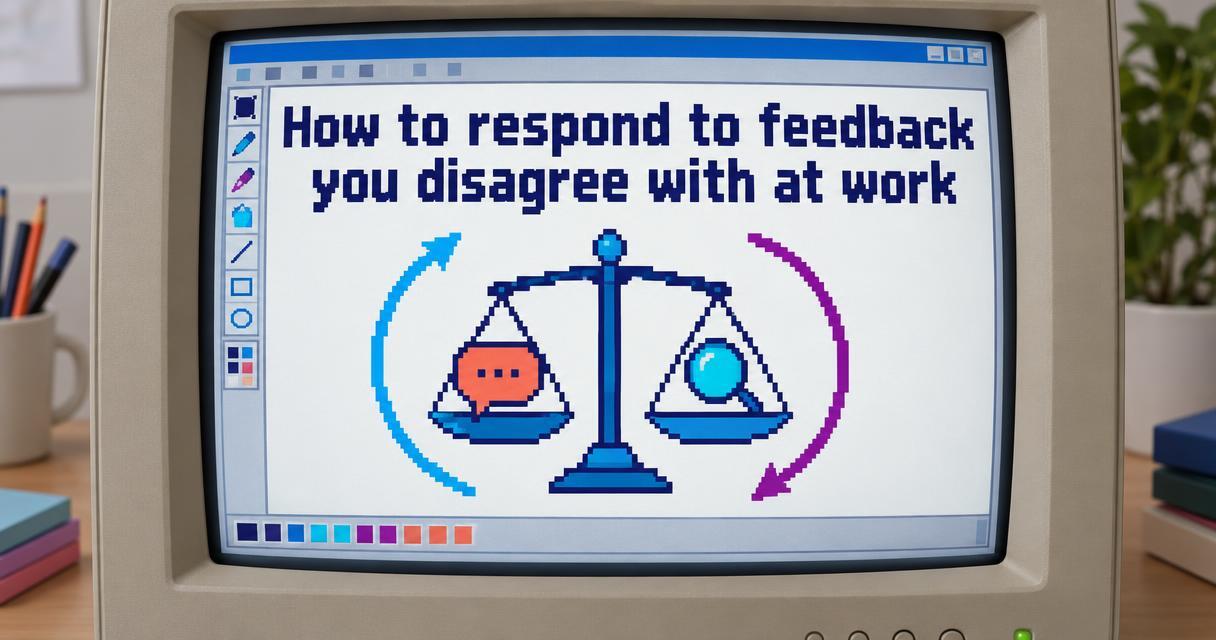
When you need to figure out how to respond to feedback you disagree with, the best approach is to pause, ask for a specific example, and separate the delivery from the actual message before pushing back.
Last reviewed November 2026
Key takeaways
- Buy yourself time instead of reacting defensively in the moment.
- Use a feedback triage matrix to identify whether the issue is factual, misinterpreted, or a delivery problem.
- Ask questions that force the other person to provide concrete examples rather than broad labels.
- Use structured communication scripts to state your perspective without starting an argument.
- Document disagreements professionally when they threaten to impact your formal performance review.
You sit down for your one-on-one meeting, expecting a routine catch-up. Instead, your manager drops a piece of feedback that feels completely off base. They might say you lack strategic vision, or that your communication style is abrasive. Your heart rate jumps. Your immediate instinct is to argue, defend your actions, and explain exactly why they are wrong.
Getting defensive is a natural human reaction. Nobody enjoys being misunderstood or judged unfairly. Hey Compono is built on the reality that we all process information differently, and conflicting perspectives are a normal part of working with other people. But reacting purely on emotion rarely ends well for your professional reputation.
The goal is not to simply smile and nod when someone gives you incorrect feedback. You have a right to defend your work and your character. The secret is learning how to push back in a way that makes the other person actually listen to your side of the story.
When you hear unfair criticism, your body enters a mild fight-or-flight state. Your brain perceives the feedback as a threat to your status or job security. If you speak while in this state, you are highly likely to say something you will regret later. The most important thing you can do in the first ten seconds is regulate your own emotional response.
You do not need to accept the feedback immediately. You just need to acknowledge that you heard it. When feedback feels unfair, thank the person, ask for one specific example, and take time to reflect before responding, according to the Lead Change Group. A simple acknowledgement buys you the time you need to process the information logically.
Try saying something like, "I appreciate you sharing that with me. I need a little time to process it before I respond." This response is entirely professional. It shows you are taking their words seriously, but it prevents you from entering into a debate before you have your thoughts organised.

Once you step away from the conversation, you need to evaluate what was actually said. Not all bad feedback is created equal. Sometimes the core message is accurate but the delivery was terrible. Other times, the feedback is factually incorrect. You need to categorise the criticism before you can figure out how to address it.
| Feedback Type | What it looks like | Your next move |
|---|---|---|
Valid but poorly delivered | The core point is true, but they used harsh language or exaggerated the impact. | Focus entirely on the core point. Ignore the clumsy delivery for now. |
Factual error | They accuse you of missing a deadline that you actually met. | Provide the objective data to correct the record gently. |
Misinterpreted intent | They viewed your quietness in a meeting as disengagement, when you were actually taking notes. | Clarify your intentions without invalidating their perception. |
Systemic bias | You receive vague feedback about your "tone" or "attitude" that does not tie to specific work outcomes. | Ask for concrete examples and document the conversation. |
As leadership expert Andi Roberts explains, you should treat the disagreement as information before you treat it as resistance and identify whether the dispute concerns facts, interpretation, or delivery. When you figure out exactly where the disconnect lives, you can build a logical response rather than an emotional one.
Sometimes feedback feels wrong simply because it is too vague. If a colleague tells you that you are "difficult to collaborate with", you have nothing concrete to address. You cannot fix a personality label. You need them to name the specific behaviour that caused the problem.
Asking for a concrete example helps clarify whether the issue is a broad label or a specific behaviour that can be addressed, as noted by Truest. You have to ask probing questions to force the other person to translate their feelings into facts. If they cannot provide a specific example, the feedback is likely based on a subjective feeling rather than an objective reality.
When you ask for clarification, keep your tone neutral. Say, "Can you walk me through a recent project where you felt I was hard to collaborate with? I want to understand exactly what that looks like from your perspective." This approach turns vague feedback into actionable advice. It also gently challenges the person to back up their claims with evidence.
The way you process unfair criticism has a lot to do with your natural work style. We all have different default behaviours under stress. Understanding your own tendencies helps you avoid common communication traps.
For example, an Evaluator naturally wants to argue with data. If they receive feedback they disagree with, their first instinct is to pull up a spreadsheet and prove the other person wrong point by point. While the facts might be correct, this aggressive approach often damages the working relationship. A Helper, on the other hand, might just accept the unfair feedback to keep the peace and avoid conflict. This leads to quiet resentment and burnout.
Even when disagreeing, acknowledge that the other person may be identifying a valid underlying issue; effective leaders pause, reflect, and learn rather than dismissing feedback, according to IMD. If you know you have a habit of steamrolling people with facts, you can actively practice softening your approach. If you know you tend to cave under pressure, you can prepare a script in advance to ensure your voice is heard.
When you are ready to state your case, structure is everything. You need to validate their experience while firmly presenting your own. A productive response separates the point accepted from the point disputed, then uses evidence and proposes a way to test the disagreement, according to SayNow AI.
Here are three scripts you can adapt based on the power changing of the relationship.
"I have spent some time thinking about the feedback you shared yesterday. I agree completely that the project timeline slipped, and I take responsibility for my part in that. However, I see the root cause differently. My view is that the scope changed significantly in week three without additional resources. Can we look at the project timeline together so I can show you what I mean?"
"Thanks for sharing your thoughts on my presentation style. I understand you felt I was rushing through the data slides. From my perspective, I was trying to leave enough time for the Q&A section, which the client specifically requested. From here, how about we align on the exact timing for each section before we present?"
"I appreciate you being open with me about how I handled the team meeting. You mentioned you felt I dismissed your idea. That was certainly not my intention, but I understand why it felt that way when I moved the agenda along quickly. My focus was on keeping us to the time limit. Next time, I will make sure to explicitly park ideas for further discussion so you know they are valued."
Disagreeing with feedback is significantly harder when you are working remotely. When communication relies heavily on Slack or Microsoft Teams, tone is incredibly easy to misread. A message that you intend to be a calm clarification can read as aggressive defensiveness on the other side of the screen.
Never try to resolve a feedback dispute over instant messaging. If someone sends you critical feedback in a text format and you disagree with it, move the conversation to a synchronous channel. Reply by saying, "Thanks for sharing this. I have a slightly different read on the situation. Do you have five minutes for a quick call to chat through it?"
Getting on a video call allows you to use your tone of voice and body language to soften the pushback. It reminds the other person that you are a human being, not just an avatar on a screen. This simple shift in medium often prevents misunderstandings from escalating into full workplace conflicts.
Most minor disagreements can be resolved with a quick conversation. But sometimes, you receive feedback that is both fundamentally wrong and likely to impact your career progression, your bonus, or your formal performance review. In these high-stakes situations, verbal pushback is not enough.
You need to document your disagreement professionally. If a manager places an unfair critique in your formal review file, you have the right to submit a written addendum. Keep this document entirely focused on objective facts. Do not attack your manager's character. Simply state the feedback provided, and list the verifiable data that contradicts it.
Before you send any formal pushback to HR or your manager, run it past a trusted mentor. If you want to rehearse what you are going to say before the stakes are real, you can try a mock conversation with Hey Compono to test different responses. Getting an objective read on your tone ensures that your pushback is viewed as professional self-advocacy rather than insubordination.
Standing up for yourself without damaging your workplace relationships takes practice. Hey Compono provides a private, AI-powered space to role-play tough conversations before they happen in real life. You can input the specific feedback you received, select the personality type of your manager, and rehearse your pushback in a realistic chat environment.
Related reading
Yes, it is acceptable to reject feedback if it is factually incorrect or based on a clear misunderstanding. However, you should never reject it in the heat of the moment. Take time to process the comments, gather your evidence, and present your perspective calmly and professionally.
The most polite way to disagree with a manager is to find a small point of agreement first, then pivot to your perspective. Acknowledge their underlying goal, share your alternative view, and use objective data to back up your stance rather than relying on emotional arguments.
If you suspect feedback is rooted in systemic bias, ask the person to provide specific, behavioural examples of the issue they are raising. Vague critiques about tone or attitude are often covers for unconscious bias. Document the conversation carefully and escalate to human resources if the issue persists and impacts your performance review.
You should put your disagreement in writing if the feedback is part of a formal performance review, or if it involves a serious accusation regarding your conduct. For minor, day-to-day disagreements, a verbal conversation is usually better for preserving the working relationship.
You should ideally wait at least 24 hours before responding to major feedback you disagree with. This cooling-off period allows your nervous system to reset, ensuring you respond with logic rather than defensive emotion.

How to give a coworker hard feedback without wrecking the relationship, with practical steps for the conversation itself.
To give upward feedback to your manager safely. Get practical scripts, frameworks and advice for managing up without damaging your career.

Word-for-word examples for the feedback conversations people avoid: missed deadlines, attitude, quality slipping, and praise that does not sound...
 Mathan Allington