
 Mathan Allington

Find my strengths: why you feel misunderstood at work
 Compono
Feeling misunderstood at work is often a sign your strengths read differently to other people. How to name them and put them where they count.
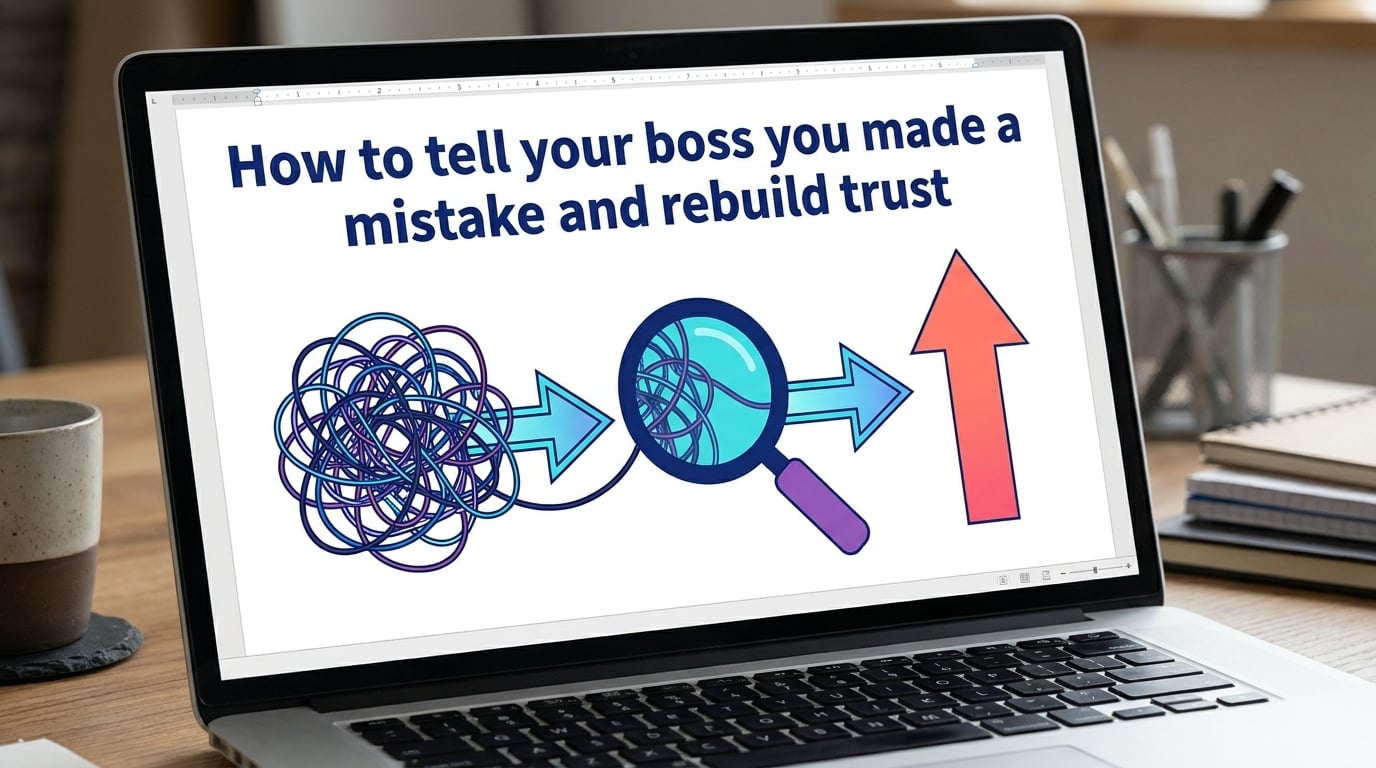
If you are figuring out how to tell your boss you made a mistake, the answer is to own it early, bring a fix, and rehearse your opening line.
Last reviewed November 2026
Key takeaways
- Breathe first to manage your panic before you communicate.
- Use a three-part framework to explain what happened, take responsibility, and propose a solution.
- Choose your communication channel based on the severity of the error.
- Rebuild trust over the next 30 days by showing how you have changed your process.
The moment you realise you messed up at work, your stomach drops. Your heart rate spikes. The urge to close your laptop and pretend it never happened is overwhelming. But burying an error is the fastest way to turn a minor slip into a career-limiting move.
Val Olson Armstrong, a career and leadership coach at Korn Ferry Advance, advises employees to communicate quickly rather than cover up an error (Korn Ferry). Your manager knows you are human. What they need to see is how you handle the fallout.
Knowing exactly what to say takes the emotion out of the moment. When you approach the conversation with a clear head and a practical solution, you protect your professional reputation.
When a mistake registers, your brain enters a stress response. You might feel the urge to send a panicked message immediately or start apologising profusely. Do not do either.
Step away from your desk for five minutes. Breathe. Before you can figure out how to tell your boss you made a mistake, you need to understand the actual impact of the error. If you are prone to overthinking, learning to stop an anxiety spiral is your first priority.
Ask yourself three questions. Who is impacted right now? Can this be fixed immediately? Does my manager need to know before they walk into their next meeting? The answers will dictate your timeline.
When you sit down to write the email or walk into their office, you need a structure. Rambling makes you look unprepared. A practical disclosure structure is to explain what happened, take responsibility, describe the immediate fix, and state how the error will be prevented next time (TheCareOnline).
First, state the facts objectively. Do not use overly emotional language or diminish the error. Second, take ownership. Defensiveness or blaming a coworker ruins your credibility. Finally, present your solution.
Managers often judge employees by how they respond to mistakes rather than by the mistake itself, making quick ownership and a proposed solution especially important (Times of India). Coming with a fix shows you are proactive.
When you take ownership, avoid the temptation to over-explain. Do not give a ten-minute backstory about why you were tired or how the software crashed. The backstory sounds like an excuse, even if it is entirely factual. Stick to the immediate reality of the error. If a colleague contributed to the mistake, focus only on your portion of the responsibility. Throwing a teammate under the bus will immediately damage your manager's perception of your leadership skills.
How you deliver the news depends entirely on the scale of the error. Use these scripts as a starting point and adapt them to your specific situation.
| Severity | When to use | What to say |
|---|---|---|
| Minor slip-up | Small data errors or forgotten attachments. | "I realised I attached the wrong version of the report this morning. I have just emailed the correct file to the client and double-checked the figures. It will not delay the project." |
| Missed deadline | Internal delays affecting other team members. | "I missed the midday deadline for the deck. I underestimated the data entry time. I will have it finished by 3 PM today, and I have already told the design team about the delay." |
| Major error | Client impact, financial loss, or compliance breaches. | "We have a problem with the new campaign launch. The budget was set incorrectly, resulting in an overspend. I have paused the ads to stop the bleed. I am pulling the data now so we can review the impact together. Do you have five minutes to look at this?" |
If you feel nervous about having this conversation live, Hey Compono can help you prepare. Practising with an AI coach helps you refine your tone before you face your manager.
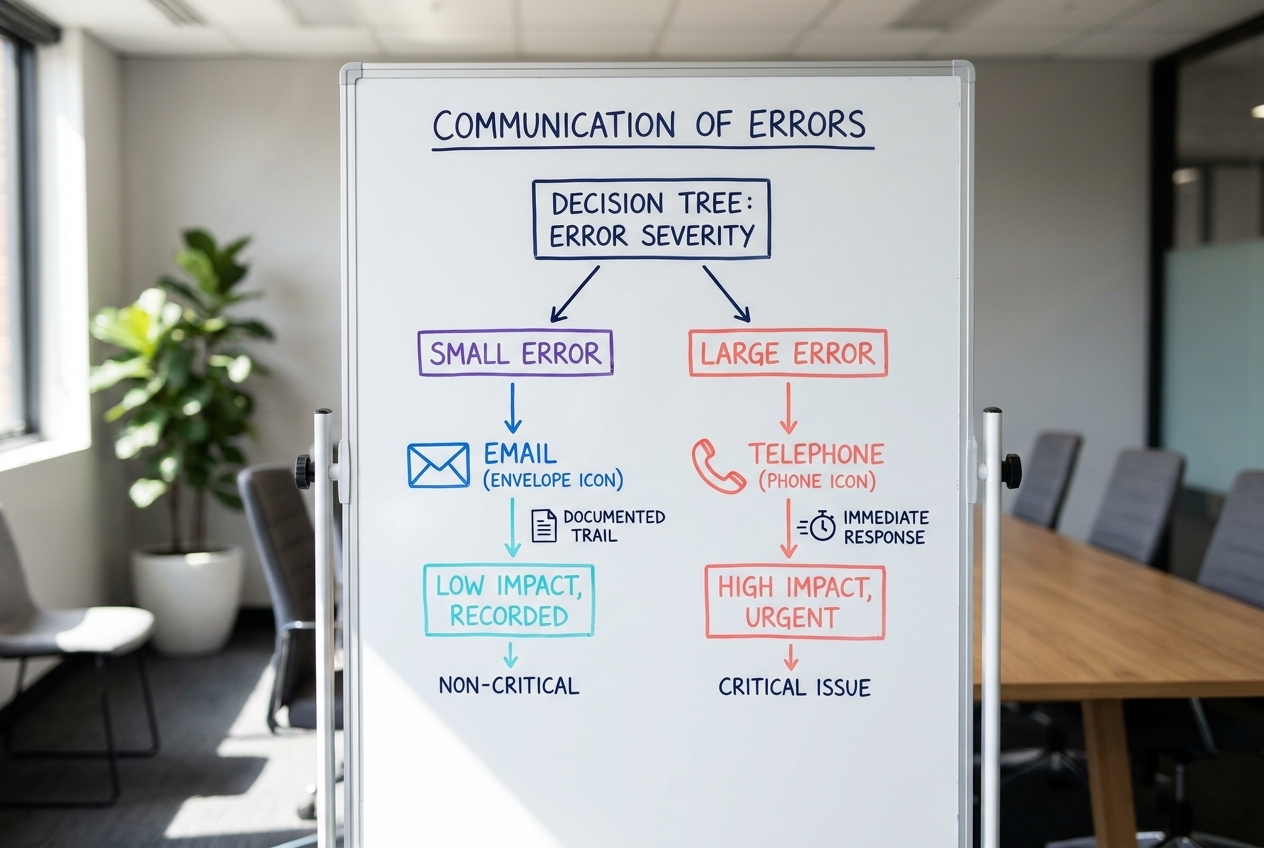
Matching the medium to the message is critical. A minor typo in an internal newsletter can be a quick chat message. A missed deadline requires an email so there is a paper trail of your solution. A major financial error requires an immediate phone call or face-to-face meeting.
Remote workers face a unique challenge here. If you cannot walk over to a desk, ask for an urgent video call. Delivering highly sensitive bad news via a chat app often strips away your tone and makes the situation feel colder than intended. If you are dealing with a tense relationship, handling an unsupportive boss requires even more care.
If you work in a hybrid environment, the decision becomes more complex. Sending an urgent calendar invite without context will make your manager panic before the meeting even begins. Instead, send a brief message stating you need five minutes to discuss a project block, then deliver the full context on the call.
Your natural work personality changes how you react to mistakes. Understanding your default behaviour helps you avoid common traps.
The Doer often tries to fix the problem silently before anyone notices. While efficiency is great, hiding a major issue denies your manager the chance to manage the wider risk. The Evaluator might get stuck analysing the root cause instead of communicating the immediate problem. The Helper tends to take on too much personal guilt, turning a practical conversation into an emotional apology session.
For highly independent workers, admitting fault feels particularly uncomfortable. If you need tailored advice on your communication style, the Hey Compono individual coaching tools adapt to your specific personality.
The conversation is only the first step. What you do over the next month determines your long-term reputation. Employees who proactively disclose mistakes can receive better performance evaluations because early disclosure increases managers’ perceptions of trust (Sema Social).
You need to show that you have changed your process. If you missed a deadline, start sending proactive status updates two days before the next project is due. If you sent an error to a client, create a new checklist and show your boss how you are using it.
Trust is not rebuilt in a single meeting. It is rebuilt through a series of small, reliable actions over the following month. Start by delivering exactly what you promise. If you say the report will be ready by Tuesday at noon, send it by Tuesday at 10 AM. Over-communicate your progress on critical tasks. Your manager will naturally feel slightly anxious about delegating to you immediately after a major error. Proactive updates remove their anxiety and prove you have absorbed the lesson.
Many people struggle with this follow-through. Learning how to master follow-through ensures your apology is backed by visible action. Remember that leadership accountability sets the tone for the whole team. Fewer than one-third of U.S. workers say their manager takes full responsibility when making a mistake (LinkedIn). When you own your errors, you model the exact behaviour great leaders demonstrate. Learning how to work through these moments builds resilience. Hey Compono helps you turn workplace challenges into growth opportunities.
Practising how you deliver bad news makes the real conversation much easier. You can rehearse these moments with AI coaching to get your tone right before you speak to your manager.
Yes, you should disclose it if the mistake had any external impact or could be discovered later. Briefly explain what happened and highlight the steps you took to resolve it immediately.
You should tell them as soon as you have gathered the facts and formulated a potential solution. Waiting longer than necessary damages trust and removes their ability to manage the fallout.
Stick entirely to the facts and maintain a calm tone. If they become volatile, acknowledge their frustration, present your solution, and ask to revisit the conversation once the immediate issue is resolved.

Feeling misunderstood at work is often a sign your strengths read differently to other people. How to name them and put them where they count.

Being the person everyone leans on has a cost. How to keep helping, set boundaries that hold, and notice when you have nothing left to give.

Learn how to practice a difficult conversation with an employee. Get practical steps to prepare, manage your anxiety, and deliver clear feedback.