
 Compono
1 min read
Free trial coaching: why personality-led support changes everything
 Compono
Free trial coaching allows you to experience professional development that is specifically tailored to your unique work personality without any...
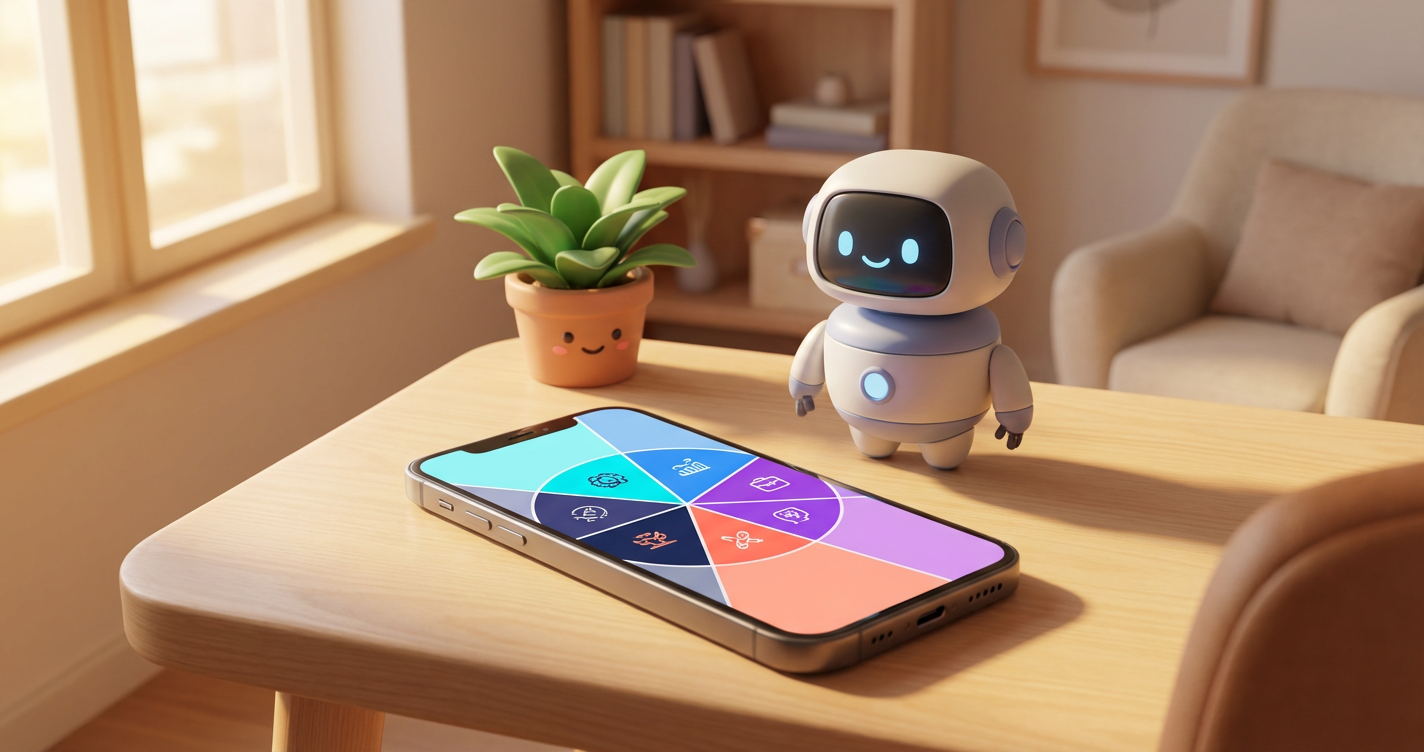
A coaching app should feel like a conversation with a mentor who actually knows you, rather than a library of generic productivity hacks that don't fit how your brain works.
Key takeaways
- Generic coaching often fails because it ignores your natural work personality and default behaviours.
- Effective digital coaching must adapt its guidance based on whether you are a Pioneer, a Doer, or an Advisor.
- The best apps focus on self-awareness and emotional resonance rather than just ticking off task lists.
- Personalised coaching helps bridge the gap between knowing what to do and actually doing it under pressure.
We have all been there, downloading a highly rated coaching app only to find it feels like being shouted at by a motivational poster. It tells you to 'just wake up at 5 am' or 'discipline your mind', but it doesn't stop to ask why you are struggling in the first place. For many of us, the problem isn't a lack of effort. It is that the advice we are receiving is fundamentally mismatched with our natural personality.
If you have ever been told you are 'too sensitive' or 'too blunt' at work, you know that standard professional development often feels like trying to fit a square peg into a round hole. You aren't broken, and you don't need a total personality transplant. You just need a way to manage the workplace that respects your natural wiring. Most apps treat every user the same, offering a linear path that ignores the nuances of human behaviour. This is where the standard approach to digital growth falls apart.
At Compono, we have spent over a decade researching how high-performing teams actually function. We have found that when people understand their 'work personality', the friction starts to disappear. A Hey Compono coaching experience starts with this recognition. Instead of giving you a generic checklist, it looks at your specific traits, whether you are a results-driven Coordinator or an empathetic Helper, and tailors the support to match.

Think about how you handle a sudden change at work. If you are a Pioneer, you might feel a spark of excitement and start dreaming up new possibilities. But if you are an Auditor, that same change might feel like a chaotic disruption to a system you have carefully built. A generic coaching app would tell both of you to 'embrace the pivot', which is about as helpful as telling someone to 'just be happy'.
Understanding your work personality changes the game. It allows you to see your 'too much' traits as actual strengths that just need a bit of calibration. For example, an Evaluator might be told they are too critical, but in reality, they are providing essential objectivity that saves the team from a massive mistake. The right coaching tool doesn't try to dampen that trait, it helps the Evaluator communicate their findings in a way that doesn't alienate their colleagues.
When you use a personality-adaptive tool like Hey Compono, the coaching content changes based on your profile. If you are curious about which of the eight types you default to, taking a quick personality read can show you in about ten minutes. This self-awareness is the bedrock of any real professional growth. Without it, you are just practicing someone else's habits.
The market is flooded with apps that promise to make you 10% more productive. They focus on time-blocking, inbox zero, and 'hacking' your focus. But for most professionals aged 25–55, the real challenges aren't about calendars. They are about the 'sticky' stuff, the difficult conversation with a manager, the feeling of being misunderstood in a meeting, or the anxiety of a looming deadline.
A modern coaching app needs to lead with vulnerability and recognition. It should acknowledge that work is often stressful and that feeling overwhelmed is a normal human response, not a failure of discipline. This is the difference between a tool that manages your tasks and one that supports your growth as a human being. We need tools that validate our struggles before they offer solutions.
For instance, if a Helper is struggling with a conflict, telling them to 'be more assertive' is terrifying. A better approach is to help them see how their natural empathy can actually be a tool for resolution. By framing the advice through the lens of their personality, the coaching becomes actionable rather than intimidating. This is how we move away from shame-based self-improvement and toward empowered action.

The biggest flaw in traditional coaching is the delay. You go to a seminar or read a book, and then three weeks later, you are in a high-pressure situation and you can't remember a single 'key takeaway'. Digital coaching has the potential to solve this by being in your pocket when you actually need it. But it only works if that guidance is relevant to the specific moment and the specific person.
Imagine you are about to lead a project kick-off. A Coordinator needs to be reminded to leave space for creative brainstorming so they don't steamroll the team with their structure. Meanwhile, a Campaigner needs the opposite, a nudge to actually lock in some concrete milestones before everyone leaves the room. This is what we call personality-adaptive coaching. It is about getting the right nudge at the right time.
Many teams are now using personality-adaptive coaching to have these conversations without it getting weird. It provides a common language that removes the personal sting from feedback. Instead of saying 'you are being too rigid', a team can say 'your Coordinator side is coming out strong today, maybe we can lean into some Pioneer energy for this session'.
Real change doesn't happen in a weekend workshop. It happens in the small, quiet moments of reflection between tasks. A coaching app should facilitate this by making reflection easy and non-judgmental. It shouldn't feel like another chore on your to-do list. Instead, it should be a space where you can check in with yourself and recalibrate.
This sustainability comes from the 'hit like a tonne of bricks' moments of insight. When a tool accurately describes your inner monologue, why you avoid certain tasks or why you feel drained after certain meetings, it creates a sense of being seen. That recognition is a powerful motivator. It makes you want to keep engaging because the tool actually 'gets' you.
At Compono, we believe that you aren't a project to be fixed. You are a professional with a unique set of preferences that, when understood, can lead to a much more fulfilling career. The goal of a coaching app should be to help you manage the world as the best version of yourself, not a watered-down version of someone else. It is about finding the path of least resistance to your own success.
Key insights
- Generic coaching apps fail because they ignore the unique personality traits that drive human behaviour.
- Real professional growth starts with self-awareness and understanding your dominant work personality type.
- Coaching should be emotionally authentic and validate the user's struggle rather than pushing for perfection.
- Adaptive coaching provides specific nudges based on whether a person needs more structure or more creativity in a given moment.
- Sustainable development happens through small, regular reflections that feel supportive rather than burdensome.
If you are tired of coaching that feels like it was written for someone else, it might be time to try an approach that starts with your brain. Understanding your natural tendencies isn't just about labels, it is about giving yourself the tools to thrive in any environment.
Related reading: Personalized coaching that actually fits your brain · How to find a life coach who actually understands your brain
Standard productivity apps focus on 'what' you are doing, tasks, lists, and calendars. A personality-based coaching app like Hey Compono focuses on 'how' and 'why' you do things. It adapts its advice based on your natural traits, helping you overcome specific mental hurdles that generic tools ignore.
Yes, but only if the app provides 'nudges' that resonate with your actual experience. By providing small, frequent insights that match your work personality, an app helps you build self-awareness over time. This makes it easier to catch yourself falling into old patterns and choose a different response.
Absolutely. At Compono, our team has fused academic research into high-performing teams with established personality theory. We have spent over a decade mapping the natural work preferences of individuals to ensure the insights provided are both accurate and practically useful in a modern workplace.
We all have a blend of traits, but most people have a dominant 'work personality' that they default to under stress or pressure. A good coaching app recognises this nuance and provides a spectrum of insights, while still giving you a clear starting point based on your primary preferences.
The best part about digital coaching is that it fits into your day. Even five to ten minutes of reflection or reading a personalised insight can shift your perspective for the rest of the day. It is about consistency and small realisations rather than long, intensive sessions.
1 min read
Free trial coaching allows you to experience professional development that is specifically tailored to your unique work personality without any...

1 min read
Professional development is most effective when it is tailored to your unique work personality rather than following a one-size-fits-all checklist of...

1 min read
Personality based coaching is a targeted development approach that aligns your professional growth with your natural psychological traits rather than...