
 Mathan Allington

How to deal with a passive aggressive coworker and stay calm
 Mathan Allington
Learn exactly how to deal with a passive aggressive coworker. Get practical scripts, learn when to involve HR, and find out how to protect your...
Giving feedback for analytical personality types requires hard data and specific examples, because vague suggestions and emotional appeals will only trigger defensiveness and analysis paralysis.
Last reviewed November 2026
Key takeaways
- Analytical professionals need concrete evidence and clear metrics to process workplace feedback effectively.
- Vague praise is just as unhelpful as vague criticism for people who rely on logic and structure.
- Written or asynchronous feedback gives analytical types the processing time they need before reacting.
- Managers must separate the factual observation from the business impact to avoid endless debates over details.
- Employees with analytical traits can take control of vague feedback by asking their managers specific, clarifying questions.
You have probably been in this room before. You sit down with a highly capable team member to discuss their performance. You suggest they need to be "more proactive" or "a bit more collaborative" with the wider team. You expect a nod and a promise to improve. Instead, you get a barrage of specific questions.
They ask exactly when they were not proactive. They ask for the metrics that define collaboration. They want to know who felt they were unhelpful, what the specific context was, and how this aligns with their formal job description. You feel like you are being cross-examined, and they feel like they are being unfairly judged on abstract concepts.
This breakdown happens because most management training focuses on delivering feedback through an emotional lens. It teaches leaders to soften the blow, use the sandwich method, and focus on feelings. That approach fails completely with analytical thinkers. They do not want the blow softened. They want the raw data.
At Compono, we base our understanding of workplace behaviour on decades of psychometric research into the eight Work Personality types. When we talk about analytical professionals, we are usually looking at two specific profiles: the Evaluator and the Auditor.
The Evaluator thrives on strategic planning, rigorous analysis, and risk assessment. They are cautious, sceptical of unproven concepts, and careful about details. The Auditor embodies thoroughness and an exacting mindset. They respect standards, procedures, and clear rules. Both types share a fundamental reliance on logic over emotion.
These traits make them incredibly valuable in a business. They spot risks before they become disasters. They ensure quality. They hold the team to high standards. But these same strengths create blind spots in interpersonal situations. An analytical person might come across as overly critical because they focus on fixing errors rather than praising effort. They might delay decisions while waiting for right data.
When you give them feedback, they process it as a data point. If the data point lacks evidence, they reject it. They are not arguing with you to be difficult. They are testing the structural integrity of your claim.
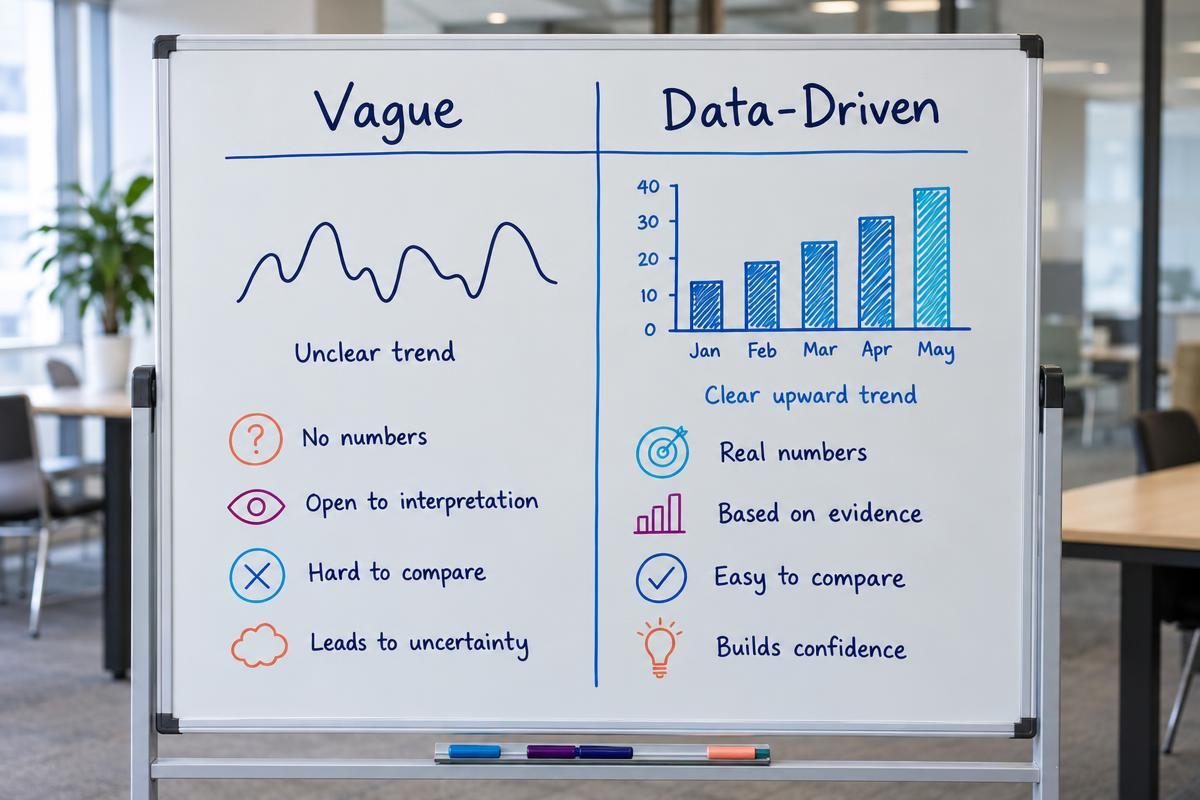
You cannot wing a feedback session with an analytical employee. If you walk in with a general feeling about their performance, the conversation will derail in the first five minutes. You need to prepare your case like a lawyer preparing for trial.
Start by collecting specific examples. If you want to discuss their communication style, find the exact email thread where their tone was problematic. Note the date, the recipient, and the specific phrasing used. If you are discussing missed deadlines, pull the project management logs. You need the exact dates and the cascading impact those delays had on the rest of the team.
This level of preparation shows respect for their working style. Research from Gallup and Workhuman shows that employees who strongly agree they receive valuable feedback are five times more likely to be engaged, 57% less likely to report burnout, and 48% less likely to be looking for another job. Valuable feedback, for this personality type, means evidence-based feedback.
You must also define the business impact. An analytical person might not care if a colleague felt slightly offended by a blunt email. They will care deeply if that blunt email caused the colleague to withhold important information, which then delayed the software release by two weeks. Connect the behaviour to a measurable business outcome.
The meeting itself needs a clear structure. Analytical people appreciate agendas. Let them know what the meeting is about beforehand so they can prepare their own thoughts. Surprising them with a performance critique is a guaranteed way to trigger a defensive reaction.
Open the conversation by stating the specific behaviour you observed. Do not use absolute words like "always" or "never". Stick to the facts. Say, "In the last three client meetings, you interrupted the account manager while they were presenting the commercial terms."
Next, state the impact. "When you interrupt the account manager, it signals to the client that our team is not aligned. This makes negotiations harder and extends the sales cycle."
Then, stop talking. Give them space to process the information and respond. They will likely ask detailed questions. Answer them calmly and stick to your prepared evidence. If they try to debate a minor detail (like whether it was three meetings or two meetings), bring the focus back to the business impact.
It is important to remember that most managers struggle with this structure. A study by Gallup found that only 21% of employees strongly agree that they received meaningful feedback from their manager during the previous week. If you are unsure how to map out these conversations beforehand, Hey Compono acts as an objective sounding board to help you structure your thoughts without relying on corporate jargon.
Translating these concepts into actual words takes practice. If you want to know how to give feedback people can actually use, you have to strip out the corporate fluff. Here is a comparison of how traditional management speak fails, and what you should say instead.
| Scenario | The Fluff (Avoid this) | The Data-Driven Script (Use this) |
|---|---|---|
| Missed deadline | "You need to improve your time management. We are falling behind." | "The quarterly report was delivered 48 hours late. This delayed the finance team's forecasting by two days. Walk me through your timeline for this project." |
| Interpersonal conflict | "You are being a bit abrasive with the junior developers. You need to soften your approach." | "In yesterday's code review, you wrote 'this logic makes no sense' on three pull requests. That phrasing caused the junior developer to stop submitting code today. Going forward, point out the specific error and suggest a fix." |
| Positive reinforcement | "Great job on the presentation! You are a rockstar." | "Your data analysis on slide four completely changed the client's perspective on the budget. That specific slide is the reason they signed the contract renewal today. Excellent work." |
Notice that even positive reinforcement requires data. Analytical people often dismiss generic praise as fake or manipulative. They want to know exactly what they did well so they can replicate it. If you tell an Auditor they are a "rockstar", they will feel patronised. If you tell them their error-catching process saved the company ten thousand dollars, they will feel valued.
The modern workplace relies heavily on remote communication. This actually presents an advantage when dealing with analytical personalities. Giving feedback asynchronously through written channels allows them time to process the information.
When you deliver verbal feedback in a live meeting, the receiver has to process the information, regulate their emotional response, and formulate a reply all at once. For someone who prefers to analyse data carefully, this pressure can lead to defensiveness. Written feedback removes the immediate pressure.
Send an email outlining your observations and the impact. End the email by suggesting a time to discuss it tomorrow. This gives them 24 hours to read the data, process their reaction, review their own records, and come to the meeting prepared for a logical discussion.
This approach aligns with differing employee needs. Research from Gallup and Workhuman reveals that only 27% of employees prefer receiving feedback from their manager weekly, while 19% prefer daily feedback. There is no universal cadence. You have to tailor the frequency and the medium to the person in front of you.
Once you deliver the feedback, an analytical person will try to solve the problem. Sometimes, this leads to analysis paralysis. They will overthink the critique, try to build a flawless system to prevent the error from ever happening again, and slow their output down to a crawl.
You need to help them transition from logical analysis to behavioural action. If you tell them to improve their communication, they might spend three days reading books on psychology instead of just sending friendlier emails. You must define what "done" looks like for the behavioural change.
Set a clear, measurable goal for the improvement. Do not leave it open-ended. Say, "For the next two weeks, I want you to run your client emails through this checklist before hitting send. We will review the results on Friday." This gives them a clear parameter to work within.
Many leaders use AI coaching for difficult conversations to practice managing this exact transition. It helps you prepare for the specific questions an Evaluator might ask, ensuring you keep the conversation moving toward a practical solution rather than getting bogged down in endless debate.
Feedback is a two-way street. If you are an analytical professional, you will inevitably report to a manager who communicates through feelings rather than facts. They will give you vague instructions. They will tell you to "be more visible" or "show more leadership". You will find this incredibly frustrating.
You cannot change your manager's communication style, but you can control how you solicit and process their feedback. If you want to read a no-fluff feedback guide on handling this, the key is to ask clarifying questions that force your manager to provide data.
When a manager says, "You need to be more proactive," do not argue with the premise. Do not pull up a spreadsheet proving how proactive you are. Instead, ask for a specific example of what proactive behaviour looks like to them. Say, "I want to make sure I hit that standard. Can you give me an example of a situation last month where I should have been more proactive, and what specific action you would have liked to see?"
This forces the manager to translate their feeling into a concrete behaviour. Once you have the concrete behaviour, you can build a system to execute it. This collaborative approach to defining expectations is highly effective. According to Gallup, employees whose managers involve them in goal-setting are nearly four times more likely to be engaged.
You also need to manage your own defensive triggers. When someone critiques your work, your natural instinct is to audit their critique for factual errors. If they get one minor detail wrong, you might dismiss the entire feedback session. You must consciously separate the core message from the minor details. Even if the manager misremembers the date of a meeting, their core point about your communication style during that meeting might still be valid.
Focusing on actionable self-awareness means accepting that human interactions are messy and rarely fit into right spreadsheets. Take the messy feedback, extract the useful data points, build your action plan, and move forward.
Delivering specific, evidence-based feedback to someone who challenges every detail can exhaust even the most experienced managers. Hey Compono Business helps leaders prepare for these exact moments. By understanding the work personality of the person you are speaking with, the platform gives you the exact scripts and framing you need to turn a confrontational debate into a productive action plan.
Related reading
They are usually not trying to be insubordinate or difficult. Analytical people process information by testing its validity. When they ask highly detailed questions or point out minor inaccuracies in your feedback, they are trying to ensure the data is correct before they commit to changing their behaviour.
Avoid generic statements like "great job" or "you are amazing". Praise them by pointing out exactly what they did and the business value it created. Highlight their rigorous attention to detail, their ability to spot risks, or the specific way their analysis saved the company time or money.
Written communication is highly effective. Sending an email outlining your observations gives them time to process the facts, review their own work, and manage their initial reaction before you sit down for a face-to-face discussion. This reduces defensiveness and leads to better outcomes.
You need to set clear, strict boundaries for the behavioural change. Do not just ask for improvement. Define exactly what the improvement looks like, set a deadline for the change, and schedule a follow-up meeting to review the results. This stops them from overthinking the problem and forces them into action.
Take control of the conversation by asking clarifying questions. Ask the manager to provide a specific example of the behaviour they want to see, and ask them to define what a successful outcome looks like in concrete terms. Translate their feelings into a measurable checklist you can follow.
Learn exactly how to deal with a passive aggressive coworker. Get practical scripts, learn when to involve HR, and find out how to protect your...

Clinical teams clash hardest when the shift is busy. Here is how different personalities react to stress and how to defuse it early.

How modern team personality insights software turns static tests into daily tools for better communication and conflict resolution. Get started today.
 Compono