
 Mathan Allington

How to work with a coworker you don't like
 Mathan Allington
Practical strategies and exact scripts for how to work with a coworker you don't like. Learn to set boundaries and protect your energy at work.
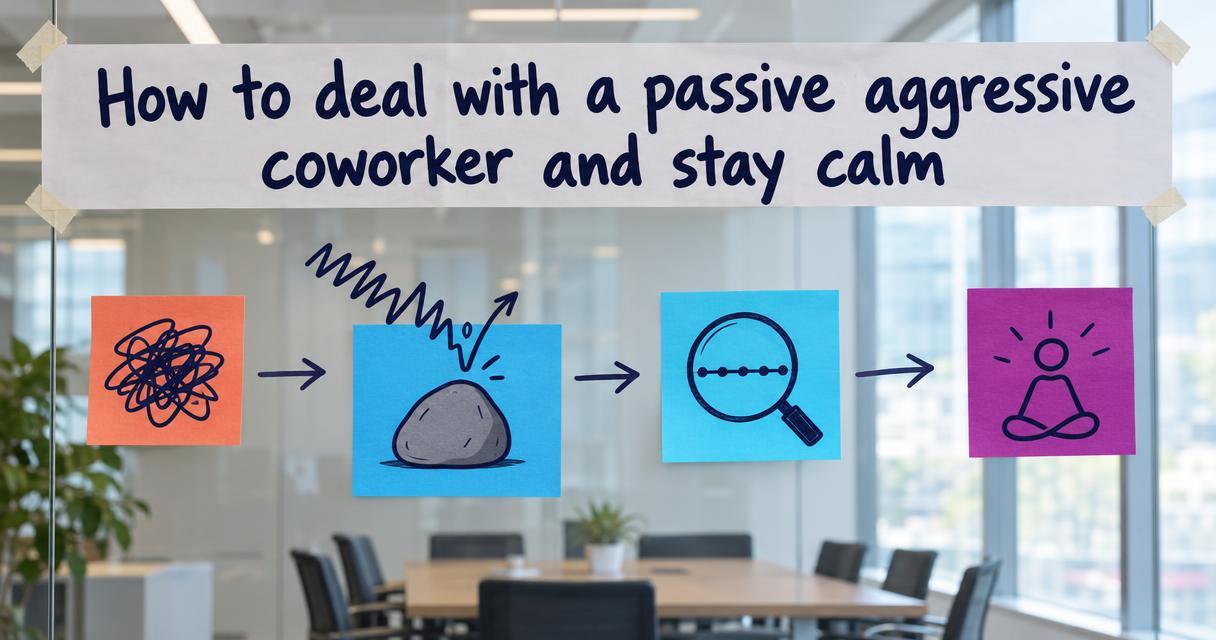
To deal with a passive aggressive coworker effectively, you need to ignore their underlying tone and respond strictly to the factual words they use.
Last reviewed November 2026
Key takeaways
- Passive aggression often masks a desire to avoid conflict or hide professional insecurities.
- Respond only to the facts of a situation rather than reacting to the tone or subtext.
- Use factual observations to clarify misunderstandings without assigning blame.
- Document persistent issues with clear examples before escalating matters to management.
- Remote work environments require extra vigilance because digital platforms strip away visual context.
You know the feeling well. A colleague agrees to a project deadline in a meeting, only to quietly miss it three days later. When you follow up, you receive a perfectly polite message that somehow leaves you feeling entirely unreasonable for asking. Working with someone who communicates this way is exhausting. It drains your energy, slows down your projects, and leaves you second-guessing your own reactions.
Indirect hostility is a common challenge in the modern workplace. It rarely looks like a shouting match. Instead, it takes the form of deliberate delays, ambiguous emails, and convenient misunderstandings. When you are on the receiving end, the natural response is to feel frustrated or tempted to snap back. Retaliation rarely solves the problem and often makes you look like the aggressor.
Understanding the root of this behaviour gives you a clear advantage. When you learn how to step back, read the situation objectively, and respond with practical tactics, you remove the oxygen from the conflict. You can protect your boundaries and keep your projects from here without losing your composure.
Workplace communication has changed dramatically over the last decade. As more teams rely on asynchronous tools, indirect hostility has found new places to hide. Without tone of voice or body language to guide us, passive aggression easily disguises itself as innocent oversight or digital brevity.
In a remote or hybrid environment, this behaviour often takes the form of malicious compliance. A coworker might do exactly what was asked in the most unhelpful way possible. They might withhold vital information until the last minute, claiming you never specifically asked for it. You will likely notice a pattern of selective responsiveness where they reply instantly to social chatter but ignore urgent project questions for hours.
Digital snark is another common indicator. We have all seen the pointed "per my last email" or the strategic use of a thumbs-up emoji when a detailed answer was required. These small actions provide plausible deniability. If you call them out, the other person can easily claim they were just busy or that you are misinterpreting a simple message.
In physical meetings, the signs are more traditional but equally disruptive. You might encounter loud sighs, eye-rolling when others speak, or backhanded compliments dressed up as constructive criticism. The goal is always the same. The person wants to express dissatisfaction or resistance without taking accountability for a direct confrontation.
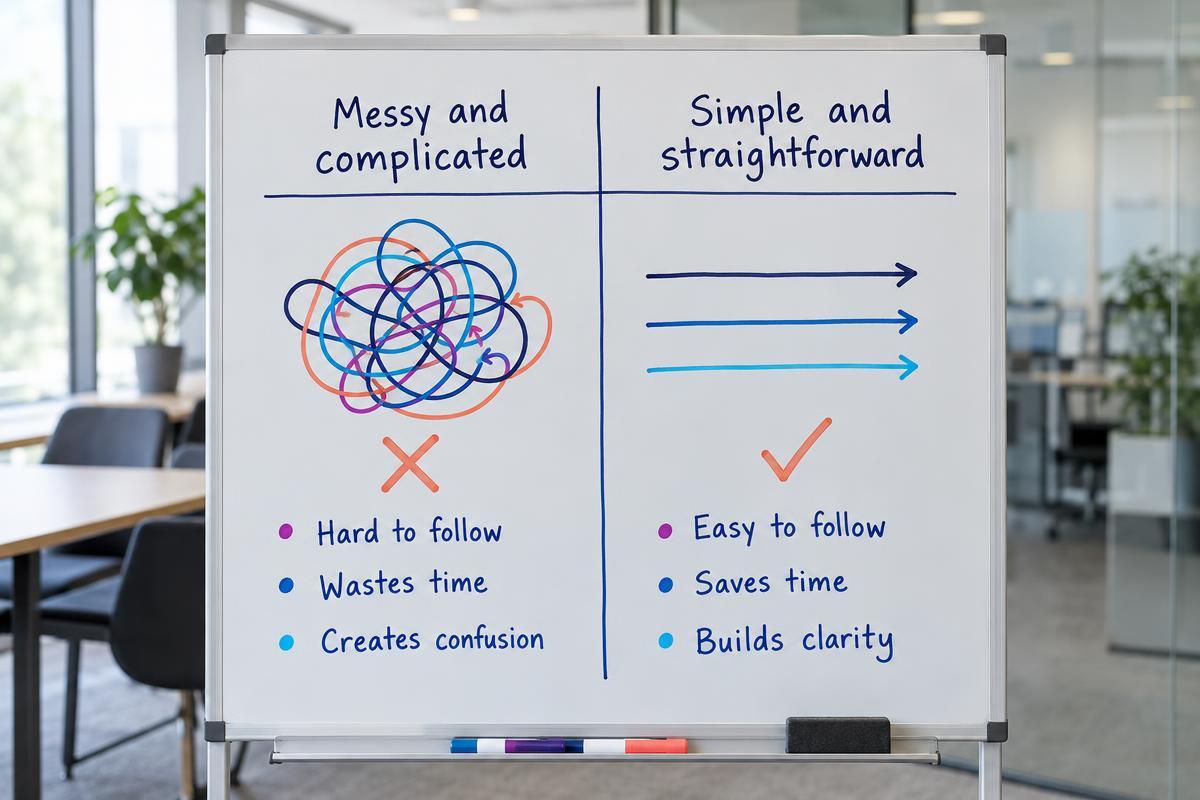
It helps to remember that this communication style is usually a defence mechanism rather than a calculated plot to ruin your day. According to UW Medicine, passive aggressive behaviour is not a pathology or mental illness, but rather a pattern of behaviour that is often unhelpful. People use it when they feel they lack the power or the psychological safety to state their needs directly.
Conflict avoidance is the primary driver. Clinical psychologist Susan Lin notes that conflict-avoidant people may use passive aggression to keep disagreements from becoming explicit. They want to object to a plan or express anger, but they fear the consequences of a direct argument. Instead of saying they disagree with a strategy, they simply drag their feet during execution.
Understanding someone's work personality provides helpful context here. For instance, the Helper personality values team harmony above almost everything else. As a result, the Helper shadow side can sometimes manifest as conflict avoidance. They might agree to take on work to please someone, feel resentful about the overload, and then quietly fail to deliver. They are not trying to sabotage you. They just lack the tools to say no.
On the other hand, a highly analytical coworker might use indirect hostility when they feel their expertise has been ignored. If a decision is made without their input, they might sit back and let a project fail just to prove a point. When you understand the underlying motivation, it becomes easier to address the issue professionally.
The most effective strategy for managing this behaviour is to take it entirely at face value. When someone makes a sarcastic comment or sends a loaded message, they are usually looking for an emotional reaction. Denying them that reaction immediately diffuses the tension.
This approach requires discipline. If a coworker sends an email saying they will "try to get to your task eventually", do not respond to the implied disrespect. Respond only to the timeline. You might reply by stating you need the file by Thursday at noon and asking if that is achievable. By ignoring the bait, you force them into a factual conversation.
When the behaviour affects project outcomes, you must address it directly but objectively. Dr Abby Medcalf suggests that a practical response is to describe the observable behaviour and its impact rather than label the coworker. Instead of calling someone unhelpful, mention a missed deadline and ask what is getting in the way. This shifts the focus from their character to the shared work goal.
Setting explicit boundaries is essential. Ambiguity is the playground of passive aggression. Take away that ambiguity by documenting everything. Send summary emails after meetings to confirm who is doing what and by when. When expectations are documented clearly in writing, it becomes very difficult for someone to claim they misunderstood the assignment.
If you find these interactions repeatedly testing your patience, Hey Compono offers AI coaching that helps you prepare. Taking ten minutes to test different responses in a private chat can help you walk into the real conversation feeling grounded and prepared.
Knowing the theory is one thing, but finding the right words in the heat of the moment is another challenge entirely. The goal is to remain professional, clear, and entirely focused on the work. Here are specific scripts to use when you need to address difficult behaviour.
Do not accuse them of deliberately holding up the team. Stratus HR recommends addressing passive-aggressive conduct privately using "I" statements that focus on how the behaviour affects work. You might say: "I noticed the report was not ready on Tuesday as we agreed. When the data is delayed, I cannot complete the client presentation on time. What is preventing us from hitting these deadlines, and how can we get this back on track?"
If a colleague is deliberately ignoring your messages to exert control, do not send multiple increasingly desperate follow-ups. State your required outcome clearly: "I have not heard back on the budget approval. I will proceed with the current numbers at 3:00 PM today unless you flag any changes before then." This puts the responsibility back on them to engage.
Call out the comment immediately by asking for clarification in a perfectly neutral tone. If they say something like, "Well, I suppose we will just do it your way again", you can respond with: "You sound concerned about this approach. What specific risks do you see in this plan?" This forces them to either articulate a genuine business concern or drop the attitude.
If you want to build your confidence for these moments, you can practise difficult conversations at work using an AI coach. Rehearsing these scripts out loud helps remove the emotional charge before you speak to your colleague.
Not every sigh or delayed email requires a formal response. You need a system for deciding when to handle things peer-to-peer and when to escalate the issue to leadership. As a general rule, you should always attempt to resolve the issue directly first.
Handling it yourself shows leadership and emotional intelligence. However, when the behaviour forms a pattern that actively damages your ability to do your job, it is time to involve others. The following table provides a guide for making this decision.
| Scenario | Action required | Next steps |
|---|---|---|
| Occasional delayed responses or mild sarcasm. | Direct peer conversation. | Address the specific instance neutrally. Clarify expectations going forward. |
| A single missed deadline with an ambiguous excuse. | Direct peer conversation. | Ask what caused the delay and establish a firm new timeline in writing. |
| Repeated missed deadlines affecting team deliverables. | Manager involvement. | Present the documented timeline of misses and explain the business impact. |
| Withholding critical information to sabotage a project. | HR or Manager escalation. | Provide written proof of the withheld data and the resulting project risk. |
| Personal insults masked as "just joking". | HR escalation. | Document the exact quotes, dates, and times. Report as a code of conduct issue. |
When you do decide to escalate, your documentation must be flawless. Advice from PathWise indicates that if the behaviour continues, you must document dates, times, what occurred, and its work impact before escalating objectively to a manager or HR. Never go to HR with a vague complaint about someone's attitude. Go with a spreadsheet showing five instances where their actions delayed a client delivery.
Dealing with indirect hostility takes a heavy toll on your energy. It is incredibly easy to fall into the trap of overthinking every interaction, wondering if a full stop at the end of a sentence was an intentional slight. You cannot control your coworker, but you can control how much mental real estate you allow them to occupy.
One highly effective approach is the grey rock method. The goal is to become as uninteresting and unresponsive to their dramatic behaviour as a grey rock. When they try to provoke an emotional reaction, you respond neutrally and factually. You offer no emotional feedback, no anger, and no defensiveness. Over time, the person usually stops trying because they are not getting the reaction they seek.
You also need to protect your professional reputation. If a coworker's resistance is delaying your projects, ensure your manager knows about the roadblocks early. Do not wait until a deadline is missed to explain that you were waiting on someone else. Communicate risks proactively, framing them as project updates rather than personal complaints.
Finally, remember to separate your self-worth from their behaviour. If you are managing conflict with a coworker who refuses to communicate clearly, that is a reflection of their professional limitations, not your competence. Focus your energy on colleagues who communicate honestly and collaborate well. You might even find that giving hard feedback to a coworker helps you establish a reputation as someone who deals with issues straightforwardly. People respect professionals who refuse to play workplace games.
Practising what you want to say makes it much easier to confront tricky behaviour without losing your cool. Using an AI coach lets you test different approaches and build your confidence in a safe, private environment before you have the real conversation.
Related reading
The grey rock technique involves responding to provocative or hostile behaviour in the most neutral, uninteresting way possible. You stick strictly to work facts, offer no emotional reactions, and keep conversations brief. This removes the drama and often discourages the other person from continuing their behaviour.
You should address the work impact in the meeting, but avoid diagnosing the person's attitude in front of an audience. If someone makes a sarcastic remark, ask them neutrally to clarify their point. Keep the focus entirely on the project facts and save behavioural feedback for a private conversation.
Never reply while you are angry. Read the email, strip away the emotional tone, and identify the core question or fact. Reply only to that factual element using clear, polite language. If the email is highly inappropriate, document it and consider moving the conversation to a quick phone call to clear the air.
Yes, but you need concrete evidence. HR cannot act on a complaint that someone has a bad attitude. You must document specific instances of missed deadlines, withheld information, or unprofessional comments, and clearly show how these actions are impacting the business.
This usually stems from a fear of conflict or an inability to say no. They agree in the moment to avoid an uncomfortable conversation, but their subsequent failure to deliver is an indirect way of expressing their true boundaries or resistance to the task.
Practical strategies and exact scripts for how to work with a coworker you don't like. Learn to set boundaries and protect your energy at work.
Learn exactly what to do if your boss doesn't like you. Get conversation scripts, documentation strategies, and steps to protect your career and...

Discover what personality types work well together. Learn how complementary traits build stronger teams and reduce friction in the workplace.
 Compono