
 Compono
1 min read
What is the best leadership coaching program in Brisbane for your personality?
 Compono
If you are wondering what is the best leadership coaching program in Brisbane, the answer is the one that adapts to your specific work personality...

The best leadership coaching program starts from each leader's actual personality and keeps working after the workshop ends. Location matters far less than method. Whether you are choosing for yourself or a team of managers, judge a program on its evidence base, how it handles different leadership styles, what happens between sessions and how many managers it can reach.
Last reviewed August 2026.
If you got here searching for leadership coaching in Melbourne, the criteria below apply whether the program runs out of a Collins Street boardroom or on a phone in Geelong. Most people who go looking for a program have hit a wall: a manager has been told they are "too direct", or a quiet high performer has been promoted and now needs to "speak up more". Something needs to change, and another generic training day sounds exhausting for everyone involved.
The standard move is to book a program and put your managers in a room with a framework. They take notes and try to apply the advice on Monday morning. By Wednesday the pressure is back and they revert to old habits, because the framework was written for a generic leader and they are not one.
We have all seen the programs that promise to turn anyone into a charismatic, visionary leader in a few easy steps. They usually rely on a compelling speaker telling the room to adopt their habits: wake up at 5:00 am, use specific power poses, run meetings with military precision, always lead from the front. The advice assumes everyone has the same brain. If a course teaches a highly empathetic, harmony-seeking manager to act like a blunt, results-at-all-costs director, it will never stick, because it conflicts with their personality and values.
When a leader forces a style that feels fake, their team notices and trust breaks down. The leader spends so much energy remembering the "rules" that they have nothing left for actual problem-solving. That is why HR so often ends up defending a spend that produced a nice lunch and little else.
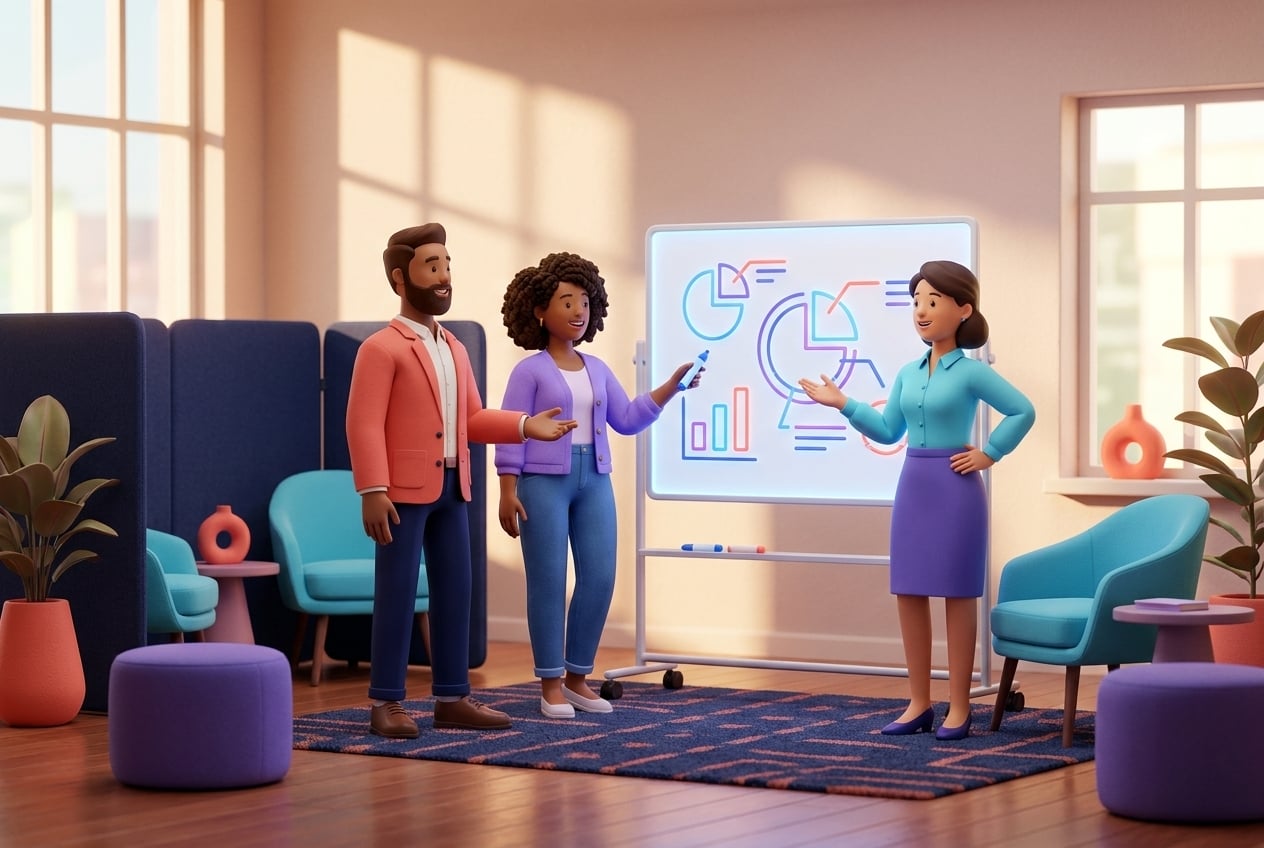
At Compono, we take evidence-based organisational psychology seriously. Our research into high-performing teams shows that leadership is a contextual practice, shaped by who the leader is and who they are leading, and no set of moves memorised from a whiteboard covers it.
Personality influences how someone interacts with the world, including how they lead. Before a manager can improve, they need to understand their baseline. Are they someone who thrives on structure and logic, or do they prefer open-ended discussion and shared decisions? A short work personality assessment answers that in a couple of minutes, and it is a better starting point than any pre-course reading pack.
The programs worth paying for do not try to change who a leader is. They help each leader understand their natural tendencies so they can stretch them when the situation calls for it.
Everyone has a default setting. When the pressure is on and deadlines are looming, leaders revert to the style that feels most comfortable to their work personality. Understanding that default is the core of effective coaching, because you cannot stretch from a position you cannot see.
Directive. Some leaders naturally want structure, clear goals, defined processes and visible progress. Analytical, organised personalities tend to lead this way. They are at their best providing clear guidance and keeping control of execution, and they prefer clear boundaries.
Collaborative. Others value shared decision-making and team harmony. Empathetic, people-first personalities tend to sit here. They want to hear from everyone before moving, and their teams usually feel heard.
Coaching. Some leaders instinctively develop the people around them, asking questions rather than giving answers. Reflective, advisory personalities lean this way. It is slow in a crisis and powerful over a year.
Hands-off. Some prefer to trust skilled teams to work independently, offering support only when asked. It suits experienced teams and can look like absence to a junior one.
None of these is the right style. Each one is right somewhere and wrong somewhere else, which is exactly why a program that teaches one style to everyone fails half the room.
Natural tendencies are the starting point, and effective leadership still requires flexibility. A directive approach might be necessary in a crisis where quick decisions matter, even if the leader's instinct is collaborative. A leader who prefers strict control may need to loosen up with a highly skilled team who thrive on autonomy, because if you micromanage experienced people they disengage and start reading job ads.
That is what a good leadership coaching program actually teaches. Rather than trying to produce a different person, it teaches each leader to recognise what a situation demands and stretch their natural personality to meet it, without burning out in the process. If your program cannot describe how it does that for two managers with opposite personalities, keep looking.
When you are ready to commit budget, you need a way to filter the good programs from the generic ones. The location matters less than the methodology. These are the questions we would ask any provider, human or digital.
Is it built on validated organisational psychology? If the program relies entirely on the personal anecdotes of the coach, walk away. You want evidence-based frameworks that account for different cognitive styles and work preferences.
Is it practical? Your managers do not need another lecture on the importance of trust. They need to know exactly how to handle a difficult conversation with an underperformer who has a completely different communication style to them, ideally with a chance to rehearse it first.
What happens between sessions? A weekend seminar might make people feel motivated, and motivation fades. Look for ongoing tools people can reach for on a Tuesday afternoon when the hard conversation is actually happening.
Who does it reach? Traditional executive coaching is priced for the top table. If the program cannot reach your first-time managers, the people who most need it and get it least, you are training the wrong layer.
Can you see whether it is working? You should be able to see participation and patterns without reading anyone's private conversations. If the provider offers neither visibility nor privacy, that is a problem in both directions.
This is where we should be upfront: Compono makes Hey Compono Business, an AI coach for teams, so we have a view. It will not replace an executive coach for your CEO, and it does not pretend to. What it does is give every manager a coach between the sessions, or instead of a program they were never going to be offered.
Each person talks to it by voice or text, and it adapts to their work personality, so a Pioneer and an Auditor asking the same question about an underperforming report get different guidance. A first-time manager can work through their first one-on-ones with it at 9 pm the night before. Someone dreading a difficult conversation can rehearse it out loud first. Managers and their teams also get personality insights on how the group fits together, which is the part a one-off workshop can never provide once the consultant leaves.
The honest positioning is both. Keep the human coach for the senior leaders and the high-stakes work. Give everyone else a coach that knows how they are wired and is there when the moment arrives.
Forcing someone into the wrong leadership style does more than slow their career. The energy required to mask a personality at work is exhausting, and it leads to burnout, frustration, cynicism and the kind of quiet dissatisfaction that ends in a resignation letter no one saw coming.
We see this constantly with people promoted for being great at their technical jobs who then struggle managing people. They assume they are failing at leadership, when they are using a style that does not fit their brain. Once they stop fighting their natural tendencies, leadership gets markedly easier. They lean on their strengths, whether that is meticulous planning, empathetic listening, steady execution or bold vision-setting, and they build teams that cover their blind spots.
Related reading: How to find a leadership coaching program that fits you · Best jobs for a Pioneer personality (and why they fit)
Employee coaching, wellbeing support and team personality insights in one platform, built on organisational psychology.
Talk to usThe clearest signal is repeated feedback in the same direction from their team or their own manager, or a leader who is visibly drained by the daily demands of managing people. It is also worth it when someone steps into a role that requires a completely different approach to the technical work that got them promoted.
Yes. Many highly effective leaders naturally prefer a hands-off or reflective style. They give their teams autonomy and listen closely, and they make considered decisions rather than dominating a room with loud enthusiasm or forceful directives.
People often gain immediate clarity about their natural work personality in the first session, and changing ingrained habits takes longer. Most leaders start to see a real shift in their daily interactions and their own stress levels after a few months of consistent, personality-adaptive practice.
No. Method matters more than postcode. A program with a solid evidence base and support between sessions works whether it runs in a Melbourne boardroom or on a phone in a regional office. Local delivery helps only if the in-person element is what makes it stick for your people.
They treat everyone in the room as having the same brain and the same motivations. If a course teaches a highly empathetic, harmony-seeking person to act like a blunt, results-at-all-costs director, the advice will not stick because it conflicts with their natural personality and values.

1 min read
If you are wondering what is the best leadership coaching program in Brisbane, the answer is the one that adapts to your specific work personality...

1 min read
The best leadership coaching program in NSW is one that adapts to your unique work personality rather than forcing you into a rigid management...

1 min read
A leadership coaching app is a digital tool designed to help managers and executives improve their leadership skills through daily prompts,...