
 Compono
1 min read
How to pilot ai coaching in a startups business
 Compono
To pilot ai coaching in a startups business, you must start with a small, cross-functional group and focus on building self-awareness rather than...
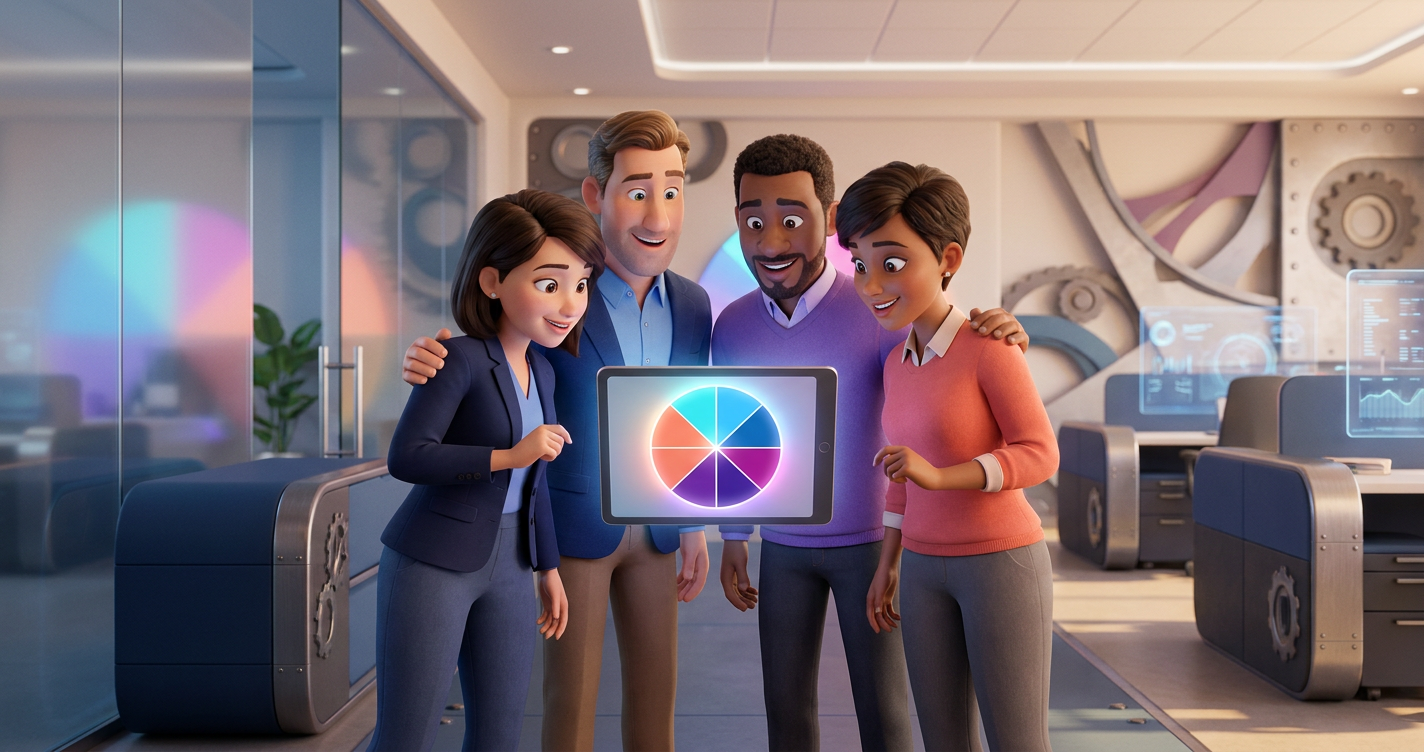
Piloting AI coaching in a defence business requires a phased approach that prioritises data security and psychological safety while focusing on specific operational outcomes like leadership readiness or team cohesion.
Success in this high-stakes environment depends on moving beyond generic automation and instead using tools that understand the unique work personalities of your personnel. Defence teams often operate under extreme pressure, and traditional coaching can be too slow or too expensive to scale across an entire workforce. By starting with a small, focused group and clear metrics, you can demonstrate how personality-adaptive coaching improves decision-making without compromising the rigorous standards your industry demands.
Key takeaways
- Defence organisations should start AI coaching pilots with non-combat support functions to establish a baseline for security and effectiveness.
- To ensure adoption, the pilot must lead with individual self-awareness rather than performance monitoring, protecting the trust of your personnel.
- Integrating work personality data allows the AI to provide coaching that feels relevant to the specific stresses of a defence environment.
- Success metrics should focus on qualitative improvements in team communication and quantitative reductions in leadership friction.
You know the pressure of the defence sector. It is a world of rigid hierarchies, complex compliance, and zero room for error. But even in this structured landscape, the human element remains your biggest variable. High-performing teams in defence are expected to be resilient and adaptable, yet the tools provided to help them manage their own mental and professional growth often feel stuck in the past. Traditional executive coaching is a luxury reserved for the top brass, leaving the mid-level leaders – the ones actually running the show – to figure it out on their own.
This creates a gap. When your people feel misunderstood or poorly supported, it does not just hurt morale – it impacts operational readiness. You might have seen talented individuals burn out because they were pushed into leadership roles without the self-awareness to handle the interpersonal weight of the job. The problem is not a lack of effort; it is a lack of scale. You cannot put a human coach in every department, but you can provide a digital partner that understands how each person actually thinks and works.
The hesitation to pilot AI coaching in defence usually comes down to two things: security and authenticity. You need to know the data is safe, and your people need to know the coaching is not just a series of canned motivational quotes. A successful pilot must address these concerns head-on by proving that Hey Compono can deliver deeply personalised insights while respecting the boundaries of a secure workplace. It is about creating a space where a 'Doer' or an 'Auditor' feels seen, not just managed.

When you are ready to start, do not try to boil the ocean. In a defence context, the most effective pilots begin in 'low-threat' but high-impact areas. Think about your logistics, procurement, or administrative support teams. These groups deal with high complexity and strict deadlines but do not carry the same immediate security classifications as frontline operations. This allows you to test the technology and the user experience without the initial hurdle of top-secret data clearance.
Identify a group of 20–30 participants. This size is large enough to provide meaningful data but small enough to manage closely. You want a mix of personality types to see how the AI handles different temperaments. For example, how does the coaching land with a 'Coordinator' who loves structure versus a 'Pioneer' who is always looking for a new way to solve a problem? At Compono, we have spent a decade researching these dynamics to ensure the coaching feels like a peer-to-peer conversation rather than a clinical assessment.
During this phase, transparency is your best friend. Be clear with your team about what the AI is and what it isn't. It is not a replacement for their manager, and it is certainly not a 'spy' in their pocket. It is a tool for self-discovery. If you are curious what personality type you default to under stress, Hey Compono can show you in about 10 minutes, providing a low-friction entry point for even the most sceptical team members.
In defence, there is often a culture of 'getting on with it'. While this builds grit, it can also lead to a lack of self-awareness that causes friction in teams. Your pilot will fail if it feels like another mandatory compliance module. To get real buy-in, the coaching must start with the individual. It needs to hit them like a tonne of bricks – in a good way. When a user sees their work personality laid out in front of them, recognising their own tendencies to over-analyse or rush to action, the 'buy-in' happens naturally.
Use the 'Knowing Me' framework during your pilot. This encourages participants to share their insights with their immediate team. Imagine a scenario where a 'Doer' and an 'Advisor' are clashing over a project timeline. Instead of a tense meeting, they use their personality profiles to realise they simply have different ways of processing urgency. The AI facilitates this by giving them the language to talk about their work styles without it getting weird or personal.
This is where the 'personality-adaptive' element becomes critical. The AI should coach a 'Helper' differently than it coaches an 'Evaluator'. One might need encouragement to be more assertive in meetings, while the other might need a nudge to consider the emotional impact of their directness. Some teams use personality-adaptive coaching to have these conversations early, preventing small misunderstandings from turning into operational roadblocks.
Defence businesses love metrics, but you have to be careful what you measure in a coaching pilot. If you focus solely on 'productivity', you miss the point. The goal of AI coaching is to build a more resilient, self-aware, and cohesive workforce. Look for 'soft' metrics that have 'hard' consequences. Are team meetings shorter because people understand how to communicate with each other? Is there a reduction in reported workplace friction? Are mid-level managers feeling more confident in their decision-making?
Collect qualitative feedback through anonymous surveys at the 30, 60, and 90-day marks. Ask questions that get to the heart of the experience: 'Has this tool helped you understand a colleague’s behaviour better?' or 'Have you changed a specific work habit based on the coaching prompts?' You will likely find that the people who were the most sceptical – often the detail-oriented 'Auditors' – become the biggest advocates once they see the precision of the insights.
Finally, look at the retention of your high-potentials. In the modern defence landscape, keeping talent is just as important as recruiting it. When people feel that their organisation is investing in their personal growth in a way that feels authentic and modern, they are more likely to stay. The Hey Compono app helps you provide this investment at a scale that was previously impossible, making it a cornerstone of your long-term talent strategy.
Key insights
- The success of an AI coaching pilot in defence depends on starting with support functions to mitigate security risks while proving the concept.
- Personnel buy-in is highest when the tool focuses on individual self-awareness and provides immediate, 'eerie' accuracy regarding their work personality.
- Personality-adaptive coaching prevents the 'one-size-fits-all' failure of traditional digital training by tailoring prompts to the user's specific traits.
- Measuring the reduction in team friction and the increase in leadership confidence provides the best ROI case for broader implementation.
Starting a pilot is the only way to move from theoretical interest to practical execution. By focusing on a small group and using a personality-led approach, you can transform the way your defence team communicates and leads.
Security is handled by choosing a platform that prioritises data privacy and starting the pilot in non-classified departments. This allows you to vet the software through your standard IT procurement processes while gathering evidence of its effectiveness without risking sensitive operational data.
Adoption depends on the 'Aha!' moment. When the AI accurately describes a user's work personality – like the 'Evaluator's' tendency to be blunt or the 'Helper's' desire for harmony – it builds immediate credibility. It stops being a gimmick and starts being a useful mirror for their own behaviour.
It is not about replacement; it is about democratisation. While a human coach is great for top-tier executives, AI coaching allows you to provide high-quality, personality-specific guidance to every level of your organisation, ensuring that all your leaders have the support they need to succeed.
Most organisations see a shift in team language and self-awareness within the first 30 days. By the 90-day mark, you should have enough qualitative data to show improved team cohesion and a quantitative increase in user engagement with professional development tasks.
The coaching is designed to be reflective, not prescriptive. It asks questions and provides insights based on the user's own work personality data. This keeps the user in the driver’s seat, encouraging them to think critically about their actions rather than blindly following a set of instructions.

1 min read
To pilot ai coaching in a startups business, you must start with a small, cross-functional group and focus on building self-awareness rather than...

1 min read
To successfully pilot AI coaching in a SaaS company's business, you need to identify a specific managerial bottleneck, select a contained group of 10...

1 min read
To pilot AI coaching in a local government business successfully, you must start with a small, cross-functional cohort to test psychological safety...