
 Mathan Allington
How to use AI coaching for internal mobility to keep your best people
 Compono
People leave to find work that suits them better. How coaching helps your team name their strengths, and find a next step inside the business.
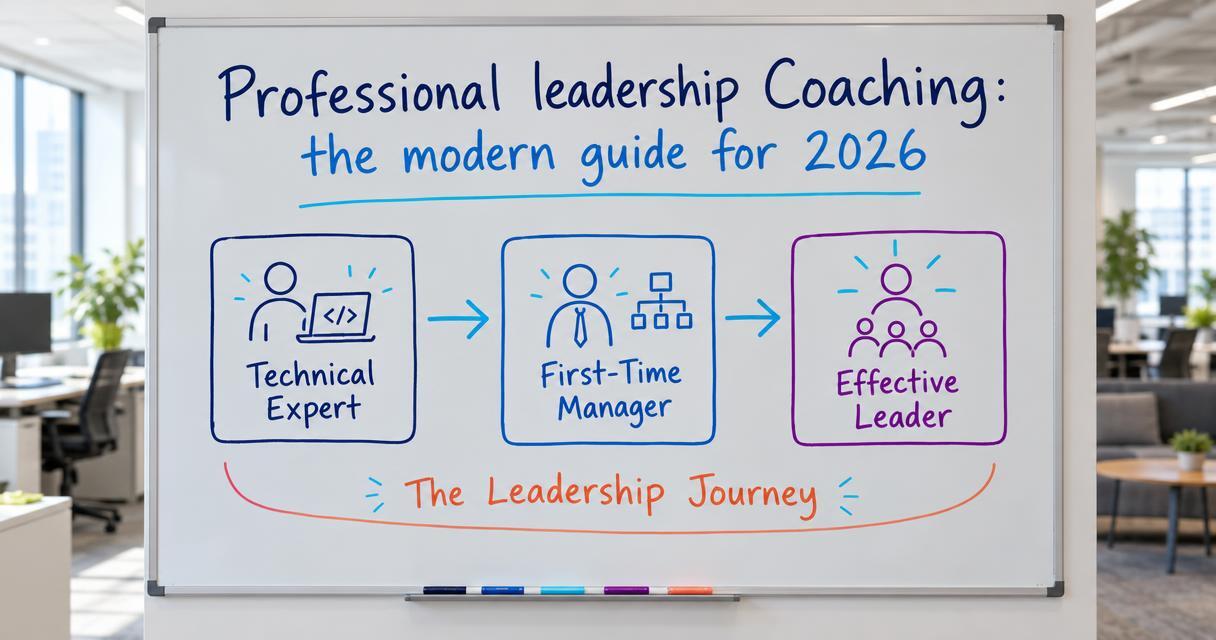
Professional leadership coaching is a structured development process where leaders work with a coach to identify behavioural blind spots, improve decision making, and build the specific skills needed to guide their teams effectively.
Last reviewed October 2026
Key takeaways
- Professional leadership coaching has moved from exclusive executive perks to accessible daily support for all management levels.
- The most effective coaching adapts to your specific work personality rather than forcing you into a generic leadership mould.
- Modern coaching focuses on in-the-moment problem solving for difficult conversations and team conflict.
- Traditional workshops are being replaced by continuous micro-sessions that fit into a normal workday.
Most people get promoted into leadership because they are very good at their technical job. Then they wake up on a Monday morning and realise that managing people requires a completely different set of skills. The transition is brutal. You are suddenly responsible for other people's career growth, performance issues, and team changing. And usually, you are expected to figure it out alone.
Historically, professional leadership coaching was reserved strictly for the C-suite. If you were a mid-level manager or a newly promoted team leader, you might get a two-day workshop. You would sit in a conference room, look at a few slides about active listening, and then go back to your desk. By the following week, all that training evaporates. When you actually face a difficult conversation with an underperforming staff member, those slides are completely useless.
The biggest flaw in traditional leadership development is the assumption that all good leaders look and sound the exact same way. They do not. If you are naturally quiet and analytical, a coaching program that tells you to be loud and charismatic will just make you feel like an imposter.
Effective professional leadership coaching starts with deep self-awareness. It looks at how your brain actually works. For example, if you have The Advisor work personality, your natural leadership style is empathetic and collaborative. You excel at building trust with your team. But your coaching needs to help you with your specific blind spots, like avoiding necessary conflict or struggling to give hard feedback.
When coaching adapts to your personality, it stops being generic advice. It becomes a practical tool for your specific workplace challenges. You learn how to use your natural strengths instead of pretending to be someone else.
Leadership coaching is not about venting your frustrations. It is about identifying patterns in your behaviour that limit your team's potential. A good coach helps you hold up a mirror to your own reactions and decisions.
Consider how you handle stress at work. When a major project goes off track, do you micromanage your team? Do you withdraw and try to fix it all yourself? Professional leadership coaching helps you spot these reactive behaviours before they damage team morale. It gives you a safe space to practice your response.
It also provides a testing ground for difficult conversations. If you need to tell a senior employee they are not getting a promotion, you can role-play that scenario first. You get to make your mistakes in practice, not in the actual performance review meeting.
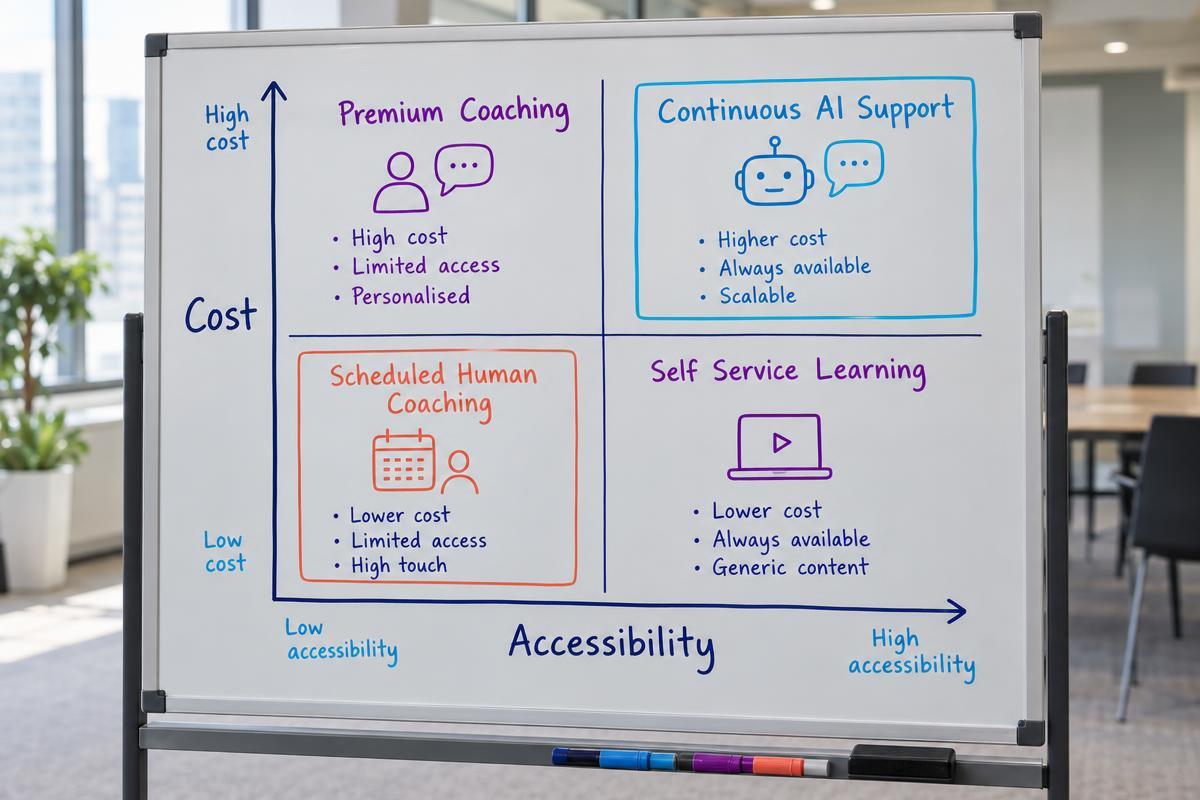
The old model of professional leadership coaching involved booking an hour with a human coach every fortnight. That model is expensive and hard to scale across a business. More importantly, it rarely aligns with when you actually need the help. If you have a team crisis on a Tuesday morning, waiting until your scheduled coaching session next Thursday is not helpful.
This is where Hey Compono changes the market. Modern teams need support in the flow of work. By using an AI coach, you get continuous, personality-adapted guidance exactly when you need it. How AI coaching improves leadership capability comes down to this immediate availability. It is available at any time of day or night.
If you are lying awake at 3 am worrying about a team restructure, you can get immediate and actionable steps to handle it. This continuous model ensures that leadership development is an ongoing daily practice, not just a scheduled event on your calendar.
| Traditional Executive Coaching | Modern AI Leadership Coaching |
|---|---|
| Reserved for the C-suite and senior executives | Available to all managers and team leaders |
| Scheduled fortnightly or monthly | Available 24/7 in the moment of need |
| High cost per head | Able to grow across the entire organisation |
| Relies on human memory and notes | Adapts continuously to your work personality |
Organisations are finally realising that frontline managers have the biggest impact on employee retention. Leaving them without support is a massive business risk. Professional leadership coaching is no longer just for executives. It is becoming standard practice for anyone who manages people.
When you provide coaching to a new manager, you prevent bad habits from forming early. The first time manager guide to survival is usually about learning how to delegate properly instead of burning out. They learn how to set boundaries and manage their time.
For experienced executives, the focus shifts entirely. They need to work on strategic thinking and unlearning outdated management styles. A platform like Hey Compono allows businesses to scale this support to every leader in the company. It ensures everyone gets guidance tailored to their specific career stage, helping to coach senior leaders on behavioural blind spots just as effectively as it helps a new team leader.
How do you know if professional leadership coaching is actually working? You look at team behaviour. When a leader improves, the entire team's changing shifts. Meetings become more productive. Staff turnover drops significantly. People stop hiding their mistakes and start asking for help.
While traditional coaching metrics often rely on simple satisfaction surveys, modern platforms track engagement and real-world application. Using a leadership coaching app lets you see if leaders are actively seeking advice on conflict resolution or performance management. This data helps organisations understand what their managers are truly struggling with and where they need more systemic support across the business.
Give every manager in your business the personality-adapted support they need to lead effectively. Replace expensive, one-off workshops with continuous coaching that actually changes behaviour.
Related reading
It is a development process where leaders work with a coach to identify their blind spots, improve their communication skills, and learn how to manage their teams more effectively.
Not anymore. While it used to be reserved for the C-suite, modern AI platforms have made professional leadership coaching accessible to first-time managers and mid-level team leaders.
Generic coaching assumes everyone leads the same way. Personality-adapted coaching looks at how your specific brain works, helping you use your natural strengths and manage your unique weaknesses.
A mentor gives advice based on their own past career experiences. A leadership coach uses structured frameworks to help you develop your own problem-solving skills and self-awareness.
The most effective coaching happens continuously in the flow of work. Rather than waiting for a fortnightly meeting, modern leaders benefit most from bite-sized daily support right when they face a challenge.

People leave to find work that suits them better. How coaching helps your team name their strengths, and find a next step inside the business.

Discover how AI coaching for scale ups gives fast-growing teams the personality-based guidance they need to manage conflict and communicate better.

Super fund leaders face tight regulation and constant change. How to build development around how each leader works, instead of a standard program.