
 Mathan Allington
Leadership coaching Adelaide: A Buyer's guide for 2026
 Mathan Allington
Searching for leadership coaching in Adelaide? Discover why modern teams are shifting from expensive traditional coaching to accessible.
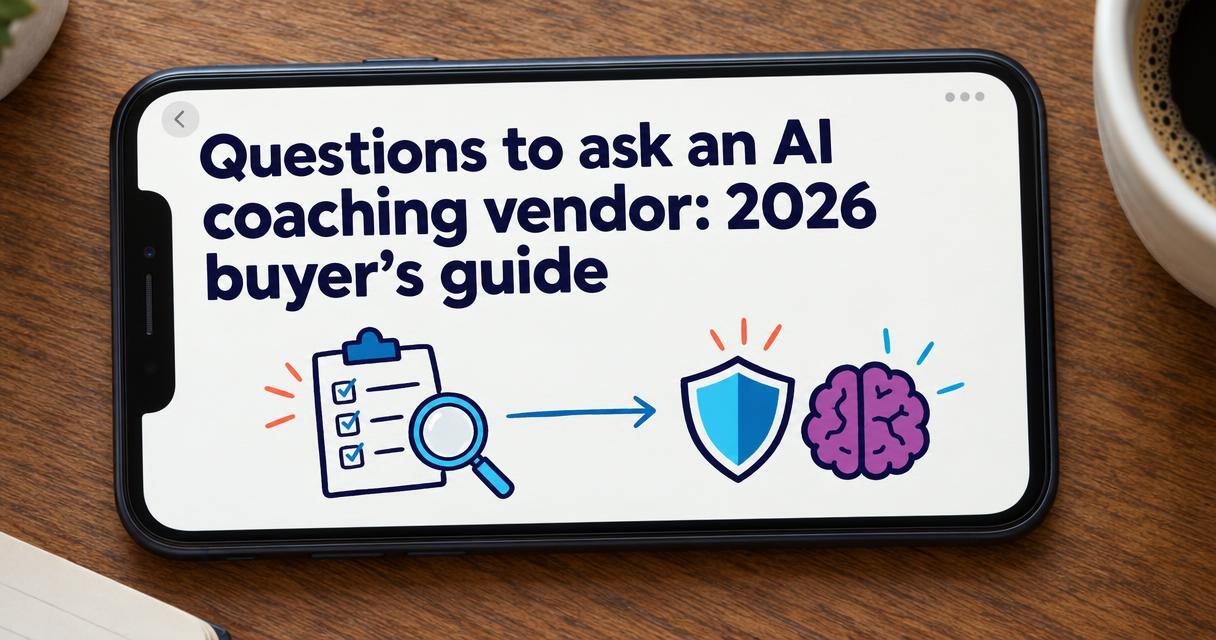
The most revealing questions to ask an AI coaching vendor go beyond basic technology and focus heavily on coaching pedagogy, behavioural science, data privacy, and how the platform handles psychological safety.
Last reviewed November 2026
Key takeaways
- Vendors must prove their platform uses validated behavioural science frameworks rather than just wrapping a generic language model in a nice interface.
- Data privacy questions should focus on whether employee conversations are ringfenced from both the vendor's training models and your internal human resources systems.
- Safety guardrails are necessary to detect crisis situations and seamlessly escalate emotionally charged issues to human support.
- True coaching efficacy is measured by observable behaviour change and skill retention rather than simple login metrics.
- A purpose-built AI coach adapts its advice to the user's specific personality and working style to ensure the guidance actually lands.
Evaluating human resources technology often feels like working through a maze of empty promises. Every platform on the market now claims to feature artificial intelligence. You are looking for a tool that genuinely helps your people grow, but distinguishing a real coaching platform from a generic chatbot requires digging below the marketing material.
The shift toward digital support is well underway. According to a Gartner report cited by Alice Labs, 38% of HR leaders had piloted or started generative AI by early 2024. However, plugging a text generator into your team's workflow is very different from deploying a genuine coaching tool.
A basic language model can summarise a book on leadership. A real coach understands the person in front of them, validates their struggle, and guides them toward self-awareness. To spot the difference during a product demo, you need a highly specific set of questions.
This is where the majority of generic tools fail the test. A software vendor might have excellent developers, but building an effective coach requires deep expertise in organisational psychology. You need to know what pedagogical foundation the platform stands on and how it actually drives behaviour change in adults.
When an employee is struggling with a difficult conversation, generic advice like "be clear and empathetic" is rarely helpful. The guidance needs to match how their brain works. A vendor should be able to explain how their system adapts to different people.
For example, Hey Compono uses the Work Personality framework to ensure advice lands correctly for different working styles. The impact of this personalisation is measurable. According to The Conference Board research published by The Good Men Project, 96% of surveyed workers said AI coaching responses were customised to their goals or context, and 89% said sessions produced specific, useful next steps.
During your vendor meeting, ask these specific methodology questions:
Trust is the currency of any coaching relationship. Privacy is often the single biggest barrier to internal adoption. If your staff suspect that their direct manager or the human resources department is reading their coaching transcripts, they will never engage honestly with the tool. They will only use it for surface-level productivity questions rather than addressing real behavioural challenges.
You must ask the vendor exactly how employee data is ringfenced. It is not enough to ask if they are SOC2 compliant. You need to know if they use your staff's vulnerable moments to train their global models. You also need to verify what administrators can see. A comprehensive AI coaching security checklist helps you evaluate these risks systematically. The vendor should state clearly that individual conversations are entirely private.
Protect your organisation by asking these governance questions:
Coaching is deeply personal. It frequently touches on stress, burnout, conflict, and professional identity crises. While technology can handle the bulk of professional development, it has limits. The Conference Board reported that AI can perform up to 90% of day-to-day coaching functions, while human expertise remains critical for emotionally charged, political, or values-based discussions. A responsible vendor knows exactly where this line is drawn.
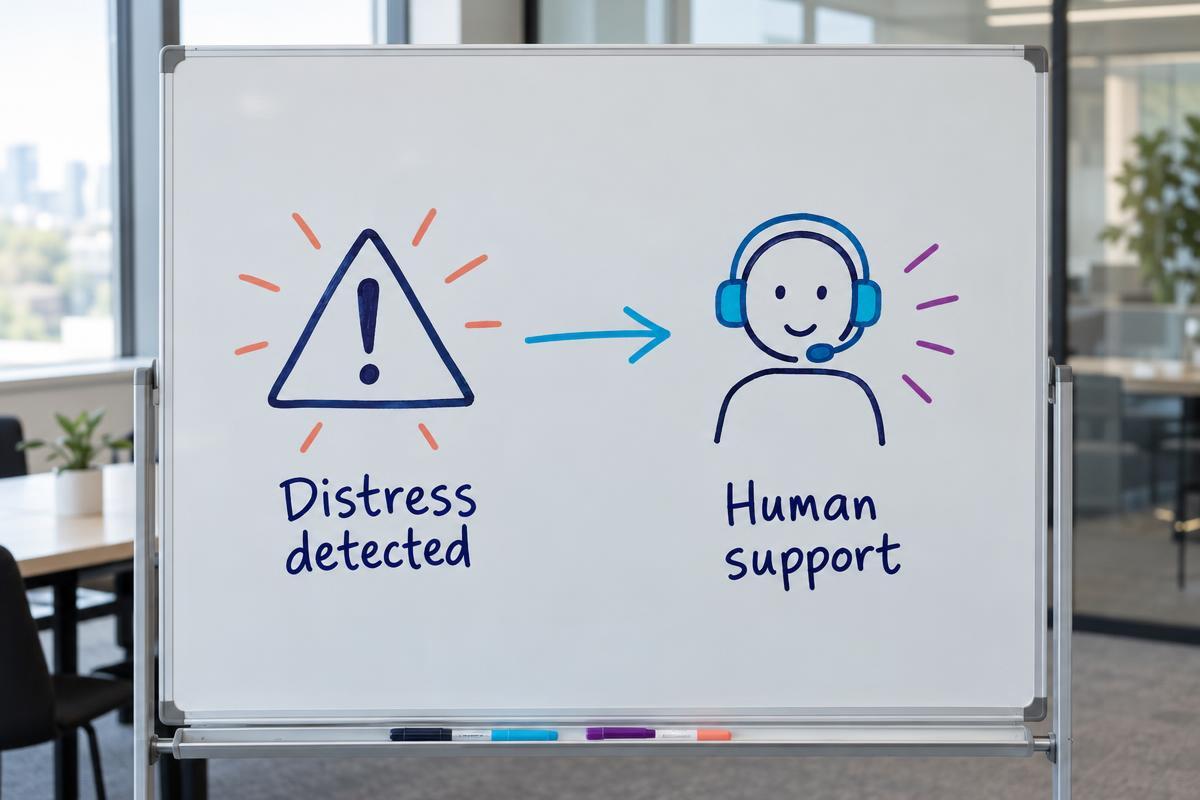
If a user types or says they are completely overwhelmed and cannot cope, the system should not offer a chipper productivity framework. It needs to recognise the distress and offer appropriate resources. You want to see the vendor's safety protocols in action.
Additionally, the overall user experience dictates whether the tool gets used past the first two weeks. If interacting with the platform feels like wrestling with a customer service bot, your team will abandon it. You can review how the market assesses these platforms by reading an AI coaching effectiveness guide to understand what drives long-term engagement.
Test the vendor's safety and user experience with these questions:
You eventually have to justify this software spend to your executive team. The adoption of these tools is rising steadily. A 2024 workplace-learning survey by CareerTrainer found that 13% of organisations reported using AI-based coaching or mentoring tools. That number is growing primarily because businesses are finding better ways to measure the impact on team performance and retention.
You need to understand how the platform fits into your existing set of tools. A standalone app that requires a separate login often struggles to gain traction. The vendor should explain how their tool complements your existing leadership development programs. They also need to provide aggregated, anonymised reporting that shows you the primary challenges your workforce is facing without compromising the trust of individual users. Understanding what AI coaching costs per seat is only half the equation; you must also define how you will measure the return on that investment.
Pin down the operational details with these questions:
To help you structure your evaluation, use this comparison of standard text tools versus purpose-built coaching platforms.
| Feature | Generic AI Chatbot | Purpose-Built AI Coach |
|---|---|---|
| Underlying model | General language prediction | Validated behavioural science framework |
| Personalisation | Responds based on user prompting | Adapts to the user's specific work personality |
| Data privacy | Often uses inputs for model training | Strictly ringfences data and protects confidentiality |
| Safety guardrails | Basic content filtering | Active distress detection and human escalation paths |
| Success metrics | Number of prompts and daily active users | Observable behaviour change and goal completion |
Evaluating vendors is much easier when you know what a purpose-built platform looks like. Hey Compono provides personality-adaptive coaching that scales across your entire workforce while keeping every conversation strictly confidential.
Related reading
The most important questions focus on data privacy, the behavioural science behind their coaching methodology, and how they measure actual behaviour change. You should always ask how they protect employee confidentiality and whether they use your company data to train their models.
Return on investment is measured through aggregated behavioural data, goal completion rates, and shifts in team performance or retention. A strong vendor will provide anonymised reporting that shows you the main themes your workforce is working on without exposing individual conversations.
No. While an AI coach can handle the vast majority of day-to-day professional development, human coaches remain essential for highly complex, emotionally charged, or highly political situations. The best vendors offer technology that complements human leadership rather than trying to replace it.
In a properly designed platform, conversations are strictly confidential. Neither human resources nor direct managers can read the transcripts. You must verify that the vendor does not provide backdoor access to management and does not use employee disclosures to train public language models.
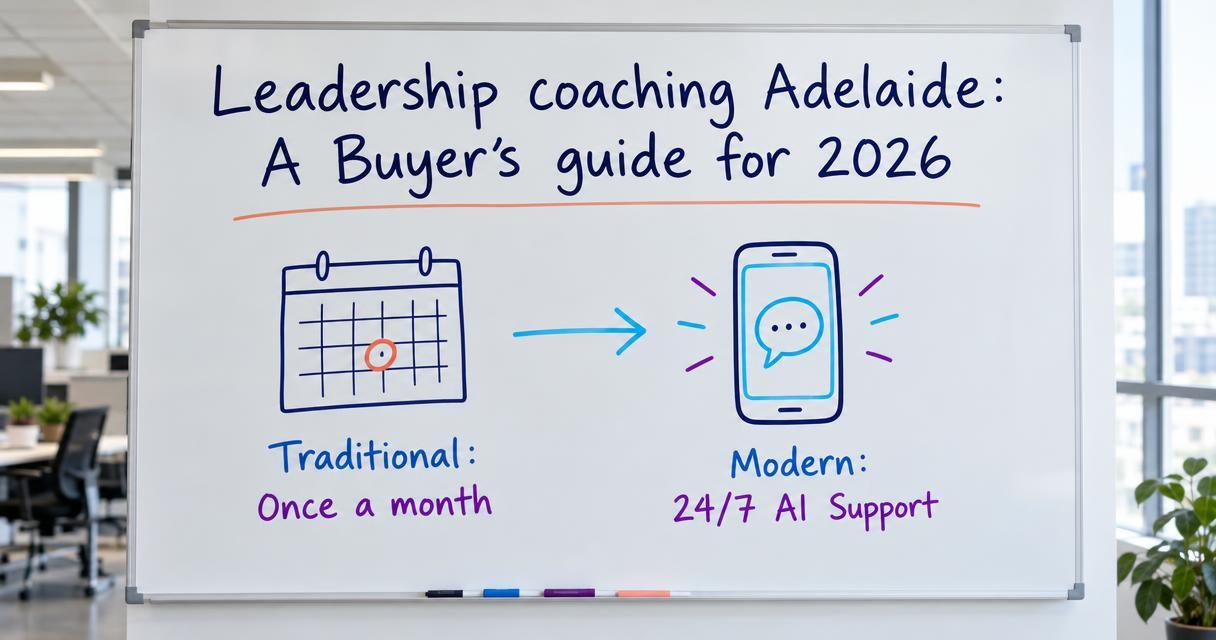
Searching for leadership coaching in Adelaide? Discover why modern teams are shifting from expensive traditional coaching to accessible.

Discover how manager coaching software improves team performance and retention. Get actionable steps to choose the right platform for your leaders in...

Comparing Rocky AI alternatives? What the main coaching apps cover, and why people are moving to coaching that adapts to how they work.
 Compono