
 Mathan Allington

How to respond to feedback you disagree with at work
 Mathan Allington
Learn exactly how to respond to feedback you disagree with. Get practical scripts, a feedback triage matrix, and strategies to push back...
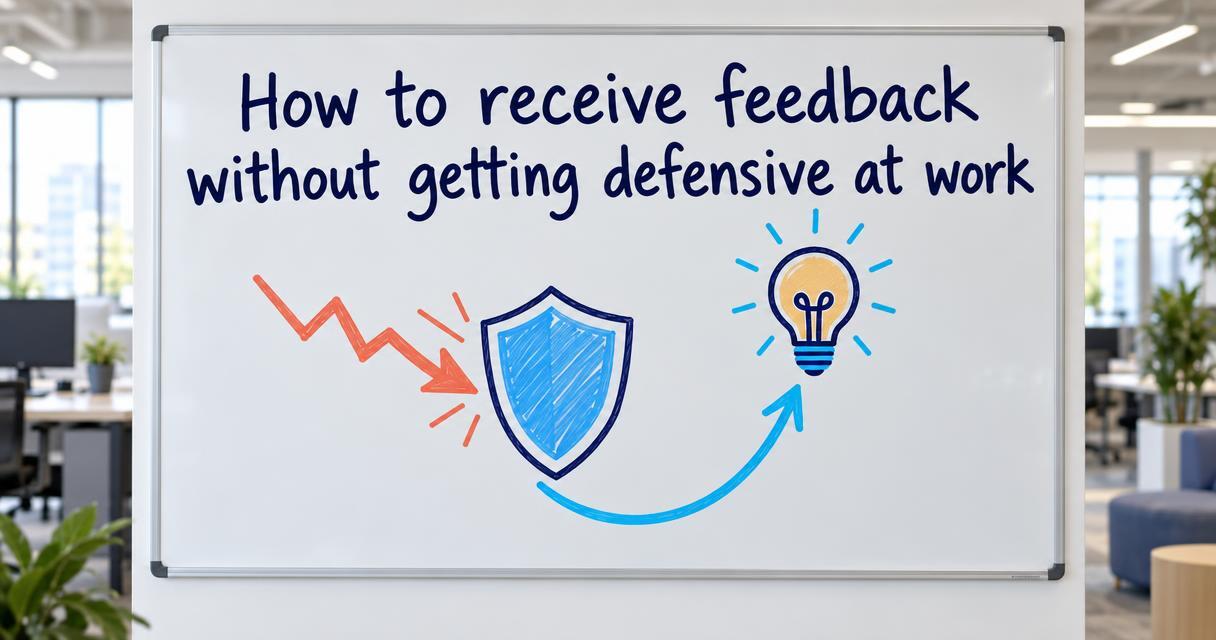
To receive feedback without getting defensive, you need to separate your physical reaction to the message from your verbal response by using grounding techniques and scripted phrases to buy yourself time.
Last reviewed November 2026
Key takeaways
- Defensiveness is a biological response triggered when your brain perceives professional criticism as a physical threat.
- Somatic techniques like adjusting your breathing or grounding your feet can de-escalate your nervous system during a stressful meeting.
- Asking clarifying questions buys you time to process your emotions while showing the other person you are actively listening.
- Separating the delivery of the feedback from the substance helps you find actionable insights, even when the feedback is delivered poorly.
- Practising your responses to difficult workplace conversations builds muscle memory so you can respond gracefully under pressure.
We have all been in that meeting room or on that video call. Your manager asks for a quick chat. They start outlining an area where you need to improve or point out a mistake you made. Immediately, your chest tightens. Your face gets hot. Before you even realise what is happening, you are arguing about a minor detail, justifying your past decisions, or shutting down completely.
You are not alone in this reaction. Defensiveness is a universal human experience. It happens because we want to be seen as competent and capable at work. When someone points out a flaw, it threatens our professional identity and our sense of security.
The goal is not to stop feeling defensive entirely. That is biologically impossible. The goal is to notice the feeling, pause the reaction, and choose how you respond. Most career advice tells you to just listen and nod, but that advice ignores the intense physical reality of receiving criticism. You need practical tools to handle the immediate physiological rush of defensiveness so you can evaluate the feedback objectively.
When you hear negative feedback, your brain does not distinguish between a social threat to your ego and a physical threat to your safety. The amygdala, the part of your brain responsible for emotional processing, hijacks your nervous system. It floods your body with adrenaline and cortisol. This is why your heart races, your breathing becomes shallow, and your muscles tense up when you are criticised.
Your body is preparing for a fight or a quick escape. In this state, the prefrontal cortex, the area of your brain responsible for logical thinking and rational decision-making, goes quiet. You physically lose the ability to listen with an open mind.
At Compono, we know that different personalities experience this threat response in unique ways. A Doer might feel the immediate urge to argue the facts, fix the problem on the spot, and rush the conversation. An Auditor might mentally pull up old emails and spreadsheets to prove the feedback is factually incorrect. Knowing your default reaction helps you catch yourself before you speak.
If you want to understand your own default reactions, Hey Compono can help you identify your patterns. Recognising that your defensive reaction is a biological event, not a character flaw, is the first step to managing it.
Not all feedback hits you the same way. You might easily accept criticism about your spreadsheet formatting but feel completely derailed when someone questions your communication style. This happens because certain types of feedback bump into our deepest insecurities or past workplace trauma.
If you struggled with a micromanaging boss in a previous role, a new manager checking in on your progress might trigger a massive defensive spike. If you battle imposter syndrome, a minor correction might feel like confirmation that you are fundamentally unqualified for your job.
To manage this, you need to map your triggers before you enter a feedback conversation. Ask yourself what kind of comments usually make you hot under the collar. Is it when your intelligence is questioned? Is it when you feel your hard work is being ignored? When you know your triggers, you can anticipate the physical reaction and remind yourself that the current situation is not a repeat of the past.
When the amygdala hijack happens, you need immediate strategies to stall. The goal is to buy your prefrontal cortex enough time to come back online.
Start with somatic, physical de-escalation techniques. You cannot always control your thoughts, but you can control your body. When you feel the defensive heat rising, press both of your feet firmly into the floor. Notice the physical sensation of the ground supporting you. Next, adjust your breathing. Make your exhales slightly longer than your inhales. This specific breathing pattern signals to your parasympathetic nervous system that you are safe, which helps slow your heart rate down.
Once your body is slightly calmer, use verbal strategies to buy more time. Only 16% of nearly 15,000 employees said their most recent conversation with their manager was "extremely meaningful," highlighting the need to listen for understanding rather than immediately defend a position, according to a recent Gallup study. You can demonstrate that you are listening while giving yourself a moment to process the shock.
Instead of replying to the claim, ask a question. To reduce defensiveness, ask clarifying questions such as "Can you tell me which part you'd like me to focus on first?"; clarifying intent can reduce anxiety and improve listening, according to IMD. Other good verbal stalls include saying, "Thank you for sharing that with me. I want to make sure I fully understand. Could you give me a specific example?" This forces the other person to be specific and gives you ten seconds to breathe.
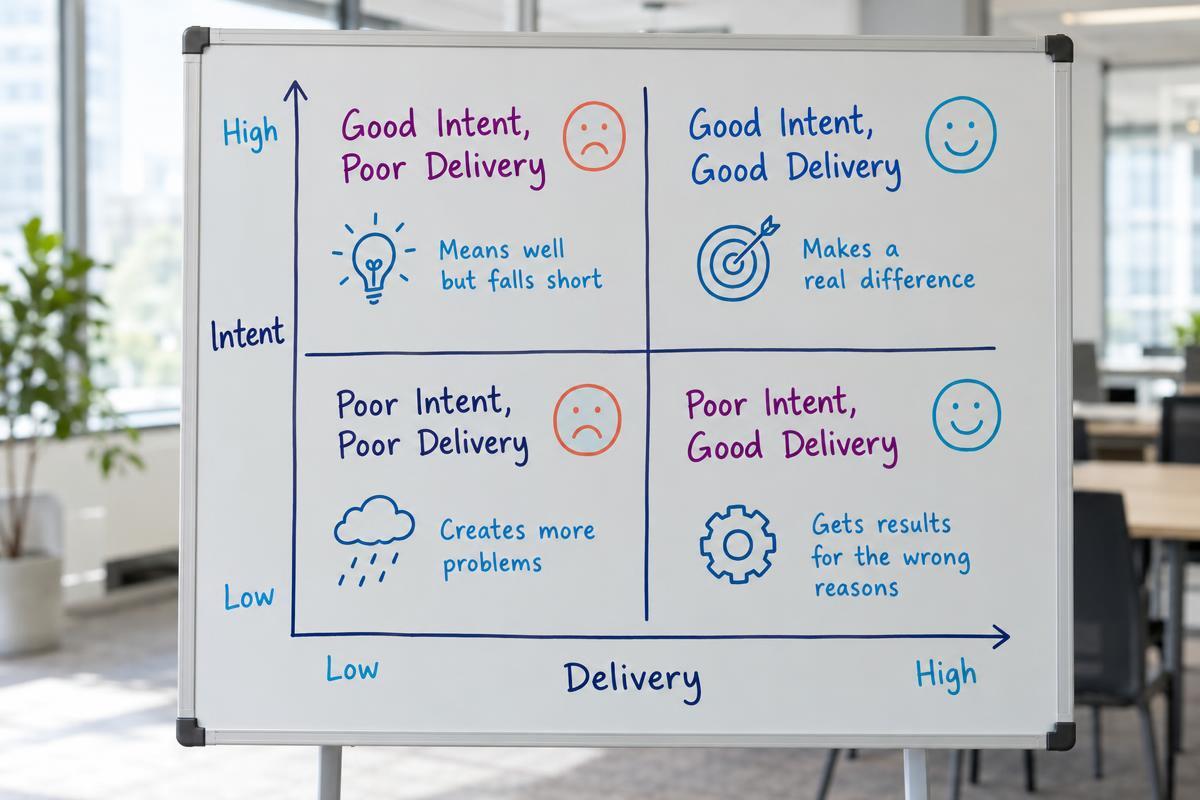
Feedback conversations often go off the rails because the delivery is clumsy. We all hope to get feedback without the fluff, but the reality is that many managers are terrible at delivering criticism. Sometimes the person trying to give constructive feedback is nervous, so they rush their words, use an aggressive tone, or surround the core message in confusing corporate jargon.
To receive feedback well, you must separate the delivery from the substance. The delivery might be frustrating, but the substance might still be accurate and helpful. You must also consider their intent. Are they trying to help you succeed, or are they trying to tear you down?
| Scenario | What it looks like | How you should respond |
|---|---|---|
| Good intent, poor delivery | They care about your growth but use harsh words or confusing examples. | Ignore the tone. Focus on extracting the actual lesson and ask for clarity. |
| Poor intent, valid substance | They want to look superior or embarrass you, but their critique of your work is factually correct. | Take the useful data to improve your work, but maintain professional boundaries with the person. |
| Poor intent, invalid substance | They are actively trying to undermine you with fabricated or highly subjective claims. | Document the conversation. Do not accept the premise. Seek support from a trusted leader. |
Keep in mind that perceptions vary wildly in the workplace. Managers were more than twice as likely as individual contributors to say they gave weekly feedback: 50% versus 20%, suggesting that feedback conversations often fail because expectations and perceptions differ, as reported by Gallup. You might feel blindsided by a comment, while your manager thinks they have been hinting at this issue for months.
It is incredibly difficult to think of the right words when your heart is pounding. Having a few memorised scripts ensures you handle the moment professionally, regardless of who is delivering the feedback.
A practical response to feedback is to acknowledge it, take notes, summarise what was heard, and ask for a specific example instead of explaining or defending immediately, a method endorsed by IMD. When you practise difficult conversations at work, you build the muscle memory required to deploy these responses naturally.
If the feedback comes from a boss and feels micromanaging, you might say: "I appreciate you pointing that out. I want to make sure I am meeting your expectations. Can we align on what a successful outcome looks like for the next project?"
If the feedback comes from a peer and feels uninvited or overly critical, you might say: "Thanks for that perspective. I am going to sit with that and look at my approach for next time." This acknowledges they spoke without conceding that they are right.
If the feedback comes from a direct report, it is vital to create safety. You might say: "Thank you for having the courage to tell me that. I know it is not easy to give feedback upwards. Let me reflect on how my actions impacted you, and we can discuss how I can support you better tomorrow."
The conversation ends, but the adrenaline usually stays in your system. This emotional residue can make it hard to focus on your remaining tasks for the day. When feedback triggers a strong reaction, labelling the emotion and requesting time to revisit the discussion can help restore the capacity for non-defensive listening, according to IMD.
Give yourself 24 hours before you decide if the feedback is entirely true, partly true, or completely false. Do not send a reactive email. Do not complain to a colleague immediately. Let your nervous system settle completely.
Once you are calm, evaluate the validity of what was said. You can turn feedback into advice you can act on by looking for the one percent of truth in the message, even if you disagree with the rest. Ask yourself what you can change to prevent the issue from coming up again.
Follow up a few days later. A simple message saying, "I thought about what you said regarding my presentation, and I am going to adjust my slides for next time," shows immense maturity. It also pays off. Employees who strongly agreed they received meaningful feedback were about seven times more likely to be highly engaged, at roughly 70%, according to Gallup. Engaging with feedback rather than fighting it ultimately improves your daily experience at work.
It is important to note that you should not blindly accept every piece of criticism. Sometimes, your defensiveness is a completely valid and necessary protection mechanism against workplace bullying, gaslighting, or toxic behaviour.
Constructive feedback focuses on your actions, your output, and specific behaviours that can be changed. It is usually delivered in private, with a focus on future improvement. Toxic behaviour focuses on your personality, attacks your character, or is delivered in public to humiliate you.
A colleague being told you are too direct at work might just lack tact when they share their thoughts. However, if a manager repeatedly moves the goalposts, denies past conversations, or uses aggressive language, you are not dealing with poorly delivered feedback. You are dealing with a toxic environment. In those cases, your priority is documenting the interactions and seeking support from HR or leadership, rather than trying to gracefully accept the abuse.
Our AI coaching app gives you a safe space to roleplay challenging workplace conversations before they happen. You can test different responses, see how they land, and figure out what phrasing works best for your natural communication style without the risk of a real-world argument.
Related reading
The best way to respond is to buy yourself time. Use physical grounding techniques like planting your feet on the floor and taking a slow breath. Then, use a scripted response like, "Thank you for sharing that, could you give me a specific example?" to force the other person to explain their point while you process your initial emotional reaction.
Getting defensive is a biological reaction, not a character flaw. When you receive criticism, your brain perceives it as a threat to your professional identity and safety. This triggers an amygdala hijack, flooding your body with adrenaline and making you feel like you need to fight back or escape the conversation.
Constructive feedback, even when poorly delivered, focuses on specific actions, projects, or behaviours that you have the power to change. Toxic feedback often attacks your personality, relies on vague generalisations, or is delivered publicly to embarrass you rather than help you improve.
In the moment, acknowledge what they said without agreeing to it. You can say, "I appreciate you sharing your perspective. Let me take some time to reflect on that." After you have cooled down, you can return to the conversation and politely present your view with objective facts, focusing on finding a shared path forward.
The initial rush of adrenaline from an amygdala hijack usually peaks within a few minutes, but the emotional residue and improved heart rate can last for several hours. This is why you should always wait at least 24 hours before sending a follow-up email or making a major decision based on a difficult feedback session.
Learn exactly how to respond to feedback you disagree with. Get practical scripts, a feedback triage matrix, and strategies to push back...
To give upward feedback to your manager safely. Get practical scripts, frameworks and advice for managing up without damaging your career.
To prepare for a skip level meeting without the anxiety. Get practical questions, alignment strategies, and tips for speaking executive language.