
 Mathan Allington

How to adapt to your manager's work style: a tactical guide
 Mathan Allington
To adapt to your manager's work style without burning out. Get tactical communication scripts, boundary-setting strategies and practical team advice.
A change in leadership means hitting reset on your daily work life, and figuring out how to build a relationship with a new boss is often the most stressful part of the transition.
Last reviewed November 2026
Key takeaways
- Your first 30 days should focus on learning your manager's communication preferences and setting clear expectations.
- Remote and hybrid relationships require proactive trust-building to succeed.
- Understanding both your own and your boss's work personality makes adapting to their style much easier.
- Managing up is about making their job easier while protecting your own professional boundaries.
- Booking regular one-on-one meetings early prevents small misunderstandings from becoming major conflicts.
You finally figured out exactly how your old manager liked things done. You knew when to ask questions, how they preferred their updates, and what mood they were in by the way they typed. Now, you have to start all over again. A new boss brings new expectations, different habits, and a completely blank slate.
This shift matters more than most people realise. A report by Gallup shows that managers account for roughly 70% of the variation in employee-engagement scores. Your relationship with the person leading your team dictates your stress levels, your job satisfaction, and your career progression. The good news is that you do not have to wait for them to set the tone. Taking the initiative early on gives you a massive advantage.
At Hey Compono, we see people struggle with this changing constantly. People often sit back and hope their new boss will figure them out. Realistically, your manager is probably overwhelmed with their own transition. If you want a smooth working relationship, you have to build it yourself.
Your first month with a new manager is a discovery phase. Do not try to impress them by working late or overpromising on projects. Instead, focus entirely on understanding how they operate.
Set up an initial one-on-one meeting specifically to talk about working styles. Ask them direct questions about how they prefer to receive information. Do they want a weekly email summary, or do they prefer a daily message on Slack? Are they interested in the granular details, or do they just want the high-level results? Getting clarity here saves you hours of wasted effort.
Feedback is another critical area to agree on early. Research from SHRM indicates that only 62% of U.S. workers say they receive timely feedback from their manager. If you wait for annual reviews to find out how you are doing, you risk severe misalignment. Ask your boss how they handle feedback and suggest a regular rhythm for checking in.
People clash at work when they assume everyone thinks the same way they do. If you are highly detail-oriented and your new boss is a big-picture thinker, you are going to frustrate each other unless you find a middle ground.
This is where the Work Personality framework becomes incredibly useful. The framework outlines eight distinct types of working styles. For example, if your new manager is a Pioneer, they will value fast action and bold ideas. Presenting them with a massive spreadsheet of risks will only annoy them. Conversely, if they are an Auditor, they want facts, data, and compliance. Walking into their office with a half-baked concept will damage your credibility.
You can learn how to adapt to your manager's work style by paying attention to what they praise and what they critique. Listen to the language they use in meetings. If they constantly ask about timelines and structure, they probably lean toward a Coordinator style. Match their communication style to build rapport faster.
Building a relationship in a physical office happens naturally through chance encounters in the kitchen or quick chats after a meeting. In a remote or hybrid environment, you have to engineer those moments.
Trust is harder to build through a screen. Gallup research highlights that managers who supervise remote workers are more likely to trust their teams when trust-building practices are used. You need to be visible without being annoying. Be proactive about sharing your progress. Send a brief end-of-week update outlining what you achieved and what your priorities are for the coming week.
Turn your camera on during those early video calls. It feels like a small thing, but reading facial expressions helps both of you understand the tone behind the words. If you feel like your updates are getting lost in the noise, schedule a dedicated 15-minute sync just to ensure you are both on the same page.
Once you understand their basic preferences, you can start anticipating their needs. This is the core of managing up without turning into a suck-up. Managing up simply means making your boss's job easier while ensuring you get the support you need to do your own job well.
If you know your manager has a major presentation to the executive team every Thursday, have your department numbers ready for them by Wednesday afternoon. If you see a problem brewing in a project, do not just bring them the fire. Bring them the fire and two buckets of water. Present the issue alongside a couple of potential solutions.
This stage is also about setting psychological boundaries. If your boss tends to send emails at midnight, clarify whether they expect an immediate response. Agreeing on response times early prevents you from burning out while trying to prove your dedication.
Sometimes, despite your best efforts, you and your new boss just do not click. They might be a micromanager, or they might be completely absent. If you are dealing with an unsupportive boss, the most important thing you can do is document your work and keep your communication strictly professional.
Do not take their management style personally. A micromanager usually behaves that way out of anxiety, not because they think you are incompetent. Provide them with so much proactive information that they feel secure enough to back off.
If the relationship becomes tense, it helps to rehearse your conversations before you have them. You can start a free session with an AI coach to practise setting boundaries or asking for more autonomy without sounding defensive. Rehearsing takes the emotion out of the discussion and helps you stick to the facts.
Figuring out a new boss takes time, but you do not have to guess their expectations alone. Hey Compono provides personality-driven AI coaching that helps you prepare for one-on-one meetings, adapt your communication style, and manage upward effectively.
Related reading
Aim for a weekly one-on-one meeting for at least the first month. These meetings should focus on aligning priorities, getting feedback on your early work, and understanding their communication style. You can reduce the frequency later if you both feel comfortable.
Ask them how they prefer to communicate regarding urgent versus non-urgent matters. Ask what their biggest priority is for the team over the next 90 days, and inquire about how they prefer to receive feedback or bad news.
Micromanagement usually stems from a lack of trust or a fear of losing control. Counter this by over-communicating initially. Send proactive updates before they ask for them. Once they see that you are reliable and transparent, they will naturally start to step back.
Focus on their role, not their age. They likely bring a different perspective or mandate from leadership. Offer your historical knowledge of the company as a resource to help them succeed, rather than treating their lack of experience as a threat.
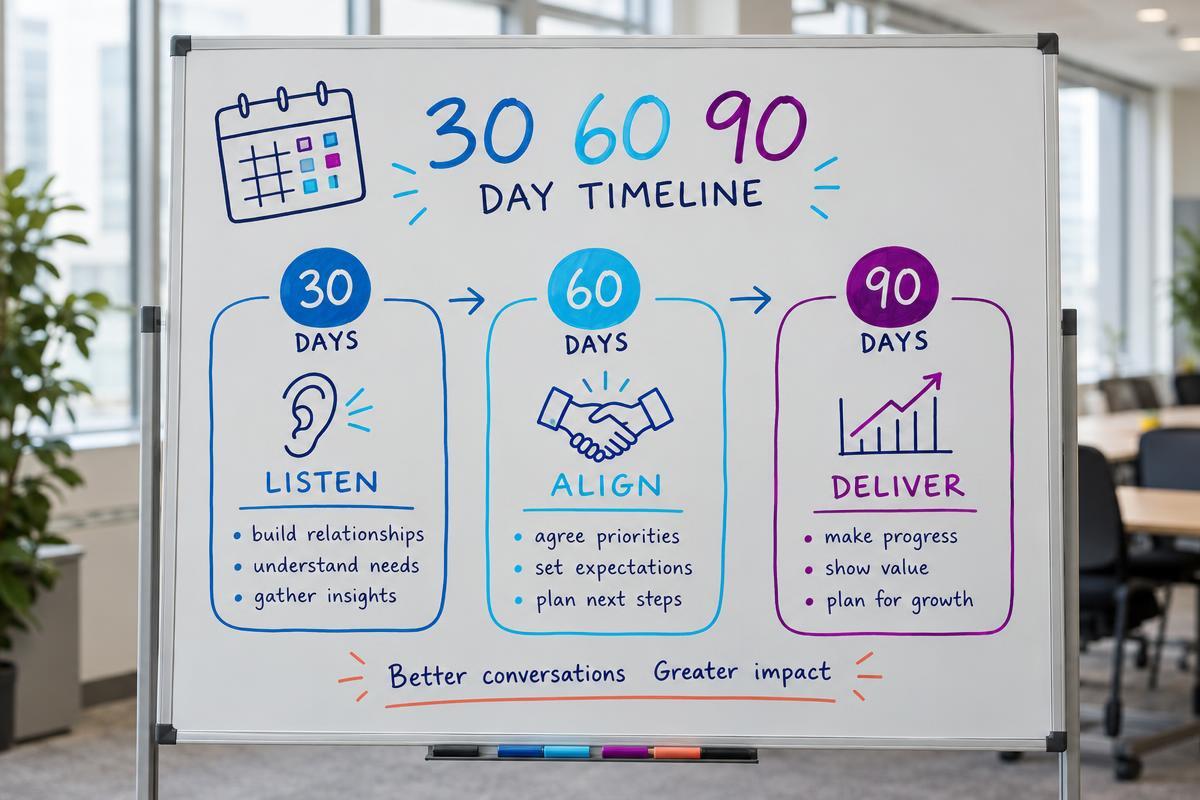
It typically takes about 90 days to establish a solid working rhythm and mutual trust. The first 30 days are for observation, the next 30 are for alignment, and the final 30 are for demonstrating consistent reliability and proactive problem-solving.
To adapt to your manager's work style without burning out. Get tactical communication scripts, boundary-setting strategies and practical team advice.
How to tell your manager you want to change teams? Get practical scripts, timelines, and advice to make an internal move without burning bridges.

Starting a job is a big shift. How to learn the place quickly, build trust with a new team, and avoid the mistakes most people make early on.
 Compono