
 Compono
1 min read
How to use a team personality wheel to understand your people
 Compono
A team personality wheel is a visual map that plots the natural work preferences of your employees, showing you exactly what tasks they are motivated...
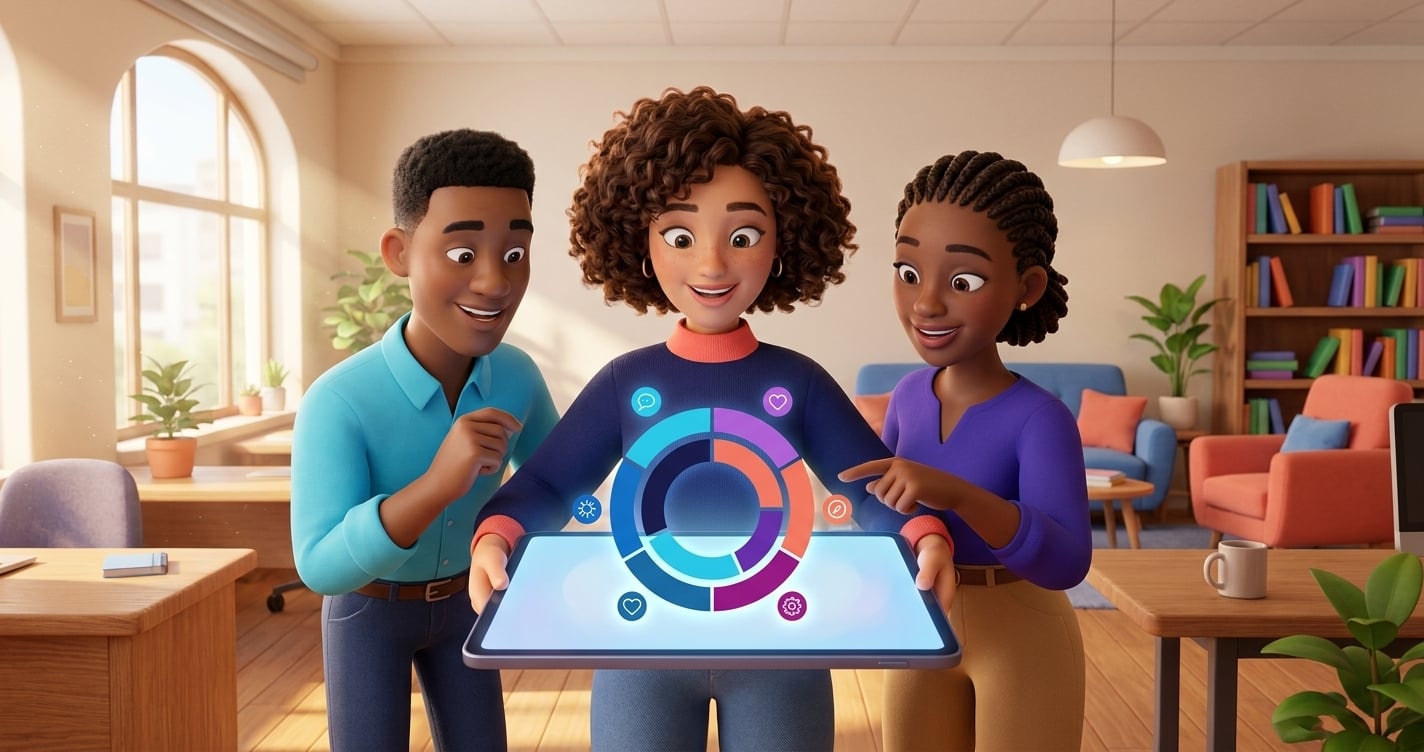
Team dynamics software is a tool that maps the natural work personalities of your employees so you can predict friction, adapt your leadership style, and build teams that actually understand how to work together.
Key takeaways
- Team dynamics software reveals the underlying personality traits driving workplace behaviour and conflict.
- Most team friction happens because different work personalities approach problems from completely opposite angles.
- Leaders can use these insights to switch between directive, democratic, and non-directive leadership styles based on who they are managing.
- Understanding your team's natural preferences helps you assign tasks that energise them rather than drain them.
You have probably managed a group of highly capable people who simply could not get on the same page. One person wants to brainstorm possibilities all morning, while another is visibly frustrated because they just want a clear checklist and a deadline. The tension builds, meetings drag on, and you spend half your week acting as an unofficial mediator.
It is exhausting. It also makes you question your own leadership skills. You might have even tried generic team-building exercises, only to find the same arguments popping up the very next day.
The truth is, your team is not broken. They are just operating on entirely different frequencies. When you understand the natural work preferences driving your team's behaviour, that friction stops looking like a personality clash and starts looking like a predictable pattern you can actually manage.
Most attempts to fix team culture focus on the surface. We run trust exercises, host Friday drinks, or set up communication charters. These activities are fine for general morale, but they do nothing to address how people actually process information and execute tasks.
At Compono, our research shows that high-performing teams rely on eight key work activities: Evaluating, Coordinating, Campaigning, Pioneering, Advising, Helping, Doing, and Auditing. Every person has a natural preference for one or two of these areas. We call this their work personality.
When you put someone who prefers auditing details next to someone who prefers pioneering new ideas, friction is guaranteed. The pioneer feels slowed down. The auditor feels rushed and anxious about mistakes. No amount of Friday afternoon trivia will fix that fundamental difference in how their brains work.
This is where Hey Compono steps in. Team dynamics software takes the guesswork out of these interactions by giving you a clear map of everyone's default operating system.

Once you map your team's personalities, the reasons behind their conflicts become incredibly obvious. You stop seeing a difficult employee and start seeing a specific work preference that is rubbing up against an opposing one.
Take the classic clash between The Campaigner and The Evaluator. The Campaigner is enthusiastic, visionary, and focused on future possibilities. They want to sell the dream. The Evaluator is logical, direct, and focused on objective risk. They want to weigh up the options and look at the data.
Without intervention, The Evaluator will shoot down The Campaigner's ideas for lacking detail, making The Campaigner feel stifled. The Campaigner will push for action without a solid plan, making The Evaluator feel anxious and dismissive.
Team dynamics software helps you spot this exact dynamic. As a leader, you can step in and translate. You can ask The Campaigner to break their vision into a logical timeline, and you can ask The Evaluator to suspend their critique until the brainstorming phase is finished. You move them from conflict to collaboration.
Leadership is often viewed as a fixed trait. You are either a commanding presence or a collaborative guide. In reality, effective leadership requires you to change your approach based on the situation and the specific people you are managing.
Team dynamics software helps you figure out which leadership style will get the best result from each team member.
Some people need Directive Leadership. This style involves high levels of control, clear goals, and specific instructions. If you are managing The Doer, someone who is practical, hands-on, and action-oriented, they will thrive under directive leadership. They want to know exactly what is expected so they can get to work.
Other team members will shut down if you try to direct their every move. The Pioneer, for example, is creative and adaptable. They prefer Non-Directive Leadership, where you give them autonomy and trust them to find their own path to the goal. If you micromanage a Pioneer, they will disengage entirely.
Then there is Democratic Leadership, which balances your guidance with team input. This works perfectly for The Helper or The Advisor, who value harmony, collaboration, and shared decision-making. By knowing who sits where on this spectrum, you stop forcing a one-size-fits-all management style onto a diverse group of brains.
Another major cause of team friction is burnout from doing the wrong type of work. We all have tasks that energise us and tasks that drain us completely.
When you use personality-adaptive software, you get visibility into what activities your team will naturally gravitate towards, and what they will likely avoid or forget to do. If your team is full of big-picture thinkers but lacks anyone with a preference for coordinating or auditing, your projects will start strong but fall apart during execution.
Having this data allows you to restructure responsibilities. You can hand the detailed compliance checks to the person who actually enjoys methodical work, and give the client pitches to the person who thrives on persuasion and enthusiasm.
It also helps you identify gaps before you hire your next team member. Instead of just looking for a culture fit, you can look for a specific work personality that balances out your current group.
Performance reviews and feedback sessions are often stressful because they feel personal. When you tell someone they are being too rigid, they get defensive. When you tell someone they are too scattered, they feel attacked.
Having a shared language around work personalities removes the personal sting. Instead of saying, "You are being too controlling," you can say, "I know your Coordinator traits make you want to lock down a process, but we need to stay flexible for a few more days."
It validates their natural tendency while still asking them to adjust their behaviour for the good of the project. It tells them they are not broken, they are just leaning too hard into a specific preference.
This level of self-awareness changes how teams operate. People start to recognise their own stress behaviours. They learn how to ask for what they need, whether that is more structure, more creative freedom, or just a bit more time to process information.
Key insights
- Most workplace friction is caused by opposing work personalities, not personal dislike.
- Generic team building fails because it ignores how individuals actually process information and execute tasks.
- Leaders must adapt their style, moving between directive, democratic, and non-directive approaches, based on their team's natural preferences.
- Having a shared language around personality types makes difficult feedback conversations objective rather than personal.
Ready to stop guessing why your team is clashing and start building a group that actually understands how to work together?
It measures an individual's natural preferences for specific work activities, like evaluating risks, pioneering ideas, or coordinating tasks. By mapping these preferences across a whole group, the software shows you where people will naturally collaborate and where they are likely to clash.
It stops arguments by removing the personal element. When team members understand that a colleague is asking for detailed plans because they are an Auditor, not because they are trying to be difficult, the frustration drops. It gives everyone a logical framework for understanding different working styles.
It depends entirely on the person you are managing and the urgency of the task. Action-oriented people usually prefer clear, directive leadership. Creative, future-focused people need non-directive autonomy. The software helps you identify these traits so you can adjust your approach.
This is a common issue. If you lack detail-oriented people, your projects might suffer from poor execution. Once you know your team's gaps, you can actively recruit people whose natural work preferences fill those specific holes, rather than just hiring people who think exactly like you do.
Most people actually enjoy learning about how they work and why they react to stress the way they do. The key is framing it as a tool for self-awareness and better team support, rather than a test they can fail.
Related reading: AI coaching for startups: scaling your team, less friction · AI coaching software for HR and the future of growth
Employee coaching, wellbeing support and team personality insights in one platform, built on organisational psychology.
Talk to us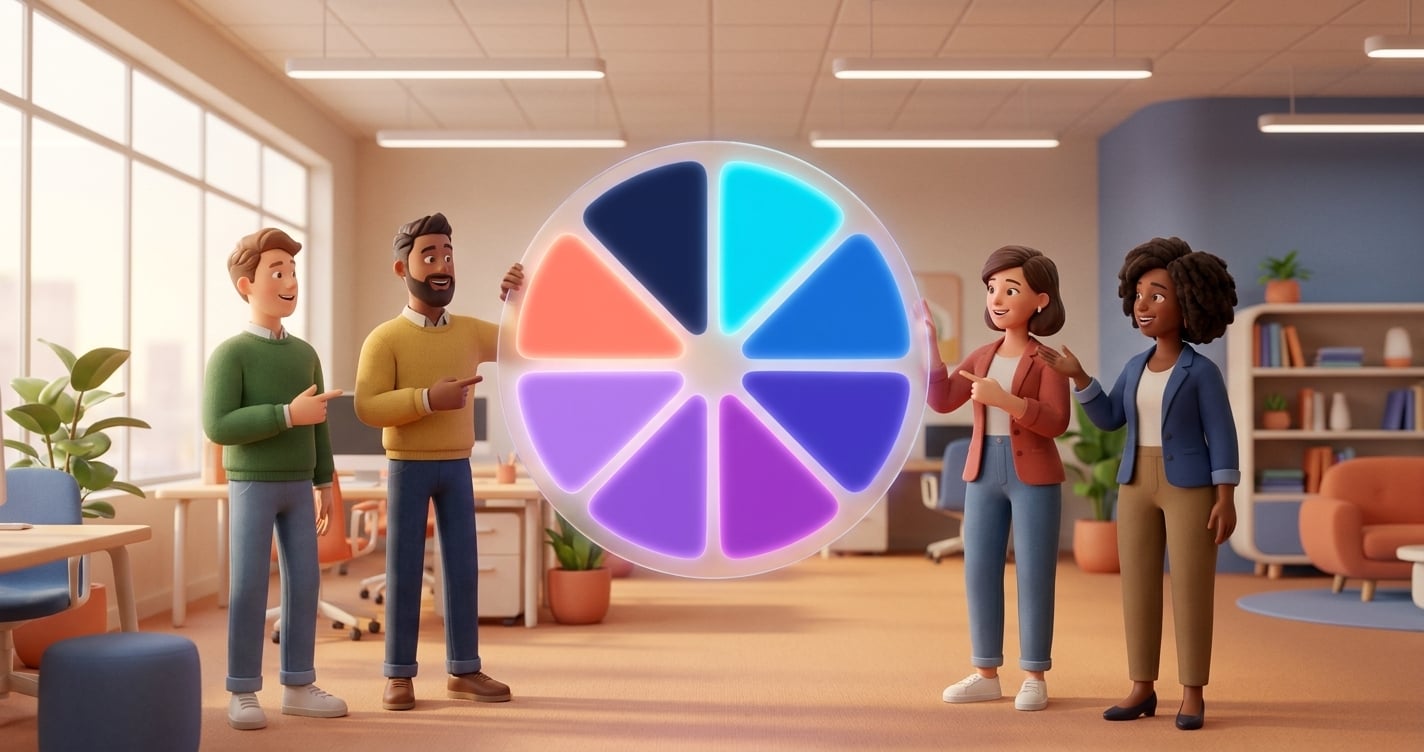
1 min read
A team personality wheel is a visual map that plots the natural work preferences of your employees, showing you exactly what tasks they are motivated...

1 min read
Understanding personality types at work is the foundation of building a high-performing team because it allows you to predict how individuals will...

1 min read
Building a better culture starts with recognising that your team is made up of distinct work personalities, each needing a slightly different...