
 Mathan Allington
How to coach an underperforming employee: a 2026 guide
 Mathan Allington
To coach an underperforming employee without micromanaging. Get practical scripts, frameworks, and strategies to improve team performance.
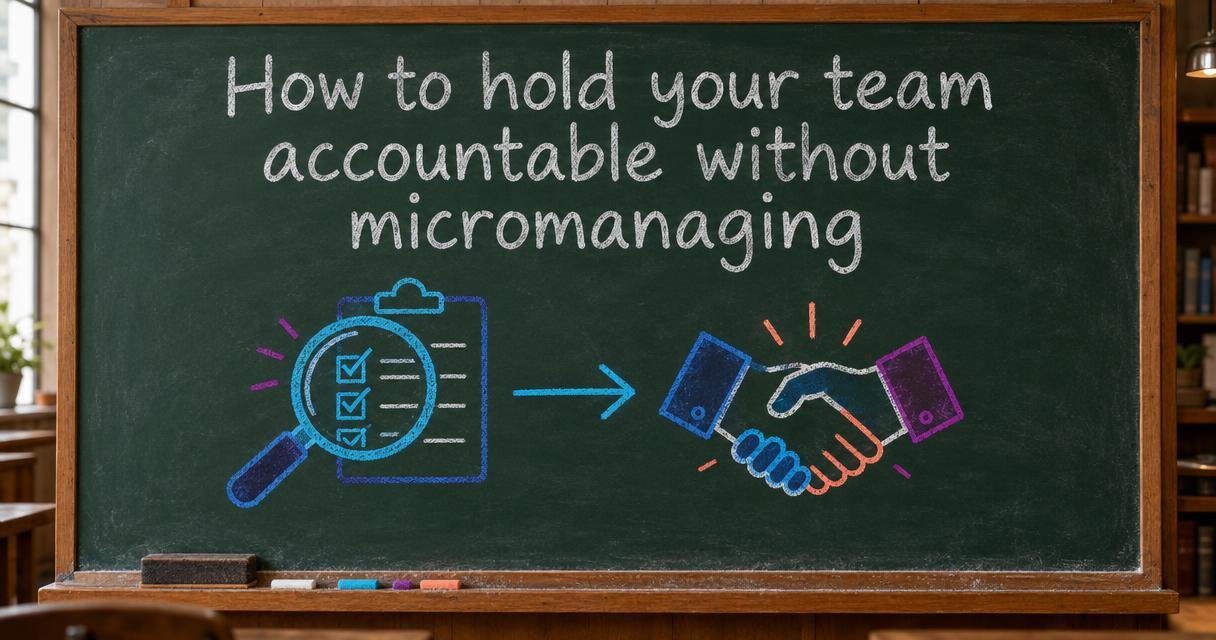
You hold your team accountable without micromanaging by defining clear outcomes rather than policing exactly how the work gets done.
Last reviewed November 2026
Key takeaways
- Accountability is about ownership of an outcome, whereas micromanagement is about controlling the process.
- Employees need clear expectations to succeed, but they also need the autonomy to choose how they meet those expectations.
- You can track progress through asynchronous check-ins and shared systems rather than constant shoulder-tapping.
- When someone misses a deadline, address the roadblock through coaching instead of taking the work back off them.
- Adapting your leadership style to fit the situation helps you maintain standards while building team trust.
Many managers swing between two extremes. They either hover over every detail to ensure nothing slips, or they step back so far that tasks fall completely off the radar. It often feels like you have to choose between getting things done and being liked by your team.
This is a false dilemma. You can maintain high standards without suffocating the people doing the work. Research on micromanagement in the National Library of Medicine describes excessive supervision, constant performance monitoring, and restricted delegation as defining behaviours that reduce employee autonomy. The solution is not dropping accountability altogether. The solution is changing how you measure it.
True accountability means your team understands what success looks like and feels responsible for delivering it. Micromanagement is simply an inability to let go of control. When you shift your focus from the process to the outcome, you give your team the space to do their best work while keeping the project on track.
It is easy to justify micromanagement as being detail-oriented or highly involved. You might tell yourself you are just making sure the client gets exactly what they asked for. In reality, constant interference breaks down trust and trains your team to wait for your instructions instead of thinking for themselves.
You might be micromanaging if you require approval for minor decisions, rewrite your team's work before sending it out, or ask for status updates multiple times a day. If you feel like your team cannot function if you take a week off, you have built a dependency rather than a reliable system.
Your work personality often drives these habits. For example, people with the Evaluator personality type thrive in environments where they can make decisions based on logic and efficiency. They are comfortable setting clear goals. They also struggle with letting go of control and might feel deeply uncomfortable with a lack of oversight, especially if they do not completely trust the team's decision-making process. Recognising your own default behaviour is the first step to changing it.
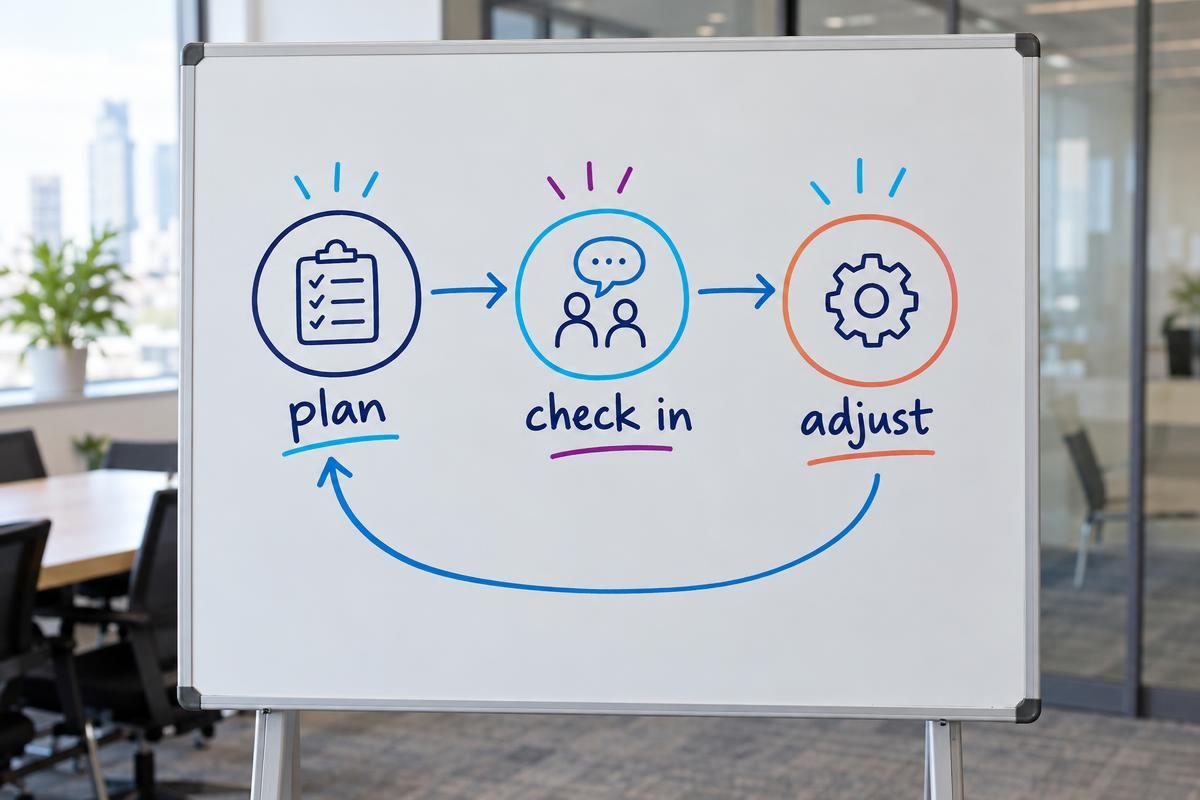
The foundation of healthy accountability is extreme clarity. People cannot be held accountable for expectations that exist only in your head. Gallup and Workhuman found that employees who know what is expected of them are 47% less likely to experience frequent burnout. Clarity reduces anxiety.
Instead of giving your team a list of tasks, give them a problem to solve. Define the desired outcome, the budget, the deadline, and any non-negotiable constraints. Then, let them figure out the steps to get there. An output instruction sounds like telling someone to send five specific emails by midday. An outcome instruction sounds like asking them to secure three meetings by Friday using whatever outreach method they think works best.
Involving your team in this planning phase makes a massive difference. Gallup research shows employees whose managers involve them in setting goals are nearly four times more likely to be engaged. When people help build the plan, they naturally feel more responsible for its success.
Not every task requires the same level of freedom. A brand new employee needs more direction than a senior specialist who has done the job for five years. You need to adjust your leadership style to fit the situation.
At Compono, our research highlights different approaches. Directive leadership involves providing clear instructions and expecting a structured approach. Non-directive leadership takes a hands-off approach, providing teams with autonomy and trusting them to make their own decisions. You can hand work over without hovering by matching the right style to the right task.
| Situation | Leadership style | Your role |
|---|---|---|
| High risk, low experience | Directive | Set clear steps, require approval at milestones, monitor closely. |
| Medium risk, medium experience | Democratic | Collaborate on the plan, agree on check-in points, share decisions. |
| Low risk, high experience | Non-directive | Define the final goal, step completely back, offer support only if asked. |
Using a simple matrix like this helps you explain to your team why you are closely involved in one project but entirely hands-off with another. It removes the guesswork and stops your involvement from feeling like a lack of trust.
One of the biggest traps managers fall into is the constant cycle of verbal status updates. Tapping someone on the shoulder or sending a direct message just to ask how things are going interrupts their deep work. It also feels like surveillance.
You can track results without micromanaging by building asynchronous systems. Use project management tools where the team updates their own progress ultimately. A simple visual board showing what is in progress and what is blocked gives you all the information you need without forcing you to ask for it.
This is especially important for remote and hybrid teams working across different locations. Gallup notes that teams with a formal hybrid collaboration plan are 66% more likely to be engaged. A formal plan includes rules about how and when to report progress. When the system holds people accountable, the manager does not have to play the role of the bad cop.
Things will inevitably go wrong. Deadlines will be missed, and quality will occasionally drop. A micromanager reacts to failure by taking the work back, redoing it themselves, and increasing their supervision for the next project. This guarantees the team will never learn how to fix their own mistakes.
A better approach is to address the failure through coaching. You need to hold the standard firm while supporting the person. Start the conversation with an observation rather than an accusation. Say something like, "I noticed we missed the Friday deadline for the client report. Walk me through what happened there."
Listen to their answer and help them identify the roadblock. Ask them what they would do differently next time. If you need to have a difficult conversation about ongoing performance, Hey Compono offers AI coaching that helps you practise your exact wording beforehand so the feedback lands effectively without causing a defensive reaction.
The goal is to build autonomous teams capable of self-correcting. When you focus on solving the root cause of the delay rather than punishing the delay itself, your team learns to bring problems to you early instead of hiding them until the last minute.
If you realise your leadership style has leaned heavily into micromanagement, changing overnight can confuse your team. They might interpret your sudden hands-off approach as a lack of care or interest. You need to reset the culture openly.
Have an honest conversation with your team. Tell them you want to give them more control over their work and that you recognise you have been too involved in the details previously. Ask them where they feel blocked by your approval processes and promise to step back in those specific areas.
Trust takes time to rebuild. LiveCareer reported that 40% of workers have quit a job because they distrusted their manager. You earn that trust back by consistently holding your tongue when someone does a task differently to how you would do it, provided the final result meets the agreed standard. Many leaders use Hey Compono to work through these exact transitional periods, working through their own habits and learning how to step back comfortably.
Changing how you lead requires practice, especially when you are trying to break deeply ingrained habits of control. You do not have to figure out the right balance of support and autonomy entirely on your own.
Related reading
Accountability focuses on the final outcome and ensuring the team meets the agreed standard by the deadline. Micromanagement focuses on controlling every step of the process and dictating exactly how the team does the work.
Use shared project management boards or regular asynchronous updates where the team logs their own progress. This gives you visibility without requiring constant verbal check-ins or shoulder-tapping that interrupts their focus.
Address the pattern directly through a coaching conversation. Ask them to explain the roadblocks they are facing, clarify the expectations again, and work together on a plan to remove the obstacles. Avoid taking the work off them and doing it yourself.
Absolutely. You should use a directive approach for new or inexperienced team members who need clear steps, and a non-directive approach for experienced staff who only need to know the final goal. Matching your style to their experience builds trust.
Ask yourself if the mistake will ruin the final outcome or if it is just a different way of doing things. If it is fatal to the project, guide them to see the error through questions rather than fixing it yourself. If it is just a different method, let it play out so they can learn.
To coach an underperforming employee without micromanaging. Get practical scripts, frameworks, and strategies to improve team performance.
To build a high performing small team by balancing roles, reducing meeting drag, and preventing burnout. Get practical steps for your workplace.
How to build a frontline manager coaching program that works for deskless shift teams. Get practical steps to reduce burnout and boost retention.