
 Mathan Allington

How to adapt to your manager's work style: a tactical guide
 Mathan Allington
To adapt to your manager's work style without burning out. Get tactical communication scripts, boundary-setting strategies and practical team advice.
Knowing how to build a high performing small team comes down to establishing shared accountability, defining clear role boundaries, and building deep psychological safety so every person can execute without bottlenecks.
Last reviewed November 2026
Key takeaways
- A small team gains an advantage through speed and agility when members understand exactly what they own.
- Clearly defined expectations reduce the risk of burnout by removing the anxiety of overlapping responsibilities.
- High performance in close quarters requires lightweight, asynchronous communication instead of constant meetings.
- Balancing different work personalities ensures all critical tasks get handled without relying on just one working style.
- Cross-training prevents single points of failure so the team can survive when one person takes leave.
In a small team, there is nowhere to hide. Every decision, every delay, and every success is visible to everyone in the room. When a small group of people clicks, the output is incredible. They move fast, they adapt to problems on the fly, and they deliver work that rivals departments five times their size. But when a small team misaligns, the friction is immediate and exhausting.
People often assume that building a great team is just a matter of hiring talented individuals and putting them in a room together. The reality is far more complicated. Small teams face unique constraints. Resources are scarce. Skill sets overlap. A single point of failure can bring a project to a sudden stop. If one person takes a week off, the entire workflow can break down if you have not planned for it.
To get this right, you cannot just copy the playbook of a massive enterprise. Corporate bureaucracy will crush a small group. Instead, you need a specific architecture designed for lean operations. You need a setup that balances the intensity of tight-knit collaboration with the autonomy required to actually get work done.
Size dictates how a group functions. Massive departments rely on heavy processes and layers of management to keep things moving. A small team relies on trust, speed, and visibility. Your biggest advantage is agility, provided you do not accidentally tie your people up in unnecessary red tape.
There is strong evidence that smaller groups have a natural edge when it comes to human connection and output. Gallup’s analysis of 92,252 teams across 104 organisations and 26 industries found that engagement is linked to higher productivity and well-being and lower turnover in small teams of four to nine employees. This tight span of control allows people to build genuine relationships and understand exactly how their daily work impacts the short answer.
When you have fewer than ten people, you do not need complex routing systems to make a decision. You can simply look across the desk or send a quick message to reach a consensus. The trap many leaders fall into is starting enterprise software or complicated approval matrices for a group of five. Keep your tools lightweight. The goal is to remove friction, not add it.
To capitalise on this agility, your people need to know they can act without waiting for permission on every minor detail. You build this environment by setting non-negotiable ground rules upfront. When everyone knows the boundaries, they can run fast within them.
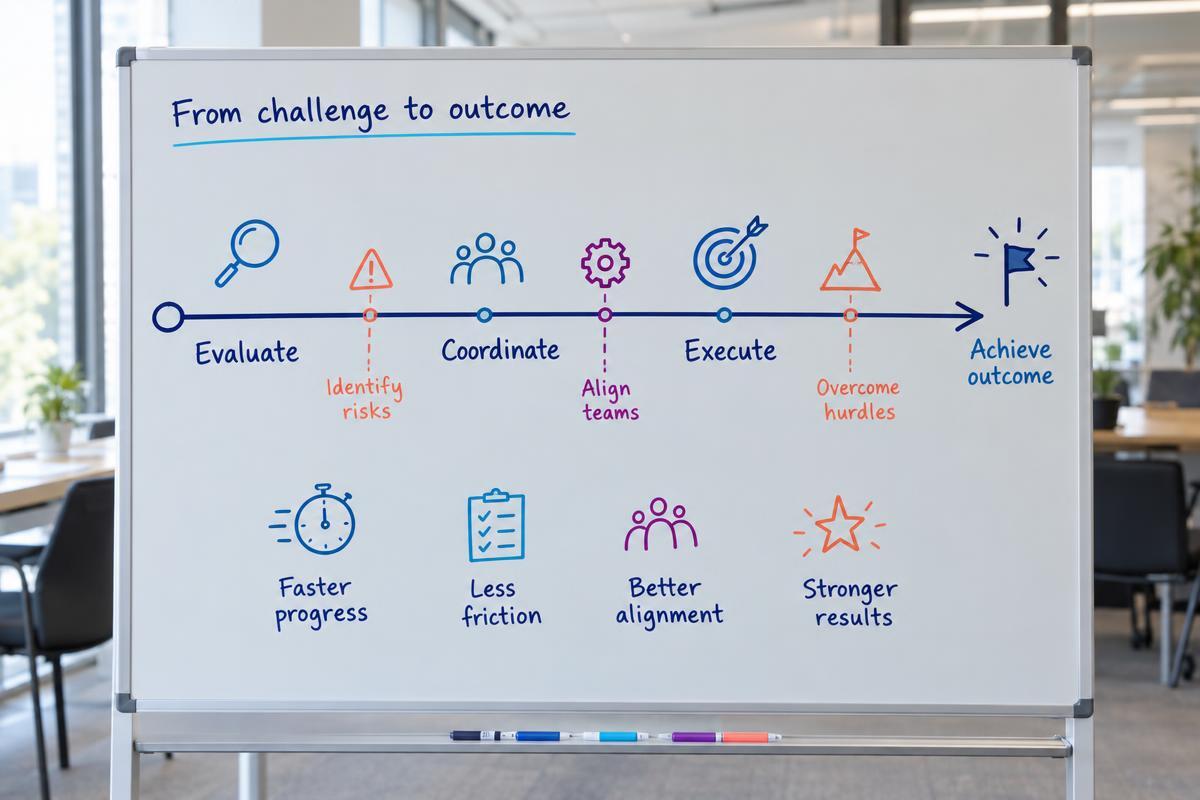
One of the hardest parts of running a lean operation is figuring out who does what. In a large company, roles are highly specialised. In a small group, everyone inevitably wears multiple hats. The challenge is balancing this need for generalist flexibility with the necessity of clear ownership.
This is where a concept like a lean team matrix helps. You need to map out the core functions your group must deliver, and then assign a primary owner and a secondary backup for each. While everyone might pitch in on a big project, one specific person must own the final outcome. Shared responsibility often leads to zero accountability because everyone assumes someone else is handling it.
Clarity is the best defence against exhaustion. Employees who clearly understand what is expected of them are 47% less likely to experience frequent burnout and 23% less likely to struggle with work-life balance. When role boundaries blur, people waste energy second-guessing their authority or stepping on each other's toes.
Start by defining what each person explicitly owns. Then, define where they are expected to collaborate. If you are trying to figure out how to build a leadership pipeline in a small team, this clarity is your starting point. You cannot develop future leaders if current responsibilities are a tangled mess.
Meeting drag is the silent killer of productivity. When a group is small, there is a temptation to include everyone in every conversation. People think this builds inclusion. In reality, it destroys focus. If a team of five spends two hours in a planning meeting, that is ten hours of collective productive time gone.
High-performing teams communicate efficiently. They build trust and open communication, but they respect deep work. The best way to handle this is by moving as much communication as possible to asynchronous channels. Use shared documents, brief status updates, and recorded videos for information sharing. Save live meetings for debates, complex problem-solving, and relationship building.
Establish ground rules for how you communicate. Decide which channel is for urgent issues and which is for general updates. If everything is marked as urgent, nothing is. A team that constantly interrupts each other will eventually burn out from the sheer cognitive load of context switching.
Trust is the foundation of this asynchronous approach. You have to trust that your people will read the briefs and do the work without you looking over their shoulders. When you give people the space to manage their own time, you are actively building a team environment people perform in.
When there are only a few people in a room, personality clashes are magnified. You cannot simply move someone to a different department if they do not get along with a colleague. You have to figure out how different working styles can complement each other rather than cause friction.
Research from Compono identifies eight key work activities that all high-performing teams do. They are Evaluating, Coordinating, Campaigning, Pioneering, Advising, Helping, and Doing. In a tight group, your people will need to cover all these bases. If your entire group loves starting new projects but hates finishing them, you have a massive execution gap.
This is where understanding the Work Personality framework changes the game. If you have an Auditor who needs time and data to make decisions, and a Pioneer who wants to move fast and break things, conflict is inevitable. Recognising these natural defaults allows you to assign work that fits how an individual naturally thinks.
If you want to see how this plays out in real life, you can explore Hey Compono to understand the changing of your group. When people understand why a colleague communicates a certain way, it removes the personal sting from disagreements. This awareness is vital if you are wondering how to handle conflict in a small team before it turns toxic.
The dark side of a high-velocity small team is the risk of burnout. When everyone is highly engaged and producing great work, the natural inclination is to pile on more projects. But lean teams lack the buffer capacity of larger departments. If one critical person breaks down, the whole system stalls.
You have to build resilience into your structure. This means identifying your single points of failure. If only one person knows how to run the payroll software or publish to the website, you are at risk. Cross-training is not a luxury; it is a basic survival tactic. Every critical task needs a capable backup.
Engagement is a powerful driver of results, but it must be protected. Highly engaged teams show 18% higher sales productivity, 23% higher profitability, 78% lower absenteeism, and 32% fewer quality defects than teams in the bottom engagement quartile. To maintain this level of engagement, you have to enforce rest. Mandate time off. Push back on unrealistic deadlines from external stakeholders. Your job as a leader is to protect the team's capacity as fiercely as you protect the quality of their work.
Feedback loops are also critical for sustaining performance. You cannot wait for an annual review to tell someone they are off track. Small teams need continuous, lightweight feedback. Catch issues early, adjust the course, and keep from here. When people feel supported and understand their impact, they will deliver incredible results without burning themselves out.
Managing the changing of a lean group requires constant attention to how people communicate and collaborate. You can use continuous insights to understand your colleagues by name and personality, reaching out before problems escalate into major roadblocks.
Related reading
Trust in a small group is built through reliable follow-through and psychological safety. When people do what they say they will do, and when they are allowed to admit mistakes without fear of punishment, trust naturally develops. You also build trust by keeping communication transparent and avoiding hidden agendas.
The most common mistake is treating a small group like a miniature version of a large corporation. Leaders often start heavy processes, excessive meetings, and complicated reporting structures that crush agility. A lean group needs lightweight tools, clear boundaries, and the autonomy to make fast decisions.
You have to become ruthless about prioritisation. A small group cannot do everything. Define the absolute most important goals and say no to distractions. Map out clear roles so there is no duplication of effort, and ensure every critical task has a backup person trained to handle it.
Cross-training prevents single points of failure. In a tight-knit group, if the only person who knows a vital process gets sick or leaves, the work stops completely. Having a secondary owner for every critical function ensures the group can maintain momentum even when someone is absent.
Personality determines how people naturally approach their work, solve problems, and communicate. If everyone has the same working style, you will have massive blind spots. Balancing different approaches ensures that all necessary work activities, from wild ideas to detailed execution, are covered effectively.
To adapt to your manager's work style without burning out. Get tactical communication scripts, boundary-setting strategies and practical team advice.
Learn about the core types of working styles, how they clash or collaborate, and how managers can adapt their leadership to build stronger teams.

Where team friction actually starts, how to read the different ways your people work, and what to change in how you lead before it gets personal.
 Compono