
 Mathan Allington

What Personality Types Work Well Together? A Guide for Teams
 Compono
Discover what personality types work well together. Learn how complementary traits build stronger teams and reduce friction in the workplace.
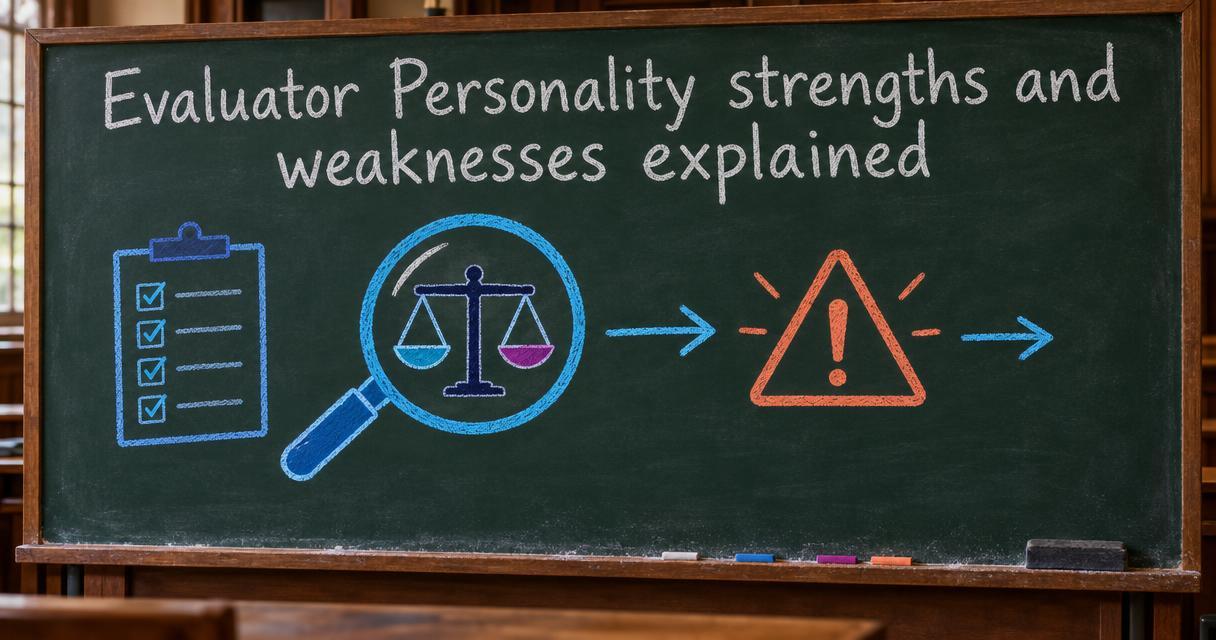
You have probably been told you ask too many questions, or that you are overcomplicating a simple decision.
Last reviewed October 2026
Key takeaways
- Evaluators excel at objective analysis, strategic judgement, and risk mitigation.
- Their need for complete information can lead to analysis paralysis and delayed decisions.
- Under pressure, their focus on logic can make them appear blunt or dismissive to colleagues.
- Working effectively with other personalities requires balancing the need for facts with the need for action.
- Reframing these traits in performance reviews helps turn perceived flaws into professional assets.
When you have an analytical mind, the modern workplace can feel deeply frustrating. Teams want fast answers, quick wins, and immediate action. You want to make sure the plan actually works before anyone starts building it. This creates a constant tension between getting things done quickly and getting things done right.
Understanding your Evaluator traits is not about changing who you are. It is about learning why certain environments drain you and why some colleagues find your thoroughness intimidating. The Work Personality framework gives us a clear way to look at these patterns.
At Hey Compono, we see how this plays out every day. The same attention to detail that saves a project from disaster is often the very thing that frustrates a fast-moving team. Let us look at what makes your analytical mind your greatest asset, and how to manage the moments when it works against you.
Your ability to see the gaps in a plan is a rare and valuable skill. While others get swept up in enthusiasm, you stay grounded in reality. According to a guide from Compono, Evaluators are characterised by logical, analytical, objective decision-making and strong strategic risk-assessment skills.
This objectivity helps them investigate ideas, challenge assumptions, and support continuous improvement, as noted by Compono. You do not accept things simply because "that is how we have always done it." You want the data, the proof, and the logical progression from problem to solution. This makes you an excellent line of defence against poorly conceived projects.
The research backs up the value of these traits. More than 80% of studies in a 2026 integrative review reported significant positive associations between conscientiousness and performance outcomes such as reliability, task completion, and goal orientation (Personality, Capability, and Context). You are the person people trust when a task absolutely must be done correctly.
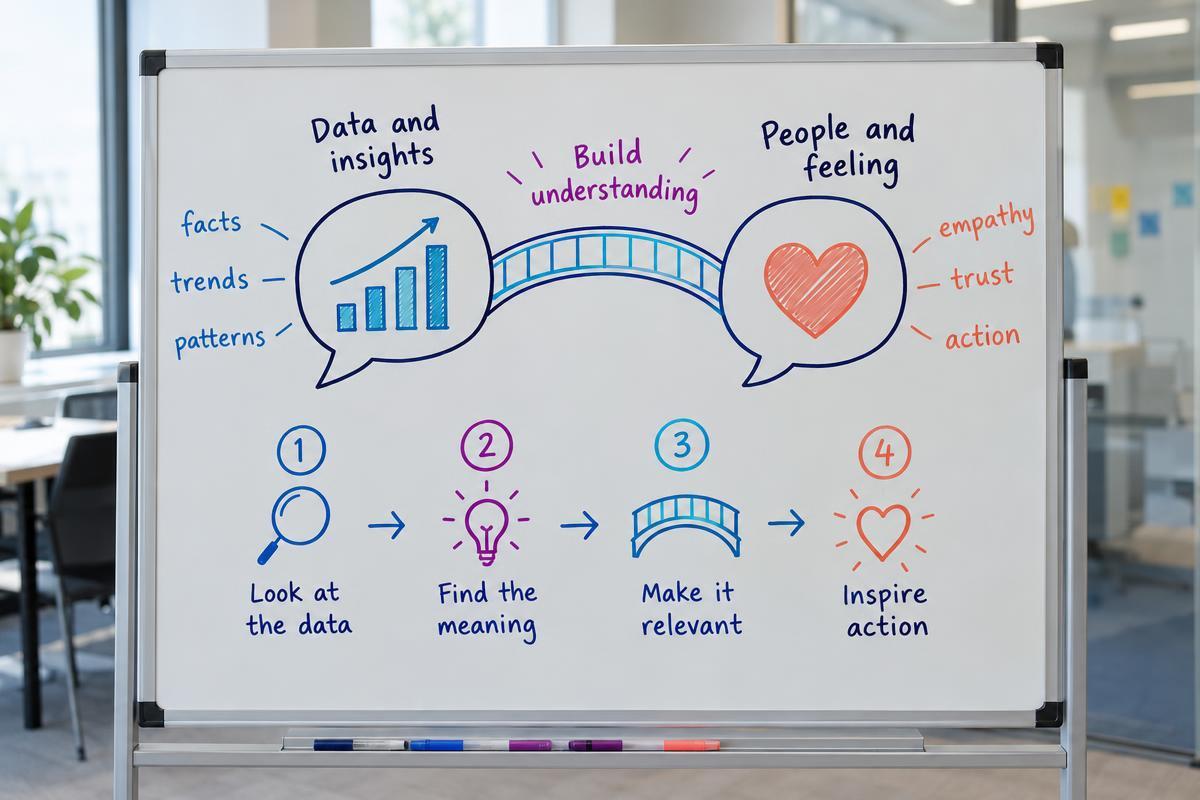
Every strength has a shadow side. When you overplay your analytical skills, they start to slow you down. The most common hurdle is the need for absolute certainty. Compono notes that Evaluators may delay decisions when information is incomplete, creating a risk of analysis paralysis.
There is also an emotional cost to your logical approach. A strong focus on logic and efficiency can cause evaluators to overlook colleagues’ emotional concerns, which Compono research highlights as a common friction point. You might think you are simply stating a fact, but your team might hear a harsh criticism.
Under pressure, evaluators may communicate bluntly or dismissively, increasing friction within teams (Compono). You can become overly critical of ideas that lack immediate logical or evidentiary support, according to Compono. If you want to learn more about reframing these blind spots, our guide to understanding personality flaws at work explains how to manage them without losing your edge.
Workplace friction often comes down to mismatched priorities. When you work with a Doer, their bias for immediate action will clash directly with your need for thorough risk assessment. They want to launch the project today. You want to run three more stress tests.
Similarly, when working with a Campaigner, you might find their big-picture vision lacking in practical detail. They pitch a grand idea, and your first instinct is to point out the six reasons it will fail. To them, you are killing the mood. To you, you are saving the business from an expensive mistake.
The fix is not to change your personality. It is to change your communication style. Instead of starting with why an idea will fail, try asking what parameters need to be true for it to succeed. If you frequently find yourself clashing with enthusiastic colleagues, our guide on mastering the Evaluator conflict style offers practical steps for these exact conversations.
Standard performance appraisals often struggle to capture the nuance of an analytical mind. A generic review might call you "slow to decide" or "too critical." Bridging the gap between psychological models and HR templates requires specific, constructive phrasing.
You need language that acknowledges the value of your thoroughness while addressing the need for momentum. Here is how you can reframe common traits in a performance review setting.
| The generic critique | The Evaluator-specific framing | The actionable goal |
|---|---|---|
| Takes too long to make decisions. | Consistently delivers highly accurate risk assessments but sometimes struggles to act on partial information. | Practise making low-risk decisions with 70 percent of the required data. |
| Is too negative about new ideas. | Excels at identifying operational flaws but can dampen team enthusiasm during brainstorming. | Hold analytical feedback until the second round of ideation meetings. |
| Lacks empathy for colleagues. | Prioritises logical outcomes and efficiency, occasionally missing the emotional context of a team conflict. | Incorporate a regular check-in on team morale before addressing project metrics. |
Using this framing helps managers see your analytical nature as a tool to be managed, rather than a flaw to be fixed. It also gives you clear benchmarks for professional growth.
We work in an era where artificial intelligence can process data faster than any human. For an Evaluator, this shift is both a relief and a threat. On one hand, you now have tools that can instantly validate your theories and run your risk models. On the other hand, you might worry that your core skill is being automated.
The reality is quite different. AI is excellent at finding patterns, but it lacks human context and strategic judgement. Your role is evolving from gathering data to interpreting what that data actually means for your specific business. You are the necessary human filter.
If you find yourself stuck in a loop of overthinking your career next steps, Hey Compono can help you map out your default reactions and build a practical plan. The future belongs to analytical thinkers who can balance machine logic with human empathy and contextual understanding. Those skills are exactly what analytical career paths will demand in the coming years.
Understanding your analytical traits is only the first step. You need a practical way to apply that self-awareness to your daily work, your communication style, and your long-term career choices.
Related reading
An Evaluator is someone who relies on logic, data, and objective analysis to make decisions. They are highly detail-oriented and excel at identifying risks and solving complex problems.
They usually struggle because they want absolute certainty. An Evaluator prefers to have all the data before making a move, which can cause delays in fast-paced environments where acting on partial information is required.
Bring facts, data, and a clear logical structure to your conversations. Avoid emotional appeals or vague concepts. Give them time to process the information and expect them to ask probing questions.
They thrive in roles that require deep analysis, critical thinking, and risk management. Common paths include finance, engineering, legal professions, data science, and strategic planning.
It only becomes a weakness when it prevents action or damages relationships. The goal is to use your analytical skills when they are needed, and learn to dial them back during brainstorming or interpersonal conflicts.

Discover what personality types work well together. Learn how complementary traits build stronger teams and reduce friction in the workplace.
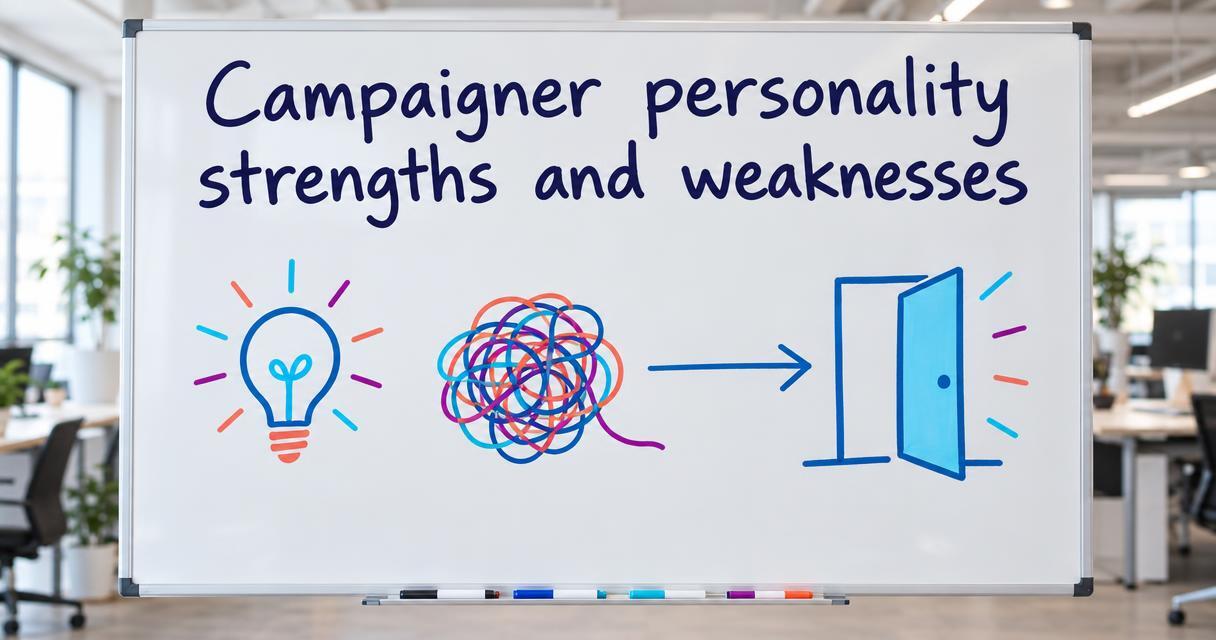
The core Campaigner personality strengths and weaknesses. Learn how to manage executive dysfunction, set boundaries and execute your big ideas at...

Leadership development in financial services usually lands on you. How to coach frontline leaders around the way each of them naturally works.
 Mathan Allington