
 Mathan Allington

How to adapt to your manager's work style: a tactical guide
 Mathan Allington
To adapt to your manager's work style without burning out. Get tactical communication scripts, boundary-setting strategies and practical team advice.
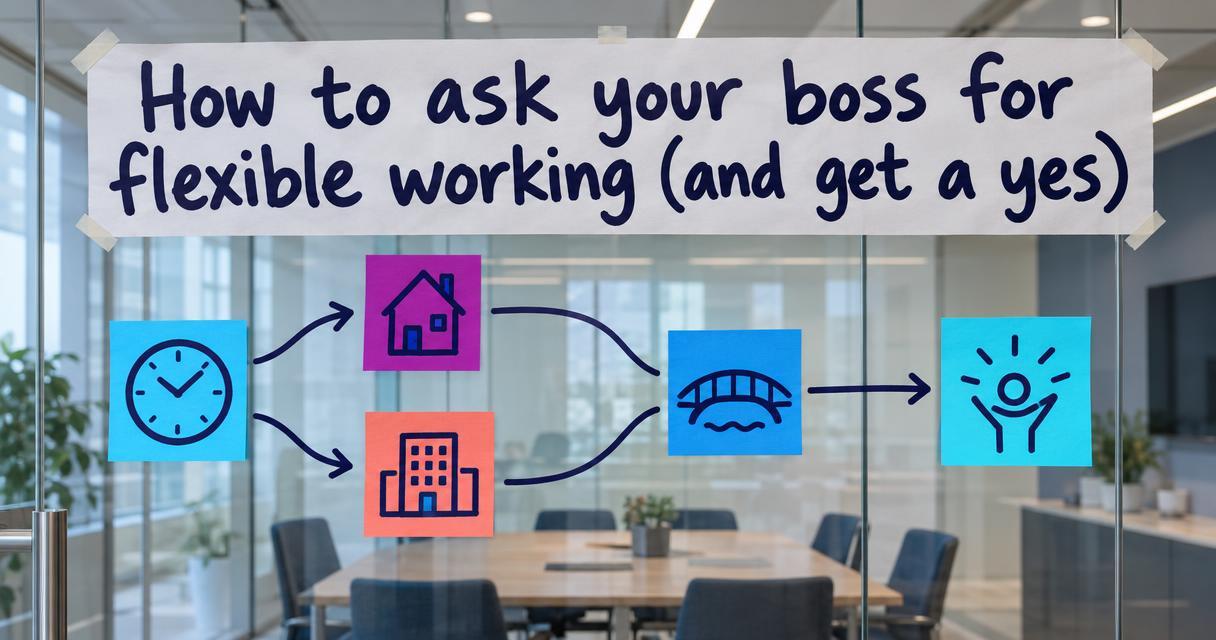
Asking your manager for a change to your work schedule usually feels like asking for a massive personal favour, even when you know you do great work.
Last reviewed November 2026
Key takeaways
- Treat your flexible working request as a business proposal focused on outcomes and team coverage.
- Define exactly what you want, whether that is hybrid days, compressed hours, or adjusted start times.
- Pitch a low-risk trial period to help a hesitant manager see how the arrangement works in practice.
- Anticipate objections about communication and productivity by bringing clear solutions to your pitch meeting.
Many professionals dread asking for flexible hours. You might worry your manager will think you are slacking off or that you are not committed to your career. You sit on the request for months, burning out slowly because the standard schedule does not fit your life or your working style.
To get a yes, you need to change how you view the request. Flexible working is not a reward for good behaviour. It is a working condition that helps you deliver better results. When you frame your request around productivity and business value, you take the emotion out of the conversation. Your manager stops seeing a personal favour and starts seeing a logistical proposal.
There is a clear gap in how employees and managers view this setup. For example, 90% of employees said they were at least as productive when working flexibly, compared with 62% of managers who agreed, according to Zoom. Your job in this conversation is to bridge that 28-point gap. You do that by showing exactly how your work will get done, how you will stay visible, and how the team will benefit.
At Hey Compono, we know that preparation changes the tone of these meetings completely. When you walk in with a plan rather than a plea, you command respect. The conversation shifts from whether you can have flexibility to how the team will start it.

Before you book a meeting, you need to know exactly what you are asking for. "More flexibility" is too vague. A manager cannot approve a concept. They can only approve a specific schedule. You need to narrow down the options and pick the one that matches your workload and your life.
Hybrid working is the most common model. This involves splitting your week between the office and your home. Across the market, 24% of EU employees worked in a hybrid arrangement, and 48% of hybrid workers had substantial discretion over both their working time and location, according to Eurofound. If you want this, specify which days you want at home and why those days make sense for your output.
Compressed hours mean working your total contracted hours over fewer days. You might work four ten-hour days and take Fridays off. This suits people who prefer long periods of deep focus and want a longer weekend to recover. It requires strict boundary setting to ensure you actually log off on your non-working day.
Flex-time involves adjusting your start and finish times. You might work from seven in the morning until three in the afternoon. This is highly effective for people managing school drop-offs or those who simply do their best thinking early in the day. It ensures you are still working a standard day, just on a shifted timeline.
Your work personality plays a big part in what schedule works for you. A Doer often thrives on clearing a task list quickly and might prefer compressed hours to power through work. Other personality types might need the collaborative energy of an office twice a week. You can read more about how finding real workplace freedom goes beyond flexible hours to understand what you actually need.
Your manager has three main concerns when you ask for flexibility. They worry about the volume of work getting done, the communication between team members, and the precedent it sets for everyone else. Your proposal needs to answer these concerns before they are spoken aloud.
Start by auditing your own work. Look at your responsibilities and categorise them into collaborative tasks and independent tasks. Point out that your independent work requires deep focus, which is often easier to achieve away from the noise of an open-plan office. Detail how you will manage the collaborative work during your available hours or your office days.
Communication is the biggest stumbling block. A 2024 Gallup and Workhuman study found that declining clarity of expectations affected hybrid and remote workers at twice the rate of the wider workforce, according to Gallup. You must propose a communication plan. State clearly how people can reach you, what your response times will be, and how you will keep your manager updated on your progress without them having to chase you.
If you are struggling to figure out your natural communication style before you pitch this, you can try Hey Compono to see what comes up. Knowing how you naturally relay information helps you build a system that you will actually stick to when working remotely.
A permanent change to a contract feels like a massive risk to a cautious manager. If they say yes and it goes poorly, they have to go through a difficult HR process to reverse it. You can bypass this fear completely by asking for a trial period instead of a permanent change.
Pitch a three-month trial. Tell your manager that you want to test the new schedule for 90 days to ensure it works for both you and the team. Agree on specific metrics that will prove the trial is successful. This might be hitting your usual sales targets, maintaining your project delivery speed, or simply ensuring no meetings have to be rescheduled due to your absence.
Set a calendar invite for a review meeting at the end of the trial right then and there. This shows your manager that you are taking accountability for the outcome. If the trial works, the arrangement simply rolls over into a permanent agreement. If it needs tweaking, you have a scheduled opportunity to adjust the terms without anyone feeling defensive.
Learning how to get better at being flexible at work means understanding that flexibility goes both ways. If an urgent team crisis happens on your usual work-from-home day during the trial, offering to come in builds immense trust. It proves you are prioritising the business outcomes, not just your own comfort.
Some managers instinctively push back against flexible working. They might be micromanagers who measure performance by physical presence, or they might simply be overwhelmed and resistant to any change. You need to be ready with calm, factual responses to their most common objections.
| The Manager's Objection | The Professional Response |
|---|---|
| "If I let you do this, everyone else will want to do it too." | "I understand that concern. I am proposing this based on my specific role and output. We can treat this as a contained pilot to see how it impacts team productivity." |
| "We need you here for impromptu meetings and collaboration." | "I will make sure my office days are entirely focused on collaboration. For urgent matters on my remote days, I am always reachable via phone or Slack within ten minutes." |
| "I am worried your performance will drop if you are not in the office." | "That is exactly why I am suggesting a 90-day trial. We can set clear output metrics today, and if I do not meet them, we revert to the old schedule. There is no risk." |
| "Company policy says we all need to be at our desks." | "I have reviewed the current HR handbook, which allows for manager discretion on flexible arrangements. Can we discuss a temporary trial within those guidelines?" |
When you respond with solutions rather than frustration, you change the changing. You show that you have thought about their workload and their reputation. Managing overwork and securing the right schedule requires you to act like a consultant solving a business problem for your boss.
Depending on where you live, you may have a statutory right to request flexible working. In many countries, legislation has shifted to make flexibility the default rather than the exception. For context, 79% of employees had access to at least one form of flexible working in 2024–25, according to the UK Government.
If you are managing a disability, a chronic illness, or neurodivergence, flexible working often falls under the category of a reasonable adjustment. This changes the nature of the conversation. It is no longer just a lifestyle preference; it is a necessary accommodation to give you equal access to your work.
You do not need to disclose your entire medical history to make this request. You simply need to explain how the adjustment allows you to perform your role effectively. For example, someone with ADHD might request two days working from home to manage sensory overload and focus deeply on complex reporting tasks.
Always check the specific employment laws in your country before relying on statutory rights. However, bringing legal requirements into the conversation should generally be your last resort. Most managers respond much better to a cooperative business case than a legal demand. If your current schedule is pushing you toward a mental health breakdown, please seek professional support and check our crisis resources.
Getting the initial meeting in the diary is often the hardest part. You want to give your manager a heads-up about the topic so they do not feel ambushed, but you do not want to put the whole proposal in an email where they can quickly reply with a no. You need a short, professional meeting request.
The meeting request email:
"Hi [Manager's Name], I would like to put 30 minutes in our diaries this week to discuss my current working schedule. I have put together a proposal for a slight adjustment to my hours that will give me more focused time for [Project X] while ensuring full coverage for the team. Let me know what day suits you best to chat through it."
Once you are in the meeting, you need a script to open the conversation confidently. Keep your voice steady and focus on the mutual benefits. You can adapt the following script to match how you make remote work suit the way you work.
The meeting opener script:
"Thanks for making the time. As you know, my main focus right now is delivering [Key Outcome]. I have found that my best deep work happens when I have uninterrupted time, which is tough in the open office.
I would like to propose a three-month trial where I work from home on Tuesdays and Thursdays. I have mapped out how I will handle all my collaborative meetings on my office days, and I will be fully online and reachable during my remote days. How does a 90-day trial of that structure sound to you?"
If they offer a compromise, take a moment before replying. If you asked for two days and they offer one, you can accept the one day for the trial period and set a date to review expanding it. Negotiation is a normal part of this process, and a partial yes is still progress.
If you are feeling anxious about pitching a new schedule to your manager, you can practise the conversation first to see how different approaches land. Testing your script in a safe space helps you refine your argument and calm your nerves.
Related reading
Treat the request as a business proposal. Outline exactly what schedule you want, explain how it will improve or maintain your productivity, and present a clear communication plan. Always propose a short trial period to reduce the risk for your manager.
Stay professional and ask for specific feedback. Say, "Can you help me understand the main concerns with this schedule?" Once they explain their worries, ask what conditions would need to be met for them to reconsider the proposal in three months.
Yes, but timing matters. It is usually best to ask about the company's general approach to flexibility early on, but save your specific, personal schedule requests until you have an offer in hand and have proven you are the right person for the job.
A 90-day trial is the standard recommendation. It is long enough to iron out any early communication issues and gather real data on your productivity, but short enough that a manager feels they still retain control of the arrangement.
No. Flexible working requires strict boundary setting. You and your manager must agree on your core working hours and your expected response times. Working from home should not mean you are permanently on call unless that is specifically written into your contract.
To adapt to your manager's work style without burning out. Get tactical communication scripts, boundary-setting strategies and practical team advice.

How to give feedback to a high performer without demotivating them. Get practical scripts, learn what to avoid, and improve your performance reviews.
To manage someone with a different work style without the daily friction. Get practical steps and scripts for your next one-on-one meeting.