
 Mathan Allington

How to deal with a passive aggressive coworker and stay calm
 Mathan Allington
Learn exactly how to deal with a passive aggressive coworker. Get practical scripts, learn when to involve HR, and find out how to protect your...
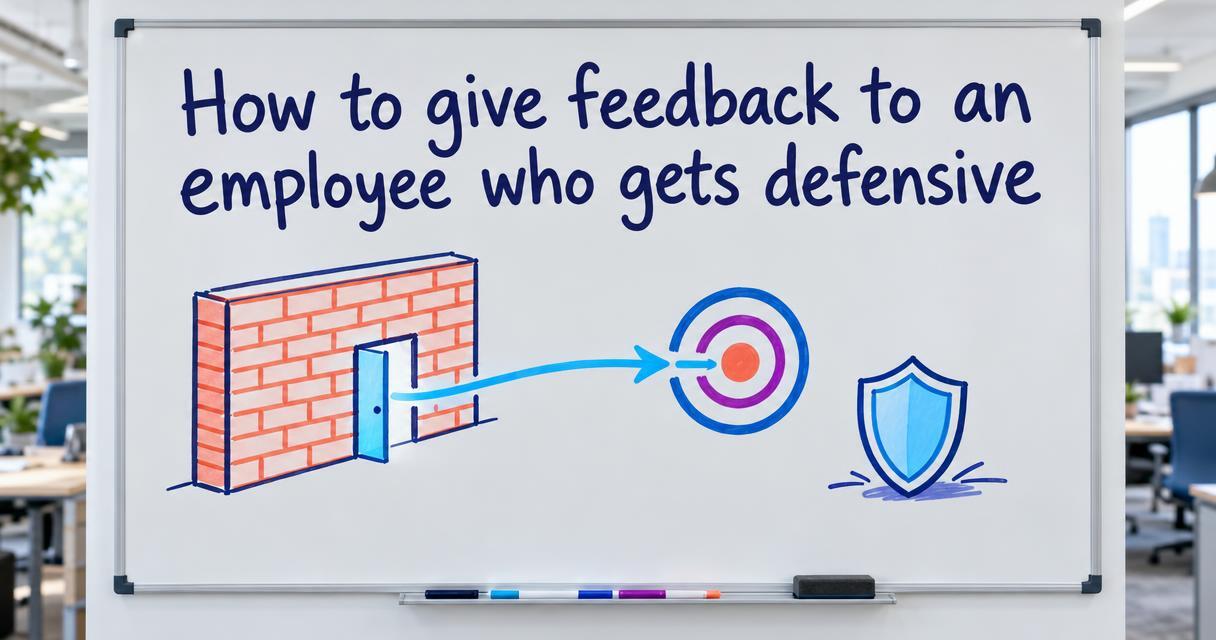
To give feedback to an employee who gets defensive, you need to state the observable behaviour without judgement, separate their intent from their impact, and use specific de-escalation scripts when they start arguing or shutting down.
Last reviewed November 2026
Key takeaways
- Defensiveness is a biological threat response, not necessarily a sign of bad faith or deliberate insubordination.
- Preparation is critical; you must separate the facts of what actually happened from the story you are telling yourself about it.
- Using structured conversational scripts helps you stay grounded when an employee blames others, cries or withdraws into silence.
- Post-meeting follow-up builds the psychological safety required for the behavioural change to actually stick.
You have booked the meeting, and your stomach is already in knots. You know exactly how this performance conversation is going to unfold. You will present a minor correction, and your team member will immediately build a wall. They might blame another department, bring up a mistake you made three months ago, or simply stare at you in hostile silence.
Managing this kind of reaction is exhausting. It takes a massive emotional toll on leaders who simply want to help their team improve. But you cannot avoid the conversation forever. The performance gap is real, and ignoring it only penalises the rest of your team who have to pick up the slack.
There is a better way to handle these interactions. By understanding the psychological root causes behind defensiveness, you can bypass the emotional triggers and deliver your message clearly. You can learn how to hold your ground without escalating the conflict.
Defensiveness is rarely about you. When an employee pushes back aggressively against constructive criticism, you are usually witnessing a biological threat response. When people feel their competence or job security is under attack, their brain activates a fight or flight reflex.
In this heightened state, they are no longer processing logic. They are simply trying to survive the conversation. Sometimes, this stems from past experiences with toxic managers who used feedback as a weapon rather than a development tool. Other times, it is driven by severe impostor syndrome, where any minor critique feels like proof that they are a fraud.
This fear of making mistakes is incredibly common in modern workplaces. According to workplace research, more than 60% of employees reportedly hesitate to share mistakes with their managers. They stay quiet because they do not feel safe enough to admit failure.
You need to distinguish between someone who is genuinely terrified of failing and someone who is weaponising incompetence to avoid accountability. A team member who is scared needs reassurance about their role security. A team member acting in bad faith needs firm, unyielding boundaries.
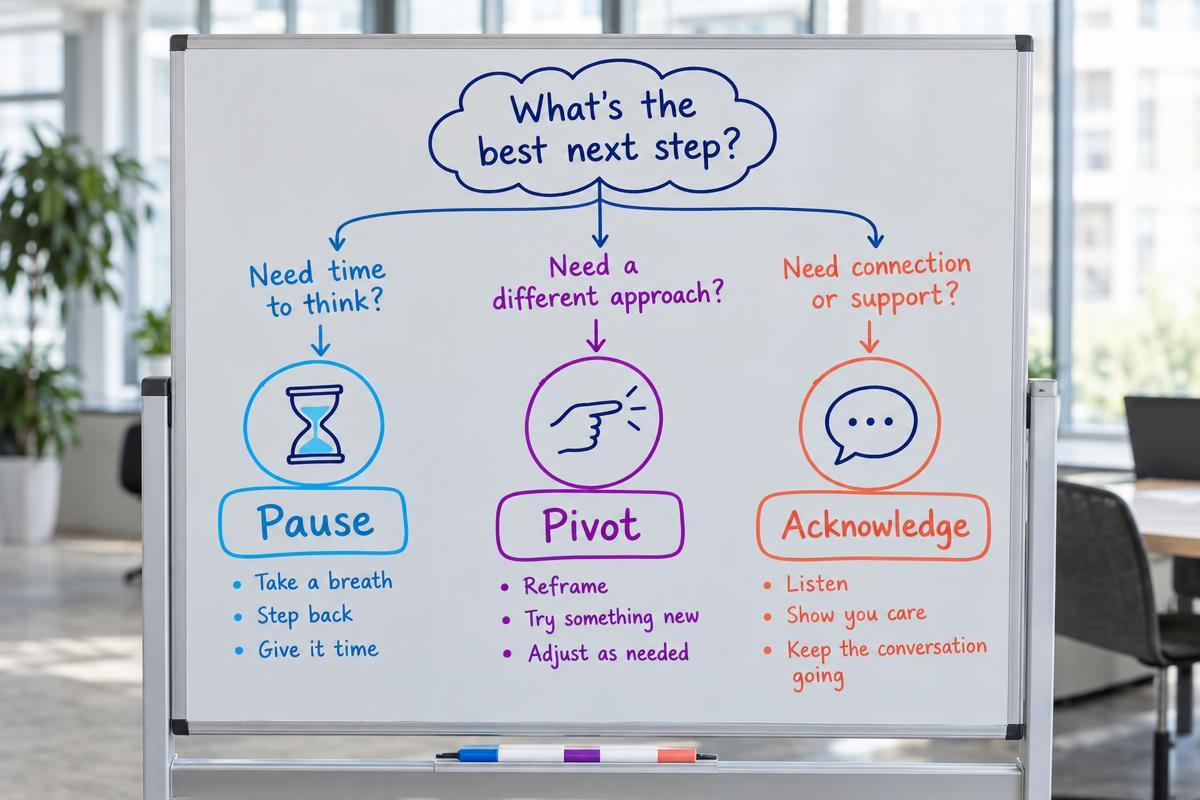
Before you step into the room, you must check your own emotional state. If you are irritated or resentful, the employee will read your body language before you even finish your first sentence. You must audit your own intent to ensure you are not inadvertently triggering their defences.
Start by separating the observable facts from the story you have told yourself. If an employee missed a deadline, the fact is that the report was submitted late. The story you might be telling yourself is that they are lazy or disrespectful. You can only address the facts.
Ask yourself if you have clearly set expectations in the past. It is unfair to penalise someone for breaking a rule they did not know existed. If you realise your past instructions were vague, you need to own that part of the failure during the conversation.
Finally, consider your default communication style. If you are naturally blunt, you might want to learn more about being told you are too direct at work to understand how your delivery lands. Adjusting your tone does not mean diluting your message; it means removing the sharp edges that cause people to panic.
The way you open the meeting dictates everything that follows. You must eliminate the element of surprise. Let them know what the meeting is about in advance so they have time to process their initial anxiety privately.
When you begin speaking, focus entirely on observable behaviour. Describe exactly what a camera in the corner of the room would have recorded. A study on team changing noted that describing observable behaviour without explaining its impact can provoke defensiveness. You must link the action directly to the business outcome.
Once you state the behaviour and the impact, you must stop talking. Pause and invite them into the conversation. Ask a neutral question like, "Can you walk me through your perspective on this?" This gives them a chance to speak without feeling interrogated.
If you are struggling to find the right phrasing, studying how to deliver difficult feedback can provide you with reliable structures. The goal is to keep the conversation anchored to the work, not the person's character.
Even with right preparation, a sensitive employee might still react poorly. When this happens, you need pre-planned responses to keep the meeting on track. Having reliable scripts prevents you from reacting emotionally to their pushback.
Here is a breakdown of common defensive reactions and the exact words you can use to de-escalate them.
| Defensive Reaction | What is happening | What you should say |
|---|---|---|
| Blaming others | They are trying to shift the focus to reduce their own cognitive load and avoid accountability. | "I hear that the marketing team was late with the brief. Right now, I want to focus on how we handle those delays when they happen." |
| Bringing up the past | They are deflecting by auditing your previous mistakes to level the playing field. | "That is a fair point about my error last month, and we can discuss that separately. Today, we need to resolve the issue with this current project." |
| Emotional flooding (Tears) | Their nervous system is overwhelmed. They are not necessarily manipulating you. | "I can see this is frustrating. Let us take a five-minute break to grab a coffee, and then we can look at the solutions together." |
| Stonewalling (Silence) | They have completely frozen. They feel unsafe and have withdrawn to protect themselves. | "I have shared a lot of information just now. I want to give you time to process this. Let us pause here and pick this up tomorrow morning." |
When an employee uses silence as a weapon, it can be incredibly uncomfortable. You might be tempted to keep talking to fill the void. A workplace survey found that 61.3% of employees say they often observe colleagues staying silent when they disagree. You must name the silence politely and explicitly ask for their input.
Sometimes, despite your best efforts, the conversation derails completely. You need clear decision criteria for when to pull the ripcord and reschedule the meeting. Pushing through a highly volatile session rarely results in productive behavioural change.
If the employee begins shouting, using aggressive language, or making personal attacks, the meeting is over. You must protect your own boundaries as a leader. Calmly state that the conversation has become unproductive and that you will reconvene when emotions have settled.
Similarly, if they are so emotionally flooded that they cannot process your words, there is no value in continuing. Continuing to deliver tough news to someone who is actively sobbing or hyperventilating is counterproductive. Give them grace, pause the session, and schedule a follow-up for the next day.
Different people process information in fundamentally different ways. What feels like a gentle suggestion to one person might feel like a severe reprimand to another. Understanding the natural working style of your team member can help you tailor your approach.
At Compono, we have spent years researching how different personalities respond to stress. For example, some people require extensive data before they can accept a critique. The Evaluator personality type can sometimes become confrontational in discussions if they feel you are making judgements without sufficient evidence.
If you are managing an analytical team member, you cannot rely on "gut feelings" or vague observations. You must bring specific dates, times and metrics to the meeting. When they push back, they are often just testing the validity of your data, not necessarily rejecting your authority.
If you find these personality clashes difficult to work through, you can use Hey Compono to practise your exact scenario. The platform acts as a safe space where you can test your phrasing on an AI coach before you sit down with your actual employee.
The feedback meeting is only the first step. The way you handle the recovery phase dictates whether the behaviour actually changes. Many managers make the mistake of avoiding the employee for days after a difficult conversation, which only increases the tension.
You must deliberately re-establish relational consistency. Reach out the next morning with a normal, friendly greeting. Ask them a casual question about a low-stakes project. You need to show them that the feedback was an isolated event, not a permanent change in how you view them.
Building this baseline of trust has massive implications for team performance. According to research on workplace changing, employees with higher psychological safety reported productivity at 74%, compared with 43% among employees with lower psychological safety. When people feel safe, they do better work.
If the employee continues to exhibit negative behaviour after the meeting, you may need to read about how to deal with a passive aggressive coworker. However, most professionals will appreciate your directness and return to baseline within a few days if you handle the follow-up correctly.
One of the most powerful concepts you can use with a defensive employee is separating their intent from their impact. When someone gets defensive, they usually say, "I did not mean to cause a problem." They are defending their intent.
You must validate their intent immediately. Tell them you believe they meant well and that you know they care about the quality of their work. Once they feel their character is secure, they will lower their guard.
Then, pivot gently to the impact. Explain that while their intent was good, the impact on the team was negative. This subtle linguistic shift removes the personal attack. You are no longer accusing them of being a bad colleague; you are simply asking them to align their actions with their good intentions.
When you need to deliver tough news to a highly defensive team member, having a safe space to rehearse makes all the difference. Our AI coaching tools let you test your delivery, try different approaches, and get real-time advice on your wording before you step into the room.
Related reading
Defensiveness is often a biological threat response triggered by fear. Even minor feedback can feel like an attack on their competence or job security, especially if they suffer from impostor syndrome or have worked under toxic management in the past.
Sending difficult feedback via email or text often backfires because tone is easily misinterpreted. It is always better to have a direct, spoken conversation where you can read their body language and adjust your delivery in real time.
Acknowledge their distress without judgement and offer them a short break to collect themselves. Do not dilute or retract your feedback just because they are emotional, but do give them the space they need to process the information safely.
Acknowledge the external factors they mention, but immediately pivot back to their specific responsibilities. Use phrases like, "I hear that the timeline shifted, but today we need to focus on how you handled the communication around that delay."
You should involve human resources if the employee becomes verbally aggressive, refuses to engage in the performance process after multiple attempts, or if their defensive behaviour begins to severely impact the wellbeing and productivity of the wider team.
Learn exactly how to deal with a passive aggressive coworker. Get practical scripts, learn when to involve HR, and find out how to protect your...
Learn exactly how to recover from a mistake at work. Get practical communication scripts, root cause frameworks, and a 30-day plan to rebuild.
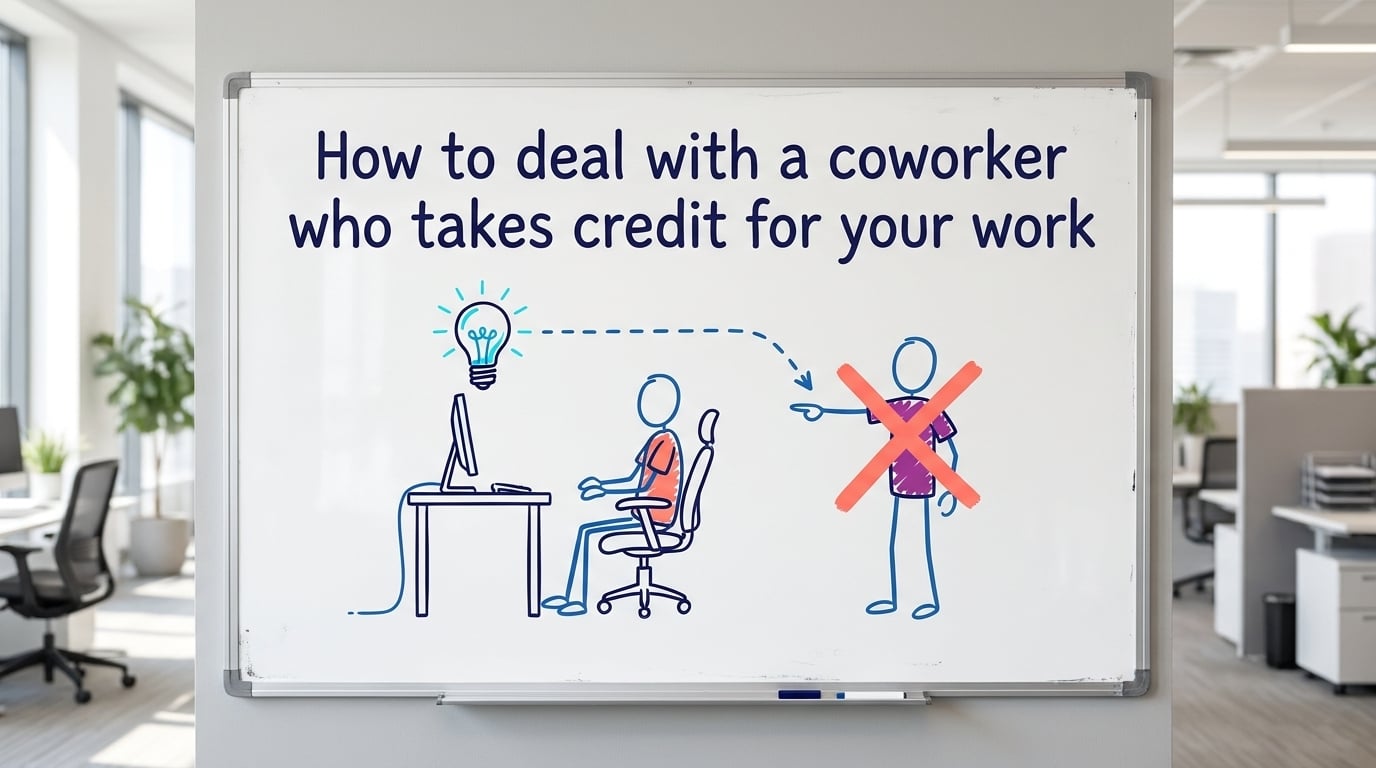
Exactly how to deal with a coworker who takes credit for your work. Get practical scripts, digital paper trail strategies, and expert escalation tips.